
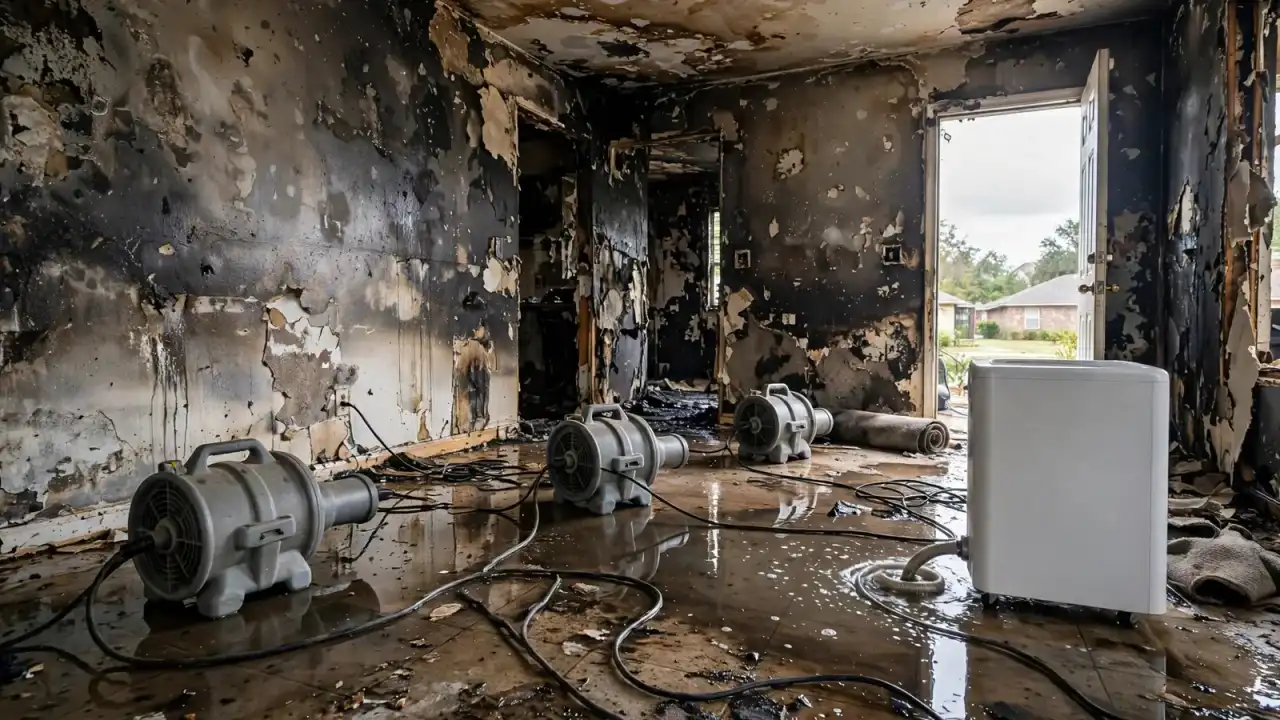
Key facts: Firefighting Water Damage
- Water used to fight a fire can soak floors, walls and ceilings well beyond the burned area.
- Mold can begin to grow on damp materials within 24 to 48 hours [1].
- Humid outdoor air slows natural drying, so mechanical dehumidification is usually needed.
- The IICRC S500 sets out recommended practice for water damage restoration [2].
- Water mixed with soot and debris is treated as contaminated, not clean water.
The issue
Why firefighting water is a problem of its own
Firefighters use whatever water it takes to stop a fire and protect people and neighboring homes. Hoses deliver large volumes very quickly, and water runs wherever gravity takes it: across floors, under baseboards, down wall cavities, through ceilings to the floor below and into crawlspaces. Attic insulation above a fire may be saturated, and ceilings below can sag with its weight.
This water is not clean. It carries soot, ash, burned debris and whatever was on the floors. Restorers treat it as contaminated, which affects what can be saved: wet carpet pad, insulation and soaked drywall are usually removed rather than dried in place.
Water also changes the soot job. Wet soot smears, stains and soaks in. Most contractors extract and dry first, then finish soot cleaning once materials are dry.
Wet areas
Where firefighting water ends up
Floors and carpet pad
Water spreads quickly and wicks under baseboards.
Wall cavities
Water runs down inside walls and soaks insulation and the bottom of drywall.
Ceilings below
On two-story homes, the floor below often takes the water.
Attic insulation
Saturated insulation can bring down ceilings.
Cabinets
Toe kicks and cabinet bases trap water against the floor.
Crawlspaces
Pier-and-beam homes can hold water under the floor.
The process
How a wet fire scene is dried
Drying is a measured process, not a guess.
- 1
Safety first
Power to wet areas is shut off; sagging ceilings are checked.
- 2
Extract standing water
Truck-mounted or portable extractors remove water from floors.
- 3
Map moisture
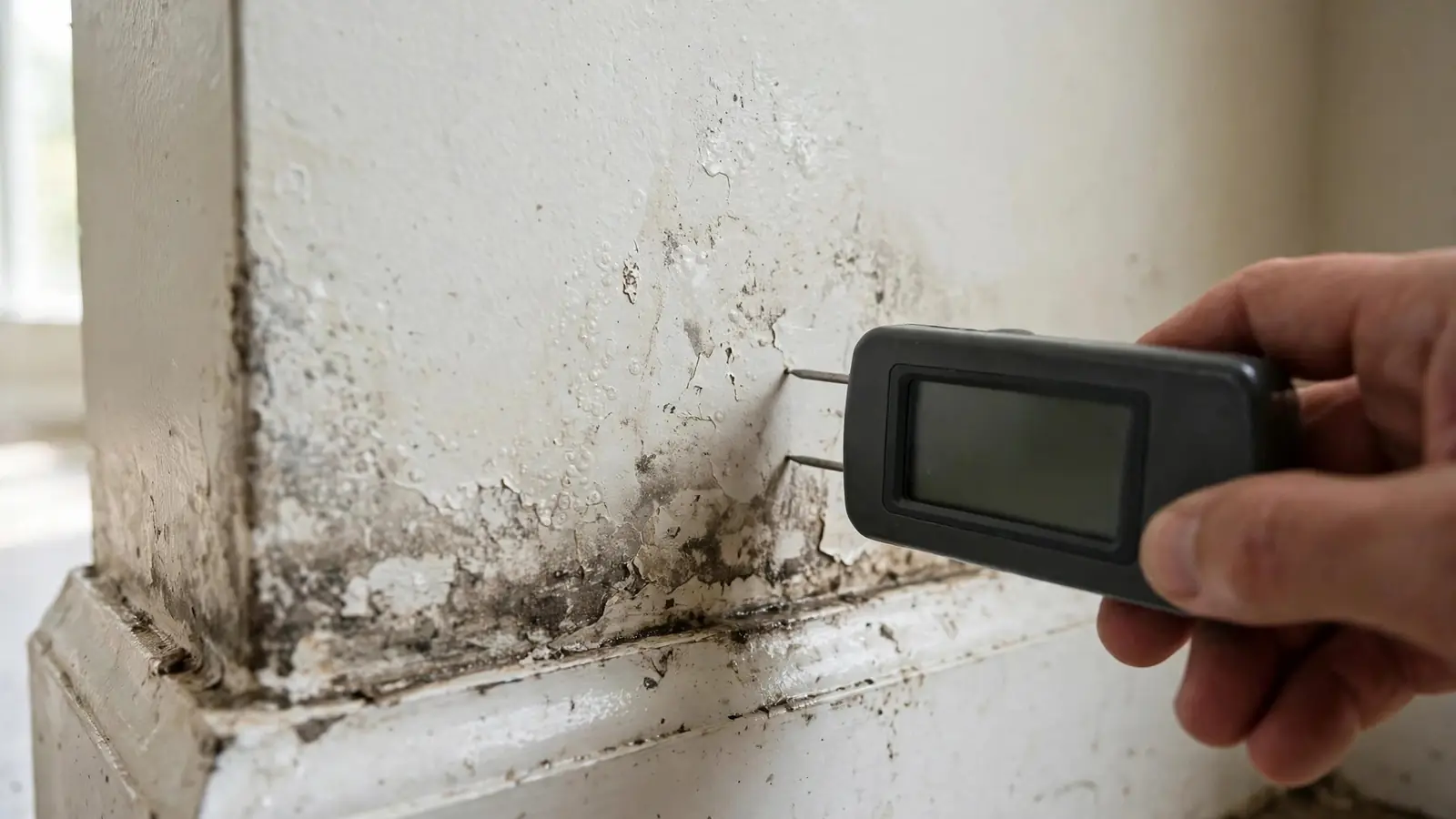
Meters and thermal cameras show where water traveled.
- 4
Remove what cannot dry
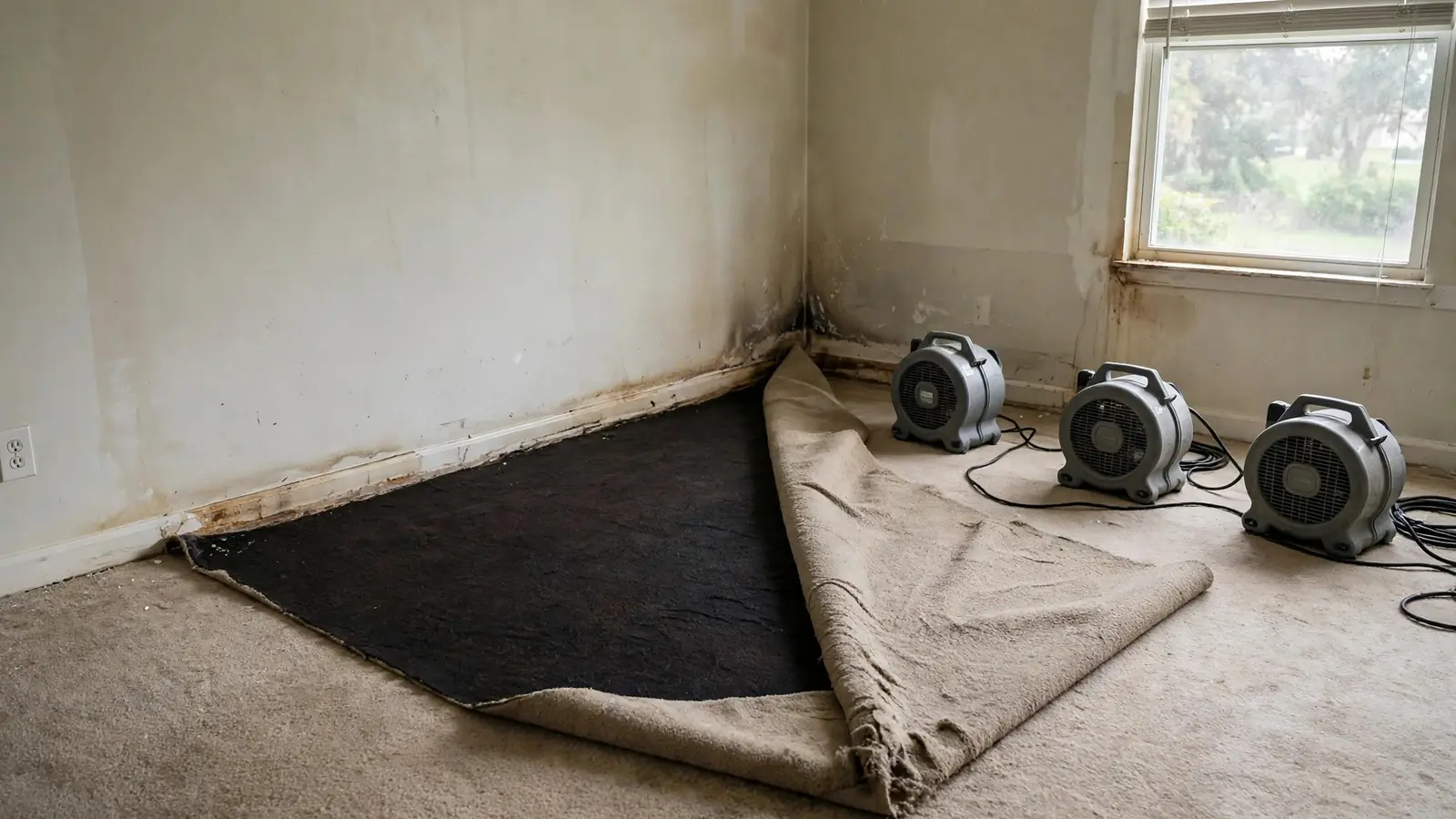
Pad, soaked insulation and saturated drywall come out.
- 5
Set drying equipment
Air movers and dehumidifiers sized to the space.
- 6
Monitor daily
Readings are recorded until materials reach a dry goal.
- 7
Clean and treat
Surfaces cleaned; antimicrobial where appropriate.
Materials
Moisture in common materials
| Material | Usual outcome |
|---|---|
| Carpet | Sometimes saved if dried fast; often replaced after fires |
| Carpet pad | Usually replaced |
| Drywall | Dried if lightly wet; cut out if soaked or swollen |
| Insulation | Usually replaced when wet |
| Hardwood floors | Dried carefully; may cup or crown |
| Laminate | Often swells at seams and is replaced |
| Particleboard cabinets | Swell and usually replaced |
| Concrete slab | Dries slowly; checked before new flooring |
Foundations
Slab foundations and pier-and-beam floors
Most Houston homes built since the 1960s sit on concrete slabs. Water on a slab does not drain away; it sits under flooring and in the bottom plates of walls. Concrete absorbs water and releases it slowly, so new flooring should not go down until moisture readings say the slab is ready.
Older homes on pier-and-beam foundations have wooden subfloors over a crawlspace. Water can soak the subfloor and drip into the crawlspace, where it keeps humidity high under the house. Drying these homes often means working under the floor too: removing wet insulation, setting equipment in the crawlspace and checking for standing water on the ground.
Local conditions
Drying in Houston's climate
Houston's humidity is the main reason fire scenes here need active drying. Outdoor air is often so damp that opening windows adds moisture rather than removing it. Restorers usually keep the home closed and run commercial dehumidifiers, which pull water out of the air so materials can release theirs. Air movers push dry air across wet surfaces.
Air conditioning helps, but only if the system is safe to run and the ducts are not full of soot. Most contractors rely on their own equipment instead. Expect drying to take several days for most homes, sometimes longer for slabs, hardwood or heavily soaked areas.
First steps
While you wait
If it is safe, mop or wet-vac standing water. Lift rugs and move furniture off wet carpet, putting foil or blocks under legs. Open cabinet doors and drawers to let air in. Take wet clothing and linens out to dry or for cleaning.
Do not use household vacuums on wet floors, and stay out of rooms with sagging ceilings. Keep the AC off if soot is visible near vents.
- Wet-vac standing water if safe
- Lift rugs and move furniture
- Open cabinets and drawers
- Stay away from sagging ceilings
- Photograph everything
Mold
Preventing mold after the fire
Mold needs moisture, food and time, and wet drywall, wood and carpet pad supply the first two. In warm Houston weather, it can appear within a day or two. The best defense is fast, measured drying and removal of materials that cannot dry. Where mold has started, the EPA recommends cleaning small areas and calling professionals for larger ones, and fixing the moisture source first [1]. Our guide on mold after firefighting water covers the signs and steps.
Timing
A typical drying timeline
| Day | What happens |
|---|---|
| Day 1 | Extraction, removal of pad and soaked materials, equipment set |
| Days 2 to 4 | Daily readings, equipment moved as areas dry |
| Days 4 to 7 | Most materials reach dry goals; slabs may take longer |
| After drying | Final readings, equipment removed, cleaning and rebuild begin |
Checks
Signs drying was done well
- Written moisture readingsDaily logs show materials reached dry goals.
- No musty smellA musty odor suggests hidden moisture or mold.
- No new stainsSpots appearing on walls or ceilings mean water remains.
- Floors are flatCupping or soft spots point to wet subfloors.
- Slab tested before new flooringPrevents adhesive failures and mold under floors.
Measuring
Moisture mapping explained
Water rarely stops where it looks like it stopped. It wicks up drywall, spreads under flooring and runs inside walls, and paint can look dry over a wet core. Restorers use two kinds of meters: pin meters that measure moisture inside wood and drywall, and non-invasive meters that scan surfaces without leaving holes. Thermal cameras help too, because wet materials are usually cooler as water evaporates, though the camera only suggests where to measure; it does not measure moisture itself.
The result is a moisture map: a sketch of each room showing wet and dry areas with readings. It guides what is removed, where equipment goes and when each area is done. Ask to see it. It is also strong evidence for an insurance claim, because it shows exactly how far the water went.
When is it dry
Dry goals, not set days
A professional drying job ends when materials reach a dry goal, not when a set number of days passes. The usual approach is to measure similar materials in an unaffected part of the home and use those readings as the target. When wet drywall, wood and subfloor read close to their dry counterparts, the area is done. Some materials, especially concrete slabs and thick hardwood, may take longer than walls, and equipment may stay in those rooms after others are finished.
Equipment
Drying equipment and what it does
| Equipment | Purpose |
|---|---|
| Extractor | Pulls standing water out of carpet and floors |
| Air mover | Blows air across wet surfaces to speed evaporation |
| Low-grain refrigerant dehumidifier | Removes water from the air in humid conditions |
| Desiccant dehumidifier | Very dry air for dense materials and cooler spaces |
| Wall cavity system | Pushes dry air into walls through small holes |
| Floor drying mats | Draw moisture from hardwood |
| HEPA air scrubber | Captures particles stirred up during work |
Upper floors
Two-story homes and water from above
When a fire is on an upper floor, firefighting water comes down. The ceiling below may be soaked, light fixtures may hold water, and wall cavities between floors can be wet from top to bottom. Wet ceilings are heavy and can fall without warning. The contractor will usually make small holes to drain trapped water safely, remove soaked ceiling drywall and insulation, and dry the floor framing between stories. Rooms below should be kept clear until the ceiling is checked.
Kitchens and baths
Cabinets, built-ins and kitchens
Kitchen and bathroom cabinets are often built from particleboard, which swells permanently when soaked. Water also hides under cabinets, behind the toe kick and below dishwashers and refrigerators. Drying these areas usually means pulling toe kicks, drilling small holes in cabinet bases or removing lower cabinets. Countertops are often saved and reinstalled if cabinets are replaced. Wood cabinets fare better but may need refinishing.
Belongings
Contents that got wet
Wet clothing and linens should be laundered or sent for cleaning promptly; left in a pile, they can mildew within a day in Houston's heat. Wet upholstered furniture is hard to dry and often replaced. Documents and photographs can be frozen in sealed bags to stop mold and damage until a specialist can freeze-dry them. Wet electronics stay unplugged until checked. Rugs can often be cleaned and dried by a rug specialist.
Choosing help
Questions to ask about drying
- Will you map moisture and share the readings?You want a record of where water went.
- How will you decide what to remove?Look for answers based on readings and material type.
- How do you dry in humid weather?Expect dehumidifiers sized for the space, not open windows.
- How will you check walls and the slab?Pin readings, non-invasive meters and slab checks before flooring.
- What happens if mold is found?A clear plan should follow EPA guidance and remove the moisture source.
- How often will you check equipment?Daily checks with readings are standard.
- Will you work under the house?Pier-and-beam homes may need crawlspace drying.
Claims
Insurance and firefighting water
Water used to put out a fire is generally treated as part of the fire loss rather than a separate flood claim, because it was caused by the fire. Policies vary, so check yours and speak with your adjuster. Keep moisture maps, drying logs, photos and a list of removed materials. Flood insurance through the National Flood Insurance Program covers flooding from outside, not firefighting water, which matters in a city where many homeowners carry both policies.
Flood experience
Lessons from Houston's floods
Houston has more experience drying homes than almost any city in the country. Hurricane Harvey in 2017 flooded well over a hundred thousand homes in the region, along with repeated flooding from storms such as Tax Day 2016 and Imelda in 2019. Those events taught homeowners and restorers what happens when drying is delayed: mold spreads behind walls, floors buckle and odors set in.
The same lessons apply to a fire. The water volume is usually smaller, but it is dirtier, and it arrives with soot and heat damage. Prompt extraction, removal of materials that cannot dry, and measured mechanical drying are the difference between a short job and a long one.
Multifamily
Apartments and water from the unit above
In an apartment building, firefighting water often travels to units below and beside the fire. Residents downstairs may find wet ceilings, damp carpet and water in light fixtures even if their unit never saw smoke. The property owner usually arranges drying of the building structure. Tenants should photograph the damage, move belongings out of wet areas, report it to management in writing and contact their renters insurer about damaged contents and temporary housing.
First day
What to do in the first 24 hours
Speed matters most in the first day after a fire in a humid climate.
- 1
Get the all-clear
Re-enter only when the fire department says it is safe.
- 2
Call your insurer
Report the loss and note the claim number.
- 3
Photograph and video
Record every wet room, ceiling and the contents.
- 4
Shut off power to wet areas
Only if you can reach the panel safely.
- 5
Start water removal
Extraction should begin as soon as possible.
- 6
Move valuables
Take documents, medicines and irreplaceable items somewhere dry.
Wood floors
Hardwood floors after firefighting water
Older Houston homes, especially bungalows in the Heights and Montrose, often have original hardwood floors. Water from firefighting can soak into the boards and subfloor and cause cupping, where edges rise higher than the center. Floors can often be saved with specialized drying mats and patience, and many flatten as they dry. Sanding or refinishing should wait until moisture readings show the wood is fully dry; working too soon can leave the floor uneven after it settles.
Attics
Wet attics and ceilings
Many Houston fires reach the attic, either because they start there, often from wiring, or because firefighters open the roof to vent heat. Attic insulation soaks up water like a sponge, and wet blown insulation is heavy enough to bring down drywall ceilings. Restorers usually remove wet insulation, dry the ceiling joists and roof deck, and check the air handler and ducts, which in most Houston homes sit in the attic. If the roof was opened, it needs a tarp before the next rain.
Water categories
Clean, gray and black water
| Category | Example | Firefighting water? |
|---|---|---|
| Clean water | Broken supply line | No |
| Gray water | Dishwasher or washing machine overflow | Sometimes, when lightly soiled |
| Black water | Sewage, floodwater | Often treated similarly when heavily contaminated with soot and debris |
Next steps
After drying is finished
Once materials reach dry goals, the job moves to cleaning and repair. Surfaces are cleaned of soot and treated where needed, sealed if odor remains, and rebuilt: new insulation, drywall, texture, paint, flooring and cabinets as needed. Keep the drying records with your home files. If you sell the house later, they show the water was handled properly, and if a problem appears, they help pinpoint what was done.
Garages
Garage and slab edges
In an attached garage fire, water floods the garage slab and runs toward the lowest point, often under the door into the house or into the laundry room. Drywall on the shared wall soaks from the bottom up, and the bottom plate of the wall stays wet. These walls are usually opened along the bottom to dry the framing. Stored boxes, paper and fabrics on the garage floor soak quickly and are often discarded after being photographed and listed.
Garage slabs can also carry chemicals from stored products into the runoff. Gloves and boots are essential, and anything that leaked should be handled as household hazardous waste.
FAQ
Houston firefighting water questions
Can I just open the windows to dry my house?
In Houston, outdoor air is often too humid; dehumidifiers dry faster and more reliably.
How long does drying take?
Usually several days; slabs and hardwood can take longer.
Can wet carpet be saved?
Sometimes, if dried quickly, but carpet soaked with sooty water is often replaced.
Is the water from firefighting clean?
No. It carries soot and debris and is treated as contaminated.
Will mold grow after a fire?
It can within a day or two on damp materials. Fast drying prevents it.
Do I need my walls opened?
If water reached wall cavities and insulation, cutting out the lower drywall is common.
Can I run my AC to help dry?
Only if the system is safe and clean; check with the contractor first.
Why is my ceiling sagging?
Wet insulation or water above it. Stay out of the room and tell the contractor.
Does insurance cover firefighting water damage?
It is usually treated as part of the fire claim; check your policy.
When can new floors go in?
After moisture readings show the slab or subfloor is dry.
How do I know my walls are dry inside?
Ask for moisture readings; paint can look dry while the drywall core is wet.
Why were holes drilled in my walls?
Small holes let dry air into wall cavities and drain trapped water.
Is firefighting water a flood claim?
Usually not; it is generally part of the fire claim. Check your policy.
Can my kitchen cabinets be saved?
Wood cabinets often can; particleboard that swelled usually cannot.
Why is water coming through my ceiling from the unit upstairs?
Firefighting water travels down through floors. Report it to management and keep belongings dry.
Will my hardwood floors flatten after drying?
Often they do, partly or fully, if dried properly. Refinish only after readings say the wood is dry.
Why was my attic insulation removed?
Wet insulation is heavy, holds moisture and can bring down ceilings. It is usually replaced.
Should I keep the drying records?
Yes. They help with your claim and with any future sale.
Why do walls next to the garage get cut open?
Water soaks the bottom of the shared wall and the framing behind it; opening it lets it dry.
Do I need to leave home while drying equipment runs?
Not always. Equipment is noisy and warm, and many families stay elsewhere if smoke cleanup is also under way.
Can drying equipment trip my breakers?
It can draw a lot of power. Contractors plan circuits or bring generators when needed.