
Key facts: Board-Up and Tarping
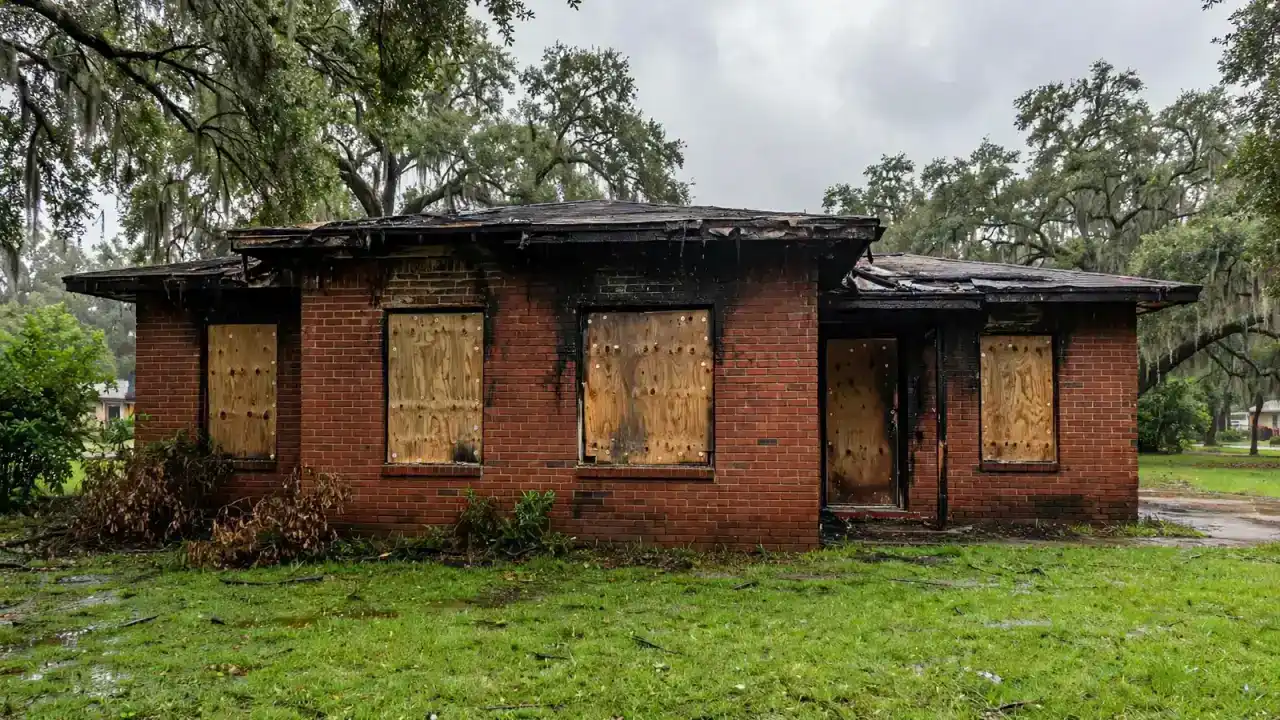
- Firefighters often break windows and cut roof openings to vent heat and smoke.
- Most homeowners policies expect you to take reasonable steps to protect the property from further damage [1].
- Tarps on damaged roofs need secure fastening to survive strong Gulf storms.
- Board-up protects against weather, animals and unwanted entry.
- Photos before securing help document the fire damage for your claim [2].
The need
Why a fire-damaged house needs securing
To fight a fire, crews often break windows, force doors and cut holes in roofs to let heat and smoke out. These steps save homes, but they leave openings. An open house lets in rain, which adds water damage on top of fire damage, and invites animals and people who should not be there. Unsecured homes can also be dangerous for curious neighbors and children.
Insurers generally expect owners to take reasonable steps to prevent further damage after a loss. Boarding up and tarping are the usual ways to do that. Keep receipts and photos, because these steps are commonly part of the claim.
Openings
What usually needs securing
Broken windows
Covered from outside with plywood fastened through the frame.
Forced or burned doors
Boarded, or replaced with a secured temporary door.
Roof vent holes
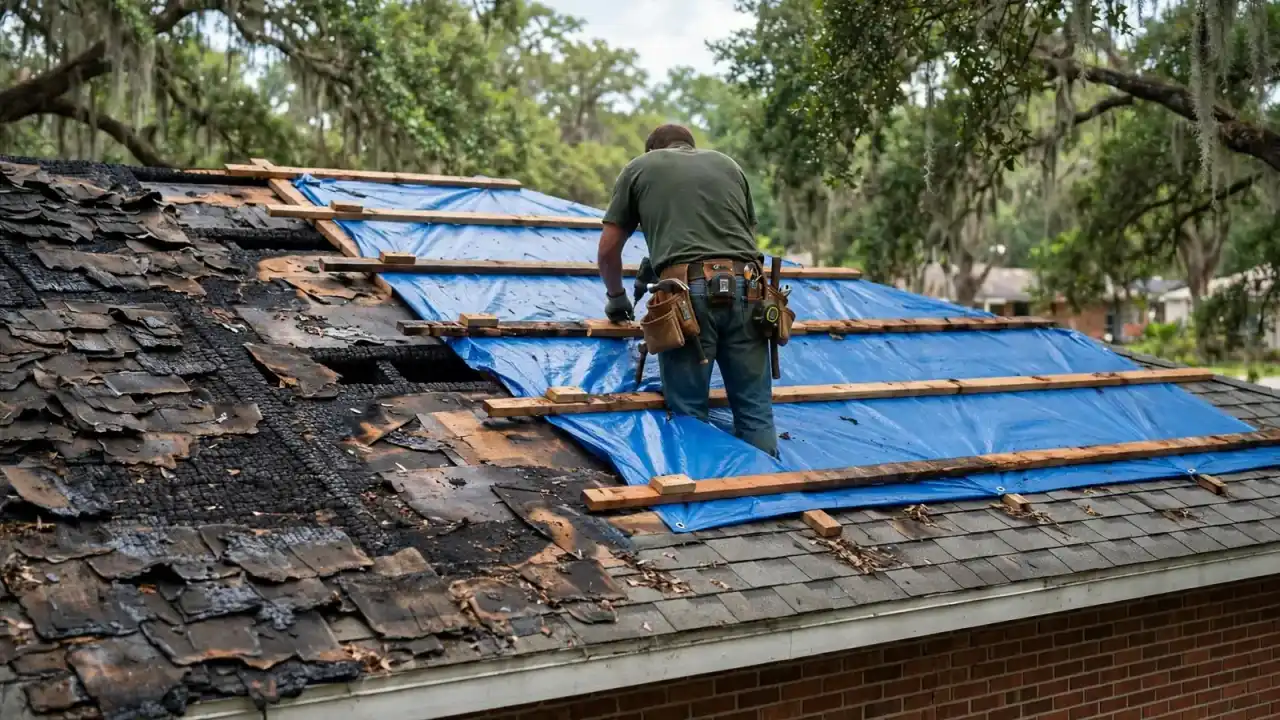
Covered with heavy tarps over battens.
Burned-through walls
Framed and sheeted to close the gap.
Garage doors
Braced or boarded if damaged.
Sliding glass doors
Covered with braced plywood.
The process
How board-up and tarping usually go
A good board-up is quick, solid and easy to remove later.
- 1
Safety check
The structure is checked for collapse risk before anyone climbs or works.
- 2
Photograph first
Damage is documented before covering.
- 3
Measure and cut
Plywood sized to each opening.
- 4
Fasten securely
Boards fixed through the frame or with braces inside.
- 5
Tarp the roof
Heavy tarps rolled over battens and fastened past the damaged area.
- 6
Leave an entry
A lockable door or panel for owners, adjusters and crews.
- 7
Check after storms
Covers are inspected and re-secured after high winds.
Options
Types of temporary protection
| Method | Used for | Notes |
|---|---|---|
| Exterior plywood | Windows and doors | Fastened through frames or braced |
| Interior bracing | Large openings | Avoids extra holes in brick |
| Roof tarp over battens | Vent holes, burned roof areas | Extends well past the damage |
| Temporary fencing | Badly damaged homes | Keeps people off the site |
| Lockable temporary door | Main entry | Access for owners and crews |
Gulf weather
Storm season and roof tarps
Houston's hurricane season runs from June through November, and heavy thunderstorms can come any time of year. [3] A tarp that is simply weighted with bricks or nailed at the edges will tear or blow off in strong wind. Professional tarping rolls the edges of the tarp around wooden battens and fastens the battens to the roof deck, extending the tarp well beyond the damage and over the ridge where possible so water sheds away.
If a named storm is forecast, ask the contractor to check every board and tarp beforehand. The National Weather Service office for Houston and Galveston posts local forecasts and warnings. After a storm, look for loose corners, water stains on ceilings and wet insulation.
Construction
Brick, siding and Houston construction
Many Houston homes have brick veneer, which makes fastening boards harder because drilling into brick leaves marks. Contractors often fasten into window frames or use interior bracing to avoid damaging brick. Homes with fiber cement, vinyl or wood siding are easier to fasten to. Older wood-frame bungalows may have original wood windows worth preserving, so boards are fitted carefully to protect sashes and trim.
First steps
Before the crew arrives
Remove valuables, medicines, documents and firearms if it is safe to enter. Close interior doors. Move belongings away from openings and cover them with plastic if rain is possible.
Photograph every opening and the roof from the ground before anything is covered. Tell neighbors the house is empty so they can watch for anyone around it.
- Remove valuables if safe
- Photograph openings first
- Cover belongings near openings
- Tell neighbors the home is empty
- Do not climb onto the roof
Security
Theft and vacant homes
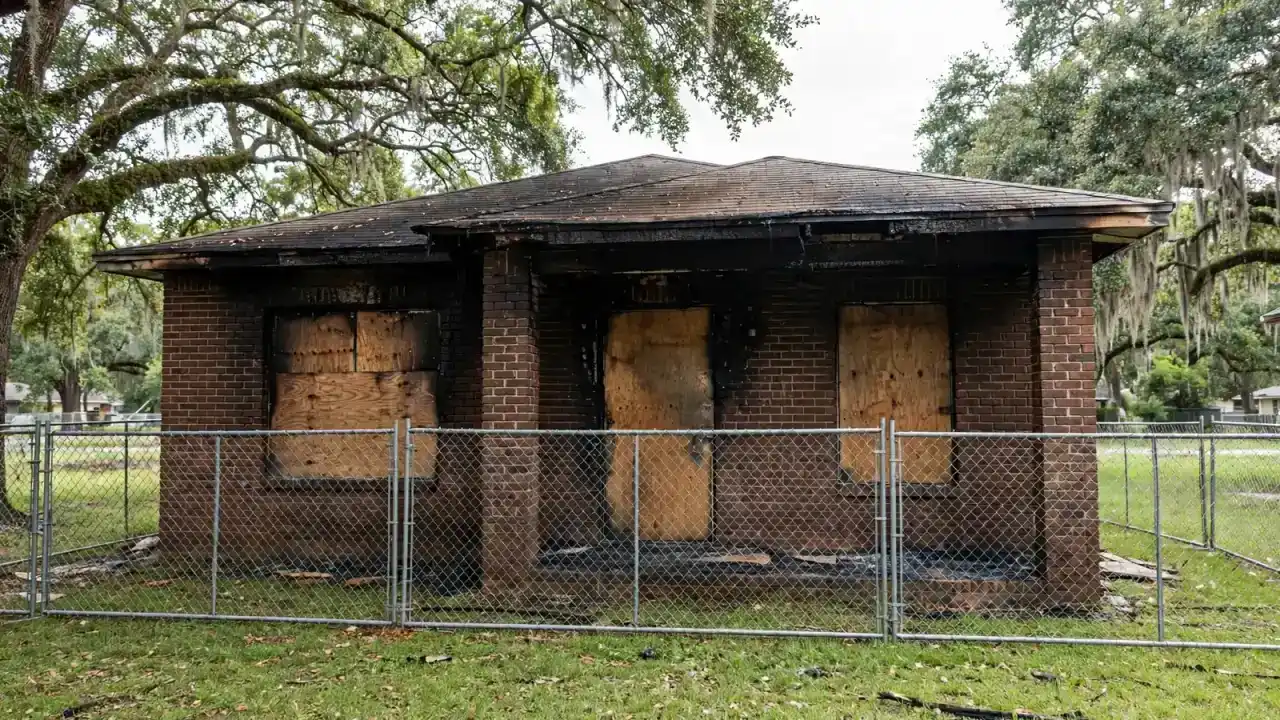
A vacant, damaged house can attract theft of appliances, copper wiring and tools, as well as squatters. Boarding all accessible openings, locking the temporary door and, for badly damaged homes, putting up temporary fencing helps. Let the Houston Police Department non-emergency line know if you see anyone at the property. Some owners add a battery-powered camera or motion light. Check your policy for conditions on vacant properties, as coverage can change if a home stays empty for a long time.
Timing
Board-up timing
| Stage | Typical timing |
|---|---|
| Emergency board-up | Same visit, once safe |
| Roof tarp | As soon as the roof can be accessed safely |
| Fencing | Within a day or two for badly damaged homes |
| Inspection after storms | After each high-wind or heavy-rain event |
| Removal | When windows, doors and roof are repaired |
Choosing help
Questions to ask before board-up
- How will you fasten to brick?Through frames or interior bracing avoids damaging veneer.
- How will the roof tarp be secured?Battens fastened to the deck, extended past the damage.
- Who keeps the key?Make sure you have access.
- Will you check after storms?Ask whether inspections are included.
- Will you take photos before covering?These help your claim.
Venting
What firefighters leave behind
Firefighters ventilate burning buildings to release heat, smoke and gases, which helps them find people and reach the fire. Horizontal ventilation means breaking or opening windows and doors. Vertical ventilation means cutting a hole in the roof, usually above the hottest area, so heat escapes upward. Both are normal and deliberate. They also mean the home has openings that were not part of the fire damage itself.
When you first return, walk around the outside with someone from the fire department or your contractor, if possible, and note every opening: broken panes, forced locks, cut roof sections and holes in walls. That list becomes the board-up plan.
Fencing
Temporary fencing for badly damaged homes
When a fire has burned through walls or roofs, boarding every opening may not be enough to keep a site safe. Temporary chain-link fencing around the house keeps people away from debris, unstable walls and open roofs. Fencing is common when a home will stand empty for weeks before demolition or rebuilding, and some insurers expect it for heavily damaged homes. Signs on the fence can give a contact name for the contractor, not the owner's personal details.
Materials
Common board-up materials
| Material | Purpose |
|---|---|
| Exterior plywood or OSB | Covering windows and doors |
| 2x4 lumber | Bracing and battens |
| Carriage bolts | Fastening boards through frames |
| Heavy polyethylene tarps | Covering roof openings |
| Roofing nails with caps | Fastening battens and tarps |
| Temporary fencing panels | Securing the perimeter |
| Padlock hasps | Lockable entry |
Storm prep
Hurricane preparation for a damaged home
If a tropical storm or hurricane threatens while your home is under repair, extra steps help. Ask your contractor to check every board and tarp and add more fastening where needed. Move contents that remain inside away from openings or out of the house. Clear the yard of loose debris that could become windborne. Clean gutters if safe so water flows away. After the storm, check for new water inside before re-entering, and photograph any new damage for your insurer as a separate event.
Remember that new storm damage may fall under a separate claim from the fire, with its own deductible. Keep records of the condition before and after the storm.
Checklist
Your board-up checklist
These steps cover the first day after a fire.
- 1
Walk the outside
List every opening, including the roof.
- 2
Photograph everything
Before any covering goes on.
- 3
Remove valuables
If the fire department says it is safe.
- 4
Arrange securing
Boards, tarps and fencing as needed.
- 5
Get a key
Keep access to the temporary entry.
- 6
Tell your insurer
Share photos and receipts.
- 7
Tell neighbors
Ask them to watch the property.
Claims
Insurance and board-up records
Most policies include a duty to protect property from further damage, and reasonable board-up and tarping is usually covered as part of the claim. Keep receipts, photos and the contractor's description of the work. If the insurer sends an adjuster, they will want to see the damage, so ask the contractor to leave a way in. The Insurance Information Institute and the Texas Department of Insurance explain claim steps and your rights if you disagree with a decision. [5]
Avoid these
Mistakes to avoid
- Covering before photographingYou lose evidence of the original damage.
- Loose tarps weighted with bricksWind lifts them and drops bricks.
- Leaving no way inAdjusters and crews need access.
- Climbing the roof yourselfFire-weakened decks can collapse.
- Ignoring forecastsCovers need checking before storms.
Windows
Board-up for different window types
Houston homes have a wide range of windows: original wood sashes in older bungalows, aluminum frames in many 1960s to 1980s houses, and vinyl windows in newer builds and replacements. Each takes boards differently. Wood frames accept screws well. Aluminum frames are thin and can bend, so contractors often brace boards from inside with lumber and carriage bolts. Vinyl frames can crack if over-tightened. Large picture windows and sliding doors are usually covered with several sheets joined over a frame of lumber.
Boards go on the outside where possible, so rain is shed away from the opening. If the outside is blocked by debris or unsafe, interior boarding is used temporarily.
Roofs
Roof types and tarping
Most Houston houses have asphalt shingle roofs, often with plywood or OSB decking. Tarps over shingles are fastened with battens nailed through to the deck. Metal roofs, more common on newer homes and outbuildings, need different fastening to avoid extra leaks. Flat or low-slope roofs on some mid-century modern homes and additions collect water, so tarps must be sloped or weighted carefully to drain. Tile roofs, less common here, are fragile and need experienced crews. In every case, the tarp should extend past the damage and, where possible, over the ridge.
Home types
Board-up by home type
| Home type | Typical considerations |
|---|---|
| Brick ranch | Fasten through frames; avoid drilling brick |
| Wood-frame bungalow | Protect original windows and trim |
| Two-story suburban home | Upper windows need lifts or ladders |
| Three-story townhome | Shared walls and tall facades; HOA involvement |
| Garden apartment | Owner arranges; multiple units affected |
| Detached garage or shed | Often fenced rather than boarded |
Neighbors
Neighbors and the street
A burned house affects the neighbors too. Debris may land in nearby yards, smoke may have entered their homes, and a boarded house changes the look of the street. Letting neighbors know what is happening, who the contractor is and how long the house may stay boarded helps. Ask them to call the police non-emergency line if they see anyone at the property, and give them a contact number for the contractor rather than your own if you prefer.
What comes next
From board-up to rebuilding
Board-up is temporary. Once the home is secure, the work moves inside: drying water from firefighting, cleaning soot and smoke, removing damaged materials, and then rebuilding. Boards stay on until replacement windows and doors are installed, and the roof tarp stays until the roof is repaired or replaced. On a large rebuild, this can be weeks or months, so covers need checking regularly, especially through Houston's long storm season.
When boards come off, the contractor should fill or patch fastener holes in frames and trim. Ask how they will handle this before boards go on, particularly on historic homes or brick.
Historic districts
Historic homes and deed restrictions
Parts of Houston, including several areas of the Heights, Montrose and Freedmen's Town, are designated historic districts, and many subdivisions have deed restrictions. Temporary board-up is generally allowed after a fire, but permanent changes to windows, doors, roofs and exterior materials may need approval from the city's historic preservation office or a homeowners association. Ask early, before ordering replacement windows or doors, so repairs are not delayed later.
After storms
Checking covers after a storm
Wind and rain test every temporary cover.
- 1
Look from the ground
Check that tarps and boards are still in place.
- 2
Check inside for drips
Ceilings, walls and floors near covered openings.
- 3
Look for loose battens
Flapping edges need re-fastening quickly.
- 4
Photograph any new damage
Record it with dates for the insurer.
- 5
Call the contractor
Ask them to inspect and re-secure.
Contents
Protecting what is left inside
Boarding the outside is only half the job. Inside, belongings near openings can still be damaged by wind-driven rain, and humidity rises in a closed, damp house. Move furniture and boxes to the center of dry rooms and cover them with plastic sheeting. Take documents, photographs, jewelry, medicines and electronics out of the house altogether. If contents will be cleaned by a specialist, they may be packed out soon after board-up, with an inventory and photos.
In summer, a closed house with no power can become very hot and humid inside, which speeds mold and odor. If power cannot be restored safely, ask the contractor about generators and dehumidifiers.
Animals
Pets and animals around a damaged home
Open houses attract stray cats, raccoons, opossums, snakes and birds, especially in neighborhoods near bayous and green space. Animals can nest in attics and walls and add their own damage and odor. Boarding all openings, including small gaps around vents and soffits, helps keep them out. If an animal is already inside, call a wildlife removal service rather than trying to remove it yourself.
Power, gas and water
Utilities after a fire
Before or during board-up, the utilities are usually made safe. CenterPoint Energy serves electricity delivery and gas in much of the Houston area, and the fire department may have shut off service at the meter. Do not turn utilities back on yourself. A licensed electrician should inspect wiring before power is restored, and gas should be relit only after a gas line check. Water may be left on for drying equipment if plumbing is intact.
FAQ
Houston board-up and tarping questions
Why did firefighters break my windows?
To vent heat and smoke and help them fight the fire safely.
How soon should my home be boarded up?
As soon as it is safe, ideally the same day.
Does insurance cover board-up?
Many policies treat it as a reasonable step to prevent further damage. Check yours and keep receipts.
Will a tarp survive a tropical storm?
A properly battened tarp is far stronger than a loose one, but it should be checked before and after storms.
Can boards damage my brick?
Fastening through frames or bracing from inside avoids drilling into brick.
How do I get into my boarded home?
Ask for a lockable temporary door or panel and keep the key.
Can I tarp the roof myself?
Climbing a fire-damaged roof is dangerous. Leave it to equipped crews.
What if someone breaks in?
Call police, photograph damage and tell your insurer.
How long do boards stay up?
Until windows, doors and the roof are repaired.
Should I fence the property?
For badly damaged homes, temporary fencing helps keep people out.
Why was a hole cut in my roof?
Firefighters cut roof openings to let heat and smoke escape so they can fight the fire safely.
Who arranges board-up for my townhome?
Shared structures are often the HOA's responsibility; check your documents.
Is storm damage after a fire a new claim?
Often yes, with its own deductible. Document conditions before and after.
Do I need fencing around my house?
For badly damaged homes left empty, it is common and sometimes expected.
Can boards be put on aluminum windows?
Yes, usually with interior bracing so the thin frames do not bend.
Should I tell my neighbors?
It helps. They can watch the property and know whom to contact.
Do I need approval to replace windows in a historic district?
Often yes for permanent changes. Temporary board-up after a fire is generally allowed.
Who patches the holes when boards come off?
Agree this with the contractor before boards go on.
Can animals get into a damaged house?
Yes. Board every opening, including gaps around soffits and vents.
Can I turn the power back on after the fire?
Not yourself. Have a licensed electrician inspect the wiring first.
Who restores gas service?
The gas utility, after lines and appliances have been checked.
Does the contractor need to be there when the adjuster visits?
It helps. They can explain the openings and what was secured.
Can boards go up at night?
Often, with lighting, once the fire department has released the property.