
Key facts: Mold after firefighting
The cause
Why mold follows fires
Mold needs three things: moisture, something to feed on and time. After a fire, all three are present. Water from hoses soaks drywall, insulation, wood and carpet pad. Those materials contain paper and wood fibers that mold feeds on. And in Houston, where outdoor air is humid most of the year, wet materials stay wet unless someone actively dries them.
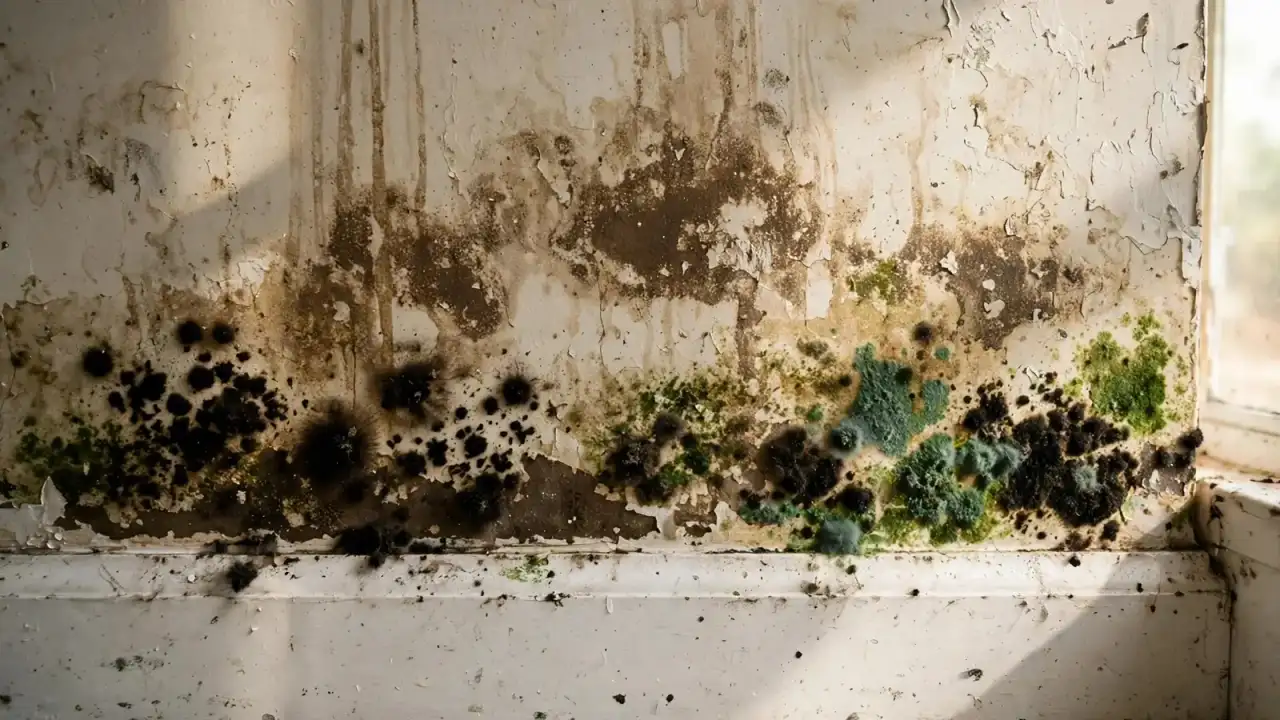
Fire scenes are often closed up and left for days while insurance and contractors are arranged. In summer, a closed, wet, hot house is close to ideal for mold. By the time cleanup begins, spots may already be visible on lower walls, cabinet bases and the back of baseboards.
Signs
Early signs of mold after a fire
Musty smell
An earthy odor different from smoke, often strongest in closets and lower rooms.
Spots on lower walls
Gray, green or black dots near the floor where water wicked up.
Stains spreading
Water marks that grow or change color.
Peeling or bubbling paint
Moisture trapped under the surface.
Soft or warped wood
Baseboards, cabinet bases and subfloors that stayed wet.
Allergy-like symptoms
Sneezing or irritated eyes that ease when you leave the house.
Prevention
Stopping mold before it starts
- 1
Start drying fast
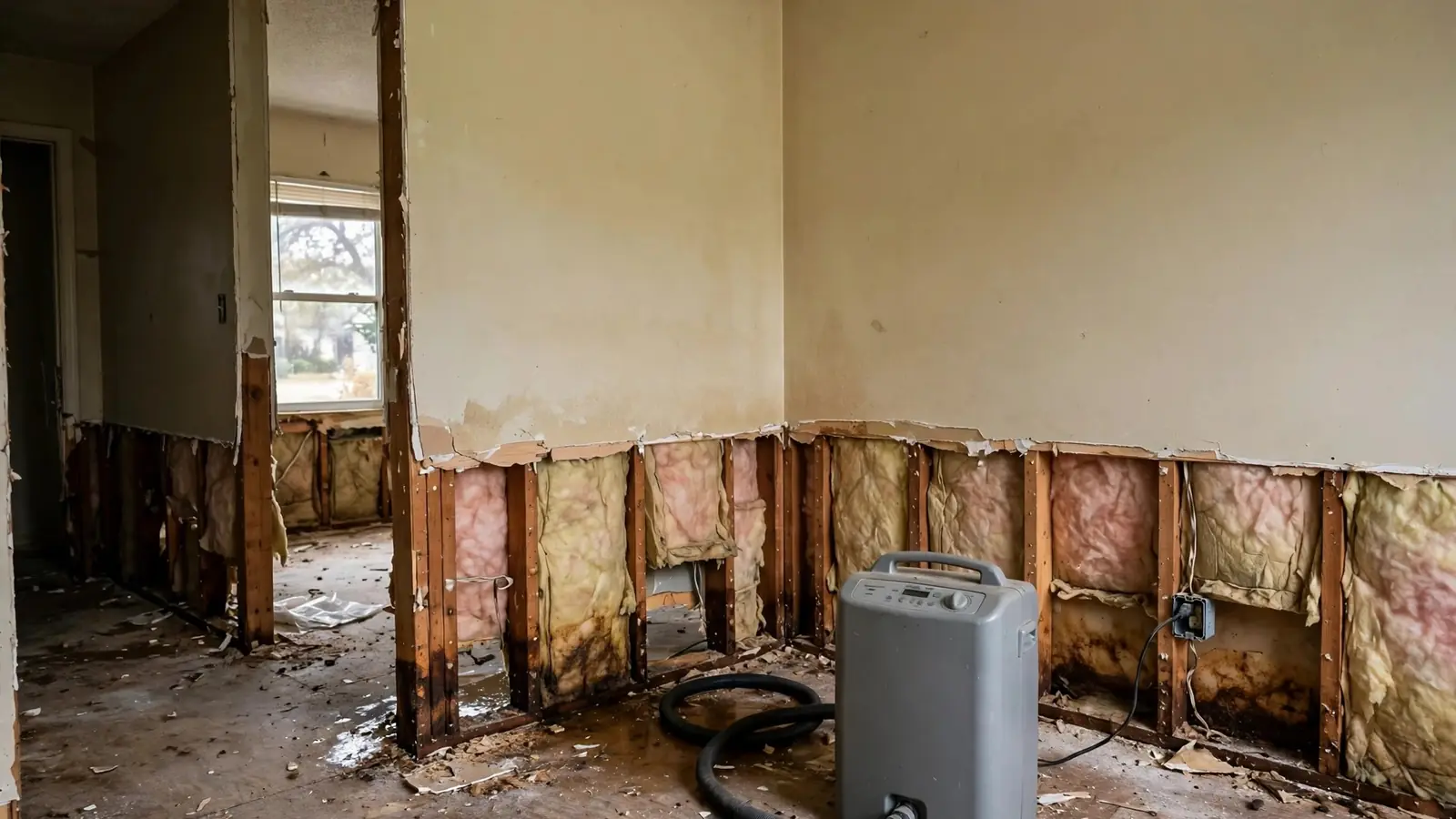
Extraction and dehumidifiers within the first day or two.
- 2
Strip out soaked materials
Soaked pad, insulation and drywall come out.
- 3
Keep the house closed
In humid weather, open windows add moisture.
- 4
Measure, do not guess
Moisture meters show when materials are truly dry.
- 5
Clean surfaces
Remove soot and debris that hold moisture.
DIY or professional
Who should handle what
| Situation | Who usually handles it |
|---|---|
| Small spots on hard surfaces | Homeowner with gloves and mask |
| Area larger than about 10 sq ft | Professional |
| Mold inside walls or ducts | Professional |
| Mold with sewage or contaminated water | Professional |
| Anyone in the home with health concerns | Professional |
Professional work
How professionals handle mold after a fire
Professional mold work after a fire usually blends with the drying and smoke work. The area is contained with plastic sheeting and negative air pressure so spores do not spread. Mouldy porous materials are removed and bagged. Framing is cleaned, dried and sometimes treated. HEPA vacuums and air scrubbers capture spores. Moisture readings confirm the area is dry before rebuilding starts. Some homeowners also choose independent testing to confirm the work, though the EPA notes that sampling is not usually needed when mold is visible.
Insurance
Insurance and mold
Many Texas homeowners policies limit coverage for mold, but mold that results directly from a covered fire and firefighting water may be treated differently from long-term leaks. Read your policy, report the fire promptly, and document drying efforts and dates. Delays in drying can complicate a claim, which is another reason to start quickly. The Texas Department of Insurance offers guidance on homeowners claims. [4]
Hidden places
Where mold hides after a fire
Visible spots on walls are only part of the story. Mold often grows first where nobody looks: behind baseboards, inside the bottom of wall cavities, under carpet pad, inside kitchen and bathroom cabinet bases, under vinyl flooring and, in pier-and-beam homes, on the underside of the subfloor. Attic insulation that got wet can grow mold above the ceilings. Ductwork that took in moist air can grow mold inside, spreading spores and odor every time the system runs.
A careful inspection after a fire includes these places, with moisture readings and, where needed, small inspection holes. Finding hidden moisture early is far easier than dealing with mold that has spread for weeks.
Materials
Mold risk by material
| Material | Risk | Usual action |
|---|---|---|
| Carpet pad | High | Remove |
| Drywall paper | High | Dry quickly or cut out |
| Insulation | High | Remove |
| Particleboard | High | Remove if swollen |
| Solid wood framing | Moderate | Dry and clean |
| Concrete slab | Low on its own | Dry before new flooring |
| Tile and metal | Low | Clean |
Climate
Houston's climate and drying
Houston's relative humidity is often high, particularly in summer mornings and after rain. Air that is already full of moisture cannot absorb much more, so open windows and fans alone dry a wet house slowly. Commercial dehumidifiers pull water from the air so materials can give up their moisture. Keeping the house closed while they run helps. If power is out after a storm, drying equipment may need a generator, which must run outside.
Information
What to tell the contractor
- When the fire happenedTime matters for mold risk.
- How much water was usedFirefighters may have used a lot.
- Whether the house has been closed upHeat and humidity speed growth.
- Any musty smellEven before visible spots.
- Health concerns in the householdAsthma, allergies or weak immune systems.
- Foundation typeSlab or pier-and-beam changes the work.
HVAC and mold
Ducts and the air conditioning
Air conditioning systems are designed to remove moisture, but after a fire they can spread problems. If the coil, drain pan or ducts took in soot and moist air, mold can grow inside them, and the system spreads spores and musty odor through the house each time it runs. Before restarting the system after a wet fire scene, have it inspected. Coils and pans can be cleaned; heavily contaminated flexible ducts are usually replaced. A clean, working system is one of the best long-term defenses against mold in a Houston home.
FAQ
Mold after fire questions
How soon can mold appear after a fire?
On wet materials, within one to two days in warm weather.
Can I bleach mold off drywall?
Bleach does not fix wet porous materials. Mouldy drywall is usually removed.
Is the musty smell mold or smoke?
Smoke smells burnt and sharp; mold smells earthy and damp. Both can be present.
Do I need a mold test?
Not usually if mold is visible; fixing moisture and removing growth matter more.
Will opening windows help?
In humid Houston weather, often not. Dehumidifiers work better.
Does insurance cover mold after a fire?
It depends on your policy. Report promptly and document drying.
Where does mold hide after a fire?
Behind baseboards, under carpet pad, in cabinet bases, wall cavities, attics and ducts.
Can a slab foundation grow mold?
The concrete itself rarely does, but flooring and materials on it can if the slab stays wet.
Can mold grow in my AC after a fire?
Yes, on coils, drain pans and duct liners. Have the system inspected before restarting.