
Key facts: Montrose
- Montrose was developed from 1911 as a residential subdivision west of downtown [1].
- The area mixes older single-family homes, garage apartments, multiplexes and townhomes.
- Fires in attached or closely spaced buildings often affect neighbors through shared walls and attics.
- Older homes may have lead paint and asbestos-containing materials [2].
- The covered ZIP code for Montrose on this site is 77006.
Coverage
Montrose ZIP codes on this line
Calls from these Montrose ZIP codes can reach an independent restoration contractor who works there.
- 77006Montrose and the surrounding streets between Allen Parkway, downtown, the Museum District and Shepherd.
About Montrose
Montrose at a glance
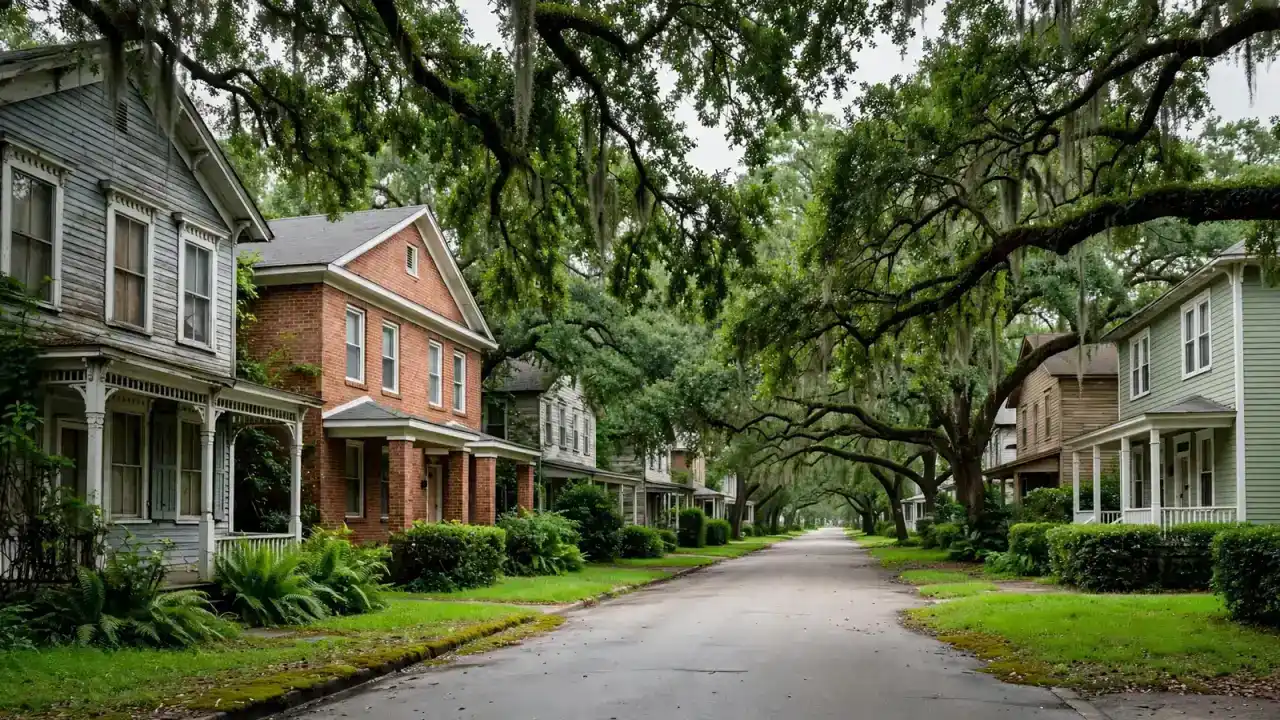
Montrose was laid out in the early twentieth century as an upscale residential area west of downtown. Over the decades it became one of Houston's most diverse and artistic neighborhoods, home to the Menil Collection, galleries, restaurants and a long-established LGBTQ community. Its housing reflects that history: original houses from the 1920s to 1940s, many divided into apartments, garage apartments behind main houses, small multiplexes, and newer townhomes and mid-rise buildings.
Lots are narrow and houses close together. Many older homes sit on pier-and-beam foundations; newer townhomes are on slabs. Mature trees shade the streets, and overhead power lines run along many alleys and back lots.
Housing
Housing types in Montrose
Original houses
Wood-frame or brick-veneer homes from the 1920s to 1940s, often updated.
Garage apartments
Small units above or behind a garage, sometimes rented separately.
Duplexes and fourplexes
Several units under one roof with shared attics.
Townhomes
Multi-story, attached, often with HOA-managed roofs and exteriors.
Mid-rise apartments
Larger buildings with sprinklers and managed restoration.
Converted commercial
Older buildings turned into lofts or mixed use.
Responsibilities
Who usually handles what
| Building type | Shared parts | Your part |
|---|---|---|
| Duplex you own and rent out | You, as owner | Tenant handles belongings |
| Townhome with HOA | HOA for roofs and exteriors, per documents | Your unit interior |
| Rented apartment | Landlord | Your belongings |
| Garage apartment behind your house | You, as owner | Tenant handles belongings |
| Condo | Association for common elements | Your unit, per bylaws |
Garage apartments
Garage apartments
Garage apartments are a Montrose tradition. They often have their own electrical sub-panel, small kitchen and window or mini-split cooling, and they sit close to the main house. A fire in a garage apartment can spread to the house or to a neighbor's garage across a narrow alley, and a fire in the main house can send smoke into the apartment. Each building is assessed separately, and if the apartment is rented, the tenant's belongings and temporary housing are part of the picture.
Electrical
Older wiring and multiple renovations
Many Montrose homes have been updated repeatedly over a century, sometimes by different owners with different standards. It is common to find a mix of old and new wiring, added circuits for window units and kitchens, and sub-panels in garage apartments. After a fire, all of this should be checked by a licensed electrician before power is restored. In Texas, electricians are licensed by the Texas Department of Licensing and Regulation, and licences can be checked online. [4]
Checklist
After a fire in a Montrose multiplex
- 1
Account for every unit
Make sure all residents are out and safe.
- 2
Notify all owners and tenants
In writing, with the date and what is known.
- 3
Photograph every unit
Including those without visible damage.
- 4
Secure shared openings
Roof and exterior boarding protects every unit.
- 5
Agree who does what
Owner, HOA, tenants and insurers.
- 6
Dry and clean in order
Starting with the worst-affected units.
Odor
Smoke and odor in older Montrose homes
Older homes here often have plaster or shiplap behind drywall, wood floors and attics with years of accumulated insulation. All of these hold smoke. Many also use window air conditioning units, which pull smoke inside if running during a fire and hold odor in their filters and coils. Window units are usually cleaned or replaced, and central systems where present are inspected. Closets and built-ins in older homes need careful cleaning.
Water
Water in raised and slab homes
Montrose has both raised older homes and slab-on-grade newer ones. Raised homes may hold water in the crawlspace; slab homes hold it under flooring and in the bottom of walls. In townhomes, water from an upper-floor fire runs down through two or three stories. Drying is planned floor by floor, with moisture readings at each level.
Townhomes
Townhomes and smoke on upper floors
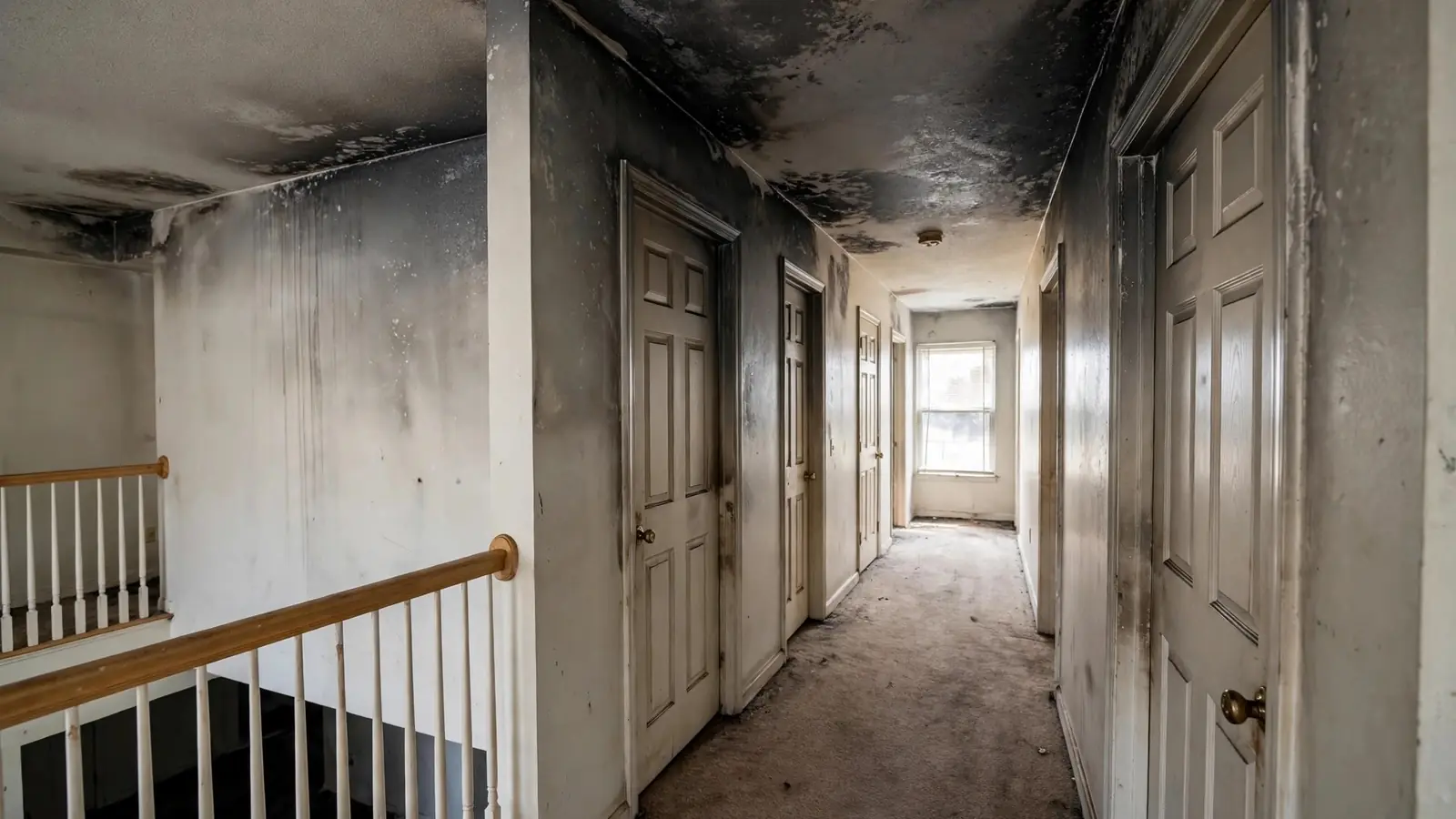
Montrose has many three-story townhomes, often with the garage on the ground floor, living space on the second and bedrooms on the third. A fire in the garage or kitchen sends smoke up the stairwell to the bedrooms. Each floor may have its own AC system or zone. Restoration usually starts at the top, where residue is heaviest, and includes all stairwell surfaces, which collect smoke as it rises.
Firefighting water on a second-floor fire runs down to the garage level. Ceilings and walls in the garage and first-floor rooms are often opened to dry framing.
Mixed use
Restaurants, bars and mixed-use buildings
Westheimer and Montrose Boulevard are lined with restaurants, bars and shops, some in converted houses next to residential lots. A commercial kitchen fire can send heavy grease smoke into neighboring homes and apartments. Residents next to commercial properties should check attics, vents and closets after any nearby fire and report residue to their insurer and the property owner.
Scenarios
Common Montrose fire scenarios
| Scenario | Usually involves |
|---|---|
| Kitchen fire in an older house | Smoke through rooms, attic and window units |
| Garage apartment fire | Apartment, main house, neighboring garage |
| Townhome garage fire | All floors via stairwell, shared walls |
| Fourplex fire | All units through shared attic |
| Fire at a nearby business | Smoke and grease residue in nearby homes |
Older foundations
Pier-and-beam homes in Montrose
Many original Montrose houses sit on piers with a crawlspace beneath. Firefighting water drains through floors into the crawlspace, and smoke drifts there through floor registers and gaps. Restorers check under the house, remove wet or smoky insulation, dry the crawlspace and joists, and look at any ductwork running below. Older wood floors above are dried slowly.
Renters
Renters in Montrose
A large share of Montrose residents rent, whether in a garage apartment, a unit in a converted house or a larger complex. Tenants should photograph damage, report it in writing, contact their renters insurer and keep receipts for temporary housing. Texas law addresses what happens to a lease when a unit becomes unusable after a fire. Our guide for renters after an apartment fire covers the steps.
Causes
Common fire starters in Montrose homes
Overloaded circuits
Older wiring running multiple window units and appliances.
Kitchen fires
In small, older kitchens close to living areas.
Extension cords
Common in older homes with few outlets.
E-bike and scooter batteries
Charged indoors in apartments and garages.
Candles
Close to curtains and bedding in small rooms.
Nearby commercial fires
Restaurants and bars on busy streets.
Batteries
Lithium-ion batteries in small spaces
E-bikes and scooters are popular in walkable inner neighborhoods like Montrose, and they are often stored and charged inside apartments, garage units and townhome garages. Lithium-ion batteries that are damaged, overcharged or poor quality can catch fire and burn intensely, filling small spaces with toxic smoke very quickly. The NFPA advises using the charger that came with the device, charging on hard surfaces away from exits, unplugging when charged and stopping use if a battery is damaged, swollen or hot.
Fires from these batteries often leave heavy, oily soot and strong chemical odor. Cleanup usually involves more removal of soft goods and porous materials than a typical small kitchen fire.
Timing
Restoration timeline for a Montrose duplex
| Stage | What happens |
|---|---|
| Day 1 | Securing, utilities checked, all units photographed |
| Days 1 to 5 | Drying in all affected units and the crawlspace |
| Week 1 to 2 | Testing older materials; soot and smoke cleaning |
| Weeks 2 to 4 | Odor treatment and sealing |
| After approvals | Rebuilding shared and unit areas |
Access
Parking, permits and street access
Montrose streets are narrow, with limited parking and frequent driveway-to-alley layouts. Dumpsters, drying trailers and box trucks need planning. Some placements in the street require permission from the city. A good contractor will explain where equipment will go, how long it will stay and how they will keep sidewalks and alleys usable. Telling neighbors in advance avoids friction.
Choosing help
What to ask a contractor in Montrose
- Have you worked on shared buildings?Coordination across units takes experience.
- Will you check neighboring units?Smoke and water often cross shared walls.
- How will you handle window AC units?They often hold smoke and need cleaning or replacing.
- Do you test older materials?Lead and asbestos are possible in older homes.
- Where will equipment go?Narrow streets need planning.
Art and collections
Museums, galleries and collections at home
Montrose's art scene means many residents keep paintings, prints, ceramics and books at home. Smoke and soot can damage artwork, and well-meaning cleaning can make it worse. Do not wipe soot off paintings, prints or photographs. Move them to a clean, dry space if safe, photograph them, and ask your insurer about a fine art conservator. Frames and glass can often be cleaned separately. Books and papers can be frozen if wet and later dried by a specialist.
Checklist
First steps for a Montrose homeowner
- 1
Get the all-clear from firefighters
Do not go back in until officials say so.
- 2
Notify your insurer and HOA
Both may need to be involved.
- 3
Tell neighbors and tenants
Especially in shared or close buildings.
- 4
Take photos of every unit and exterior
Including window units, attic and crawlspace vents.
- 5
Secure openings
Boards and tarps before the next rain.
- 6
Begin drying
In all affected units and floors.
Insurance
Insurance across several owners
When a fire affects a building with more than one owner or tenant, several insurance policies may be involved: the building owner's, an HOA master policy, unit owners' policies and renters policies. Each covers different parts. Keep your own records, share photos with whoever needs them, and ask each insurer what they need. The Texas Department of Insurance explains how homeowners and condo policies work and how to file claims.
Outside smoke
Smoke from wildfires and outside sources
Occasionally, smoke from grass fires, regional wildfires or industrial incidents reaches central Houston. Older Montrose homes with gaps around windows and doors let in more outside smoke than newer, tighter homes. Close windows, set AC to recirculate, run a HEPA air cleaner and replace filters afterwards. Our guide on smoke from industrial fires covers this in more detail.
Summary
Montrose fire damage summary
- Mixed housingHouses, garage apartments, multiplexes and townhomes.
- Shared structuresFires often affect neighbors.
- Older materialsTest for lead and asbestos before demolition.
- Window unitsOften hold smoke and need cleaning or replacement.
- Tight accessPlan equipment and parking with neighbors.
Character
Neighborhood character and rebuilding
Montrose has deed-restricted sections and areas with historic designation, along with streets where redevelopment is common. If a fire damages an older house badly, owners face choices about repairing, rebuilding in a similar style or redeveloping. Those choices involve insurance, deed restrictions, city rules and personal priorities. Restorers can explain what can be repaired and what cannot, but the decision is yours. Ask before demolition begins so options remain open.
Pets
Pets in apartments and townhomes
Pets in small apartments and townhomes are at high risk from smoke, which fills small spaces quickly. Pet alert stickers on doors can help firefighters. After a fire, pets exposed to smoke should see a veterinarian. Pet bedding, toys and crates usually need replacing. Pets should stay elsewhere until cleaning and odor treatment are finished.
Upper units
When the fire is in the unit above
In stacked units, such as fourplexes and older converted houses, water from fighting a fire upstairs pours into the unit below. The lower unit may have wet ceilings, light fixtures full of water and soaked carpet, even if no smoke reached it. Ceilings may need to be opened to drain water and dry framing between floors. Tenants and owners below should photograph damage, move belongings out of wet areas and stay clear of sagging ceilings.
Summary
Montrose after a fire: the short version
Expect a fire here to involve more than one household, more than one insurer and older materials that need testing. Get everyone out, wait for the all-clear, secure the building, and dry every affected unit quickly in Houston's humidity. Clean from the top down, deal with window units and attics, and treat odor at its source. Talk to neighbors, keep records, and ask contractors about their experience with older and shared buildings.
Finishes
Cleaning soot from older finishes
Older Montrose homes often have original wood floors, built-in shelves, glass-front cabinets, tile bathrooms and decorative trim. These finishes respond well to careful cleaning but can be damaged by harsh products or aggressive scrubbing. Restorers usually test cleaners on hidden spots, use dry methods first and hand-clean built-ins. Old tile and grout often clean well; heat-cracked tile is replaced to match where possible. Wood floors are cleaned, dried if wet and refinished once dry.
Checks
Signs smoke reached your unit from next door
- Gray film on ceilings along the shared wallSmoke crossed through the wall or attic.
- Odor in closetsClothing absorbs smoke first.
- Soot around outlets on the shared wallSmoke traveled through wall cavities.
- Stains on the ceilingWater came through from next door or above.
FAQ
Montrose fire damage questions
My neighbor's unit burned. Why does mine smell of smoke?
Smoke crosses shared attics and walls. Report it to the owner or HOA and photograph residue.
Who repairs the roof on a townhome after a fire?
Often the HOA, depending on your documents. Check before work starts.
Is a garage apartment assessed separately?
Yes. It is a separate structure with its own wiring and contents.
Can window AC units be cleaned after a fire?
Sometimes, but smoky units are often replaced.
What if a tree near the house was scorched?
Have an arborist check it for weak limbs.
Do I need an electrician after a small fire?
Yes, if wiring or outlets were involved or heat reached walls.
How do crews work on narrow streets?
They plan equipment and dumpsters with neighbors and keep alleys clear.
Does my renters insurance cover a fire next door?
It may cover your damaged belongings. Check your policy.
Why are the bedrooms worse than the kitchen in my townhome?
Smoke rises up the stairwell and collects on upper floors.
Can a restaurant fire damage my home?
Grease smoke can enter nearby homes through vents and gaps. Check and report residue.
Are e-bike battery fires hard to clean up?
Often. They leave heavy oily soot and strong odor, and more soft goods may need replacing.
Do I need city permission for a dumpster on the street?
Sometimes. Your contractor should know the rules for street placement.
Should I clean soot off my paintings?
No. Move them somewhere clean and dry if safe and ask about a conservator.
Who handles the claim for a shared building?
Several insurers may be involved: building owner, HOA, unit owners and renters.
My unit is below the fire. Why is everything wet?
Firefighting water travels down through floors and ceilings. Report it and stay away from sagging ceilings.
How long does restoration take in a shared building?
Often several weeks, longer if approvals or multiple insurers are involved.
Can tenants stay in undamaged units during repairs?
Sometimes, if smoke and water did not reach them and the building is safe.
Can old tile bathrooms be saved after smoke?
Usually. Glazed tile cleans well; grout may need deep cleaning or regrouting.
Who checks the electrical sub-panel in a garage apartment?
A licensed electrician, before power to that building is restored.
Should neighbors be told before restoration starts?
Yes. It helps with access, parking and noise from equipment.