
Key facts: Generators and outages
The risk
Why outages lead to fires
Long outages change how people live for a few days. Rooms are lit with candles and lanterns. Food is cooked on camp stoves and grills. Portable generators run fridges, fans and window units through extension cords snaking into the house. Fuel is stored in garages in cans. Tired, hot people make mistakes. Each of these raises the chance of a fire or carbon monoxide poisoning.
After major storms, Houston-area hospitals have treated many people for carbon monoxide poisoning, often from generators run in garages or too close to open windows. Fires from candles and from generators refuelled while hot are also common after storms.
Generators
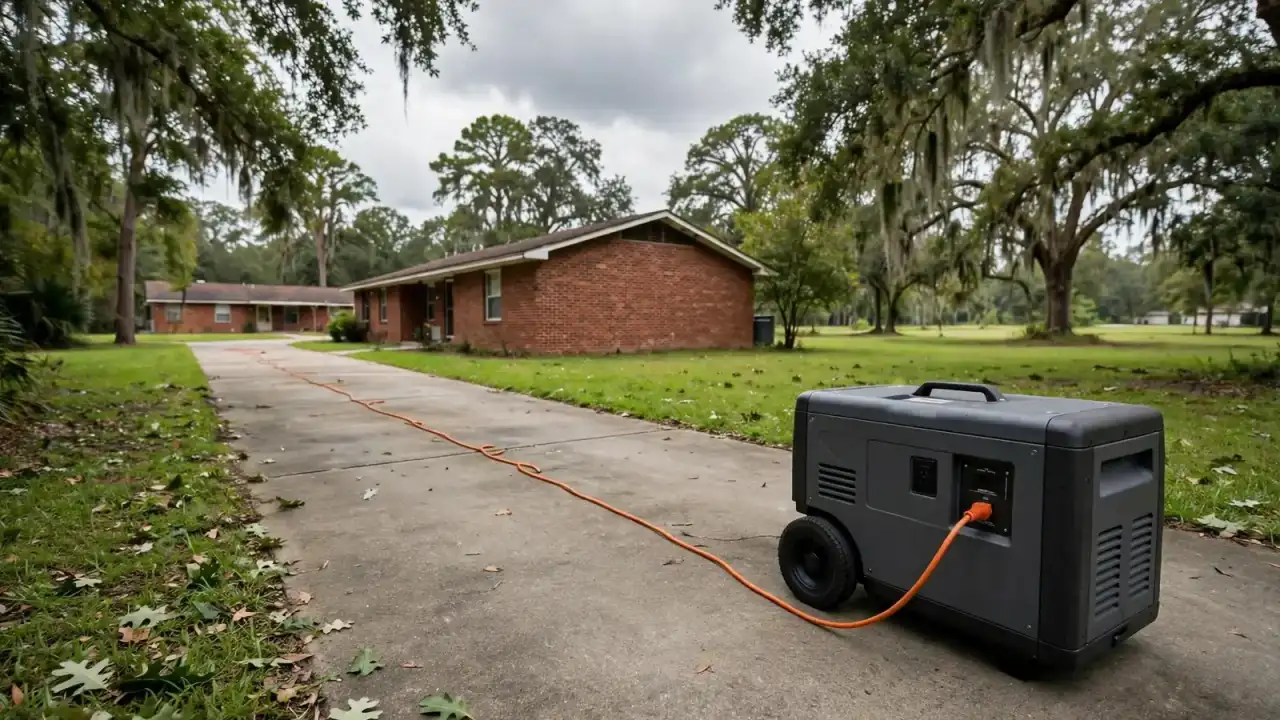
Running a portable generator safely
Most generator deaths and fires come from a handful of avoidable mistakes.
- 1
Outside only
Never in a house, garage, carport, shed or on a covered porch, even with doors open.
- 2
Far from openings
Place it well away from doors, windows and vents, with exhaust pointed away from the house.
- 3
Dry and level
Keep it on a dry surface; a canopy built for generators helps in rain.
- 4
Cool before refuelling
Turn it off and let it cool; spilled fuel on a hot engine can ignite.
- 5
Heavy outdoor cords
Use outdoor-rated cords sized for the load; do not run them under rugs.
- 6
No backfeeding
Never plug a generator into a wall outlet. A transfer switch installed by a licensed electrician is the safe way to connect to house wiring.
Alternatives
Safer choices during an outage
| Need | Riskier choice | Safer choice |
|---|---|---|
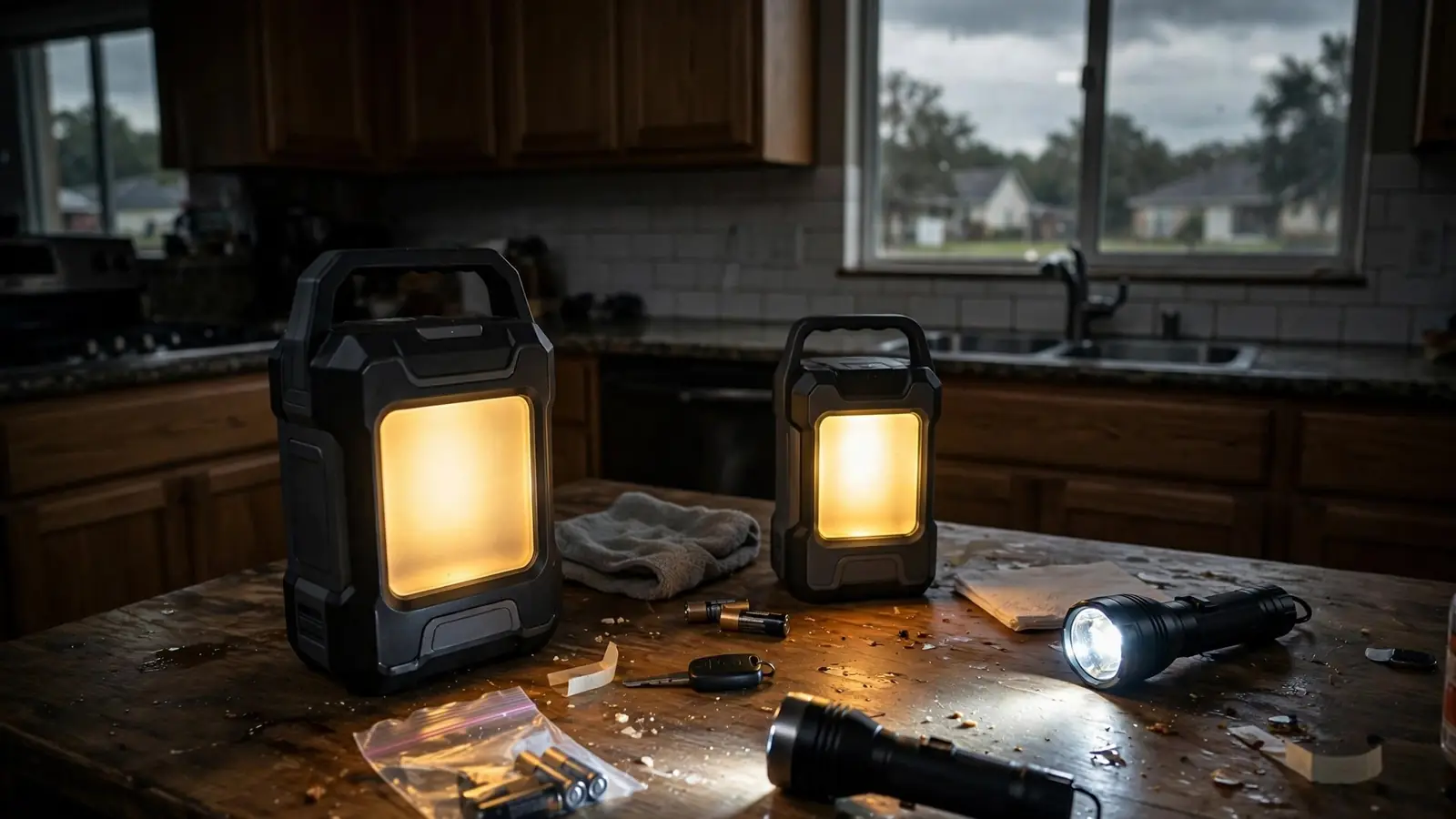
| Light | Candles | Battery lanterns and flashlights |
| Cooking | Grill or camp stove indoors | Grill outdoors, away from the house |
| Cooling | Running a generator in the garage | Generator outside, or a cooling center |
| Fuel storage | Cans in the house | Approved cans in a ventilated shed |
| Charging phones | Car idling in a garage | Car outside or battery packs |
Flames indoors
Candles and camp stoves
If you must use candles, put them in sturdy holders on stable surfaces away from curtains, bedding and anything that can fall over, and never leave them burning in empty rooms or while sleeping. Keep them away from children and pets. Camp stoves, charcoal grills and propane heaters designed for outdoor use produce carbon monoxide and belong outside.
Heat
Heat during outages
Houston outages often happen in summer, when indoor heat becomes dangerous, especially for older adults, young children and people with health conditions. The National Weather Service publishes heat safety advice. If your home becomes too hot, go to a public cooling center or stay with family who have power, rather than running generators or engines in enclosed spaces to cool the house.
Restoring power
After the power comes back
- 1
Check for damage first
Look for water near outlets and appliances before switching back on.
- 2
Turn appliances on gradually
Avoid surges from everything restarting at once.
- 3
Watch for burning smells
Turn off and unplug anything that smells hot.
- 4
Replace the AC filter
Outage smoke, dust and soot collect in filters.
- 5
Put generators away safely
Let them cool, store fuel safely and check cords for damage.
If it goes wrong
If a fire happens during an outage
Get everyone out and call 911 from outside. Firefighters may take longer to arrive after a storm because of blocked roads, so do not go back in for belongings. Once the fire is out, the usual recovery steps apply, with an added urgency: storms may have left the house without power for drying equipment, and rain may still be coming. Covering openings and starting to dry the house quickly matter more than ever.
Preparation
Preparing before storm season
The best time to think about generator safety is in May, before hurricane season starts. Run the generator briefly outside to make sure it starts. Check cords for cuts and frayed ends. Buy fresh fuel stabiliser and approved fuel cans. Test smoke and carbon monoxide alarms and keep spare batteries. Decide where the generator will sit, well away from the house, and how cords will reach inside without passing through a window that must stay open.
If you plan to connect a generator to your home's wiring, have a licensed electrician install a transfer switch or interlock well ahead of time. In Texas, electricians are licensed by the Texas Department of Licensing and Regulation, and you can check a licence online.
Permanent units
Standby generators
Many Houston homeowners installed permanent standby generators after recent storms. These run on natural gas or propane, start automatically and are installed outside with proper clearances. They are much safer than portable units run by tired people at night, but they still need regular servicing, clear space around them and working carbon monoxide alarms inside. Keep plants, fences and stored items clear of the unit's exhaust and air intake.
Kit
Outage safety kit
- Battery lanterns and flashlightsSafer than candles in every room.
- Carbon monoxide alarmsBattery-powered or with battery backup.
- Fire extinguisherKept where you can reach it, not near the stove.
- Heavy outdoor extension cordsRated for the load.
- Approved fuel cansStored away from the house.
- Battery power banksFor phones and small devices.
- Cooler and iceTo keep food and medicines cool.
- Printed contact listIn case phones run out of charge.
Looking out
Older relatives and neighbors
Older adults living alone are at particular risk during outages, both from heat and from unsafe use of generators, candles or stoves. Check on older relatives and neighbors before and after storms, help them set up generators safely or get to a cooling center, and make sure their smoke and carbon monoxide alarms work.
FAQ
Outage and generator questions
Can I run a generator in my open garage?
No. Carbon monoxide builds up even with the door open and can seep into the house.
How far from the house should a generator be?
Well away from doors, windows and vents, with the exhaust pointing away from the home. Follow the maker's instructions.
Are candles safe during an outage?
Battery lights are far safer. If you use candles, never leave them unattended.
Do I need a CO alarm?
Yes, on every level and near sleeping areas, with fresh batteries before storm season.
Can I plug my generator into a wall outlet?
No. Backfeeding can kill utility workers and start fires. Use a transfer switch installed by a licensed electrician.
What if my CO alarm goes off?
Get everyone into fresh air immediately and call 911.
Should I test my generator before hurricane season?
Yes. Start it outside, check cords and confirm fuel is fresh.
Are standby generators safer?
Generally, if professionally installed and serviced, but CO alarms are still needed inside.