
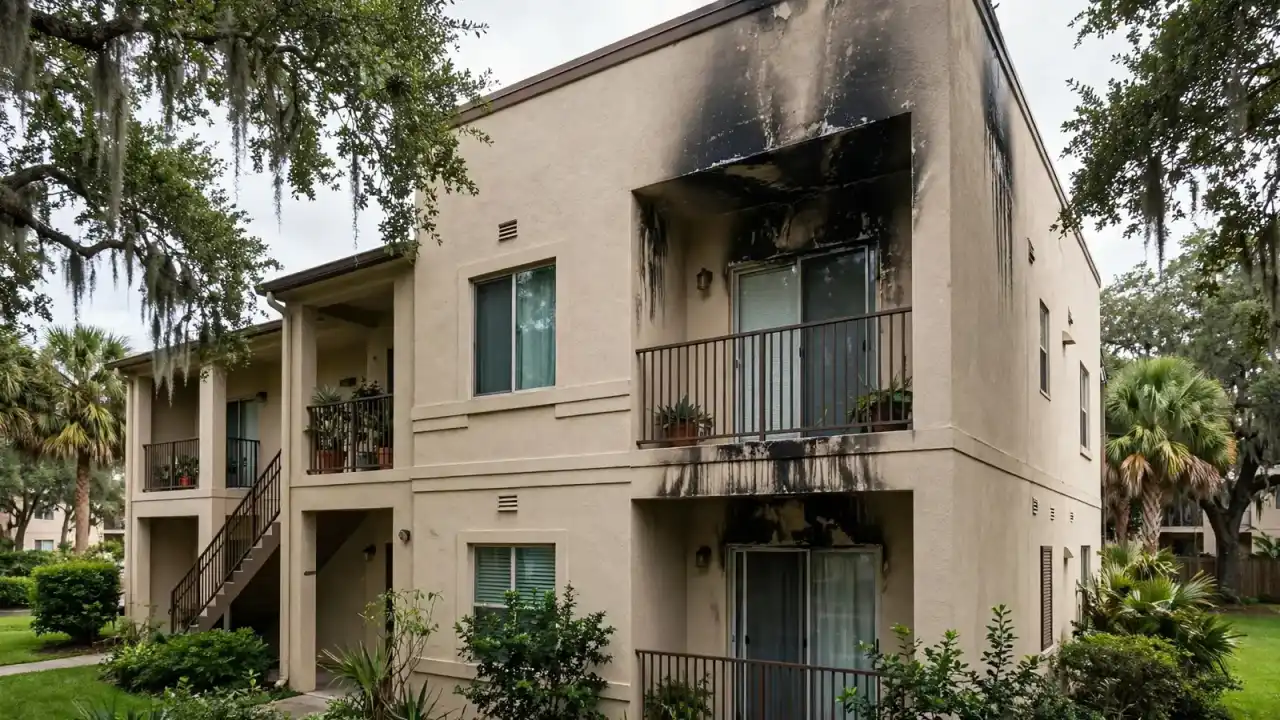
Key facts: Renters after a fire
- Texas law addresses leases when a rental is damaged by fire or other casualty [1].
- Landlords usually handle the building; renters insurance covers tenants' belongings if they carry it.
- Smoke and water often reach neighboring units.
- Written notice to the landlord creates a record.
Right away
First steps for tenants
These steps protect both your safety and your claim.
- 1
Get to safety
Leave the building and stay out until fire officials say it is safe.
- 2
Find somewhere to stay
Family, friends, the Red Cross or a hotel if your policy covers it.
- 3
Photograph your unit
Every room, ceilings, closets and belongings.
- 4
Notify the landlord in writing
Email or letter describing damage and the date.
- 5
Call your renters insurer
Report the loss and ask about temporary housing.
- 6
Keep receipts
Hotels, meals, laundry and replacement essentials.
Responsibilities
Who is responsible for what
In general, the property owner is responsible for the building: walls, ceilings, floors, fixtures, built-in appliances, the roof and shared systems. Cleaning soot from walls and ceilings and drying the structure usually falls to the owner and their insurer. Your own belongings, furniture, clothing and electronics are your responsibility and are covered by renters insurance if you have it. Renters insurance may also cover additional living expenses if you cannot stay in the unit.
Texas Property Code section 92.054 addresses what happens when a rental becomes totally or partly unusable because of a casualty such as fire [1]. If the unit is totally unusable for residential purposes, either the tenant or the landlord may be able to end the lease with written notice before repairs are finished, provided the tenant did not cause the damage. Leases can change these terms, so read yours and consider getting legal advice.
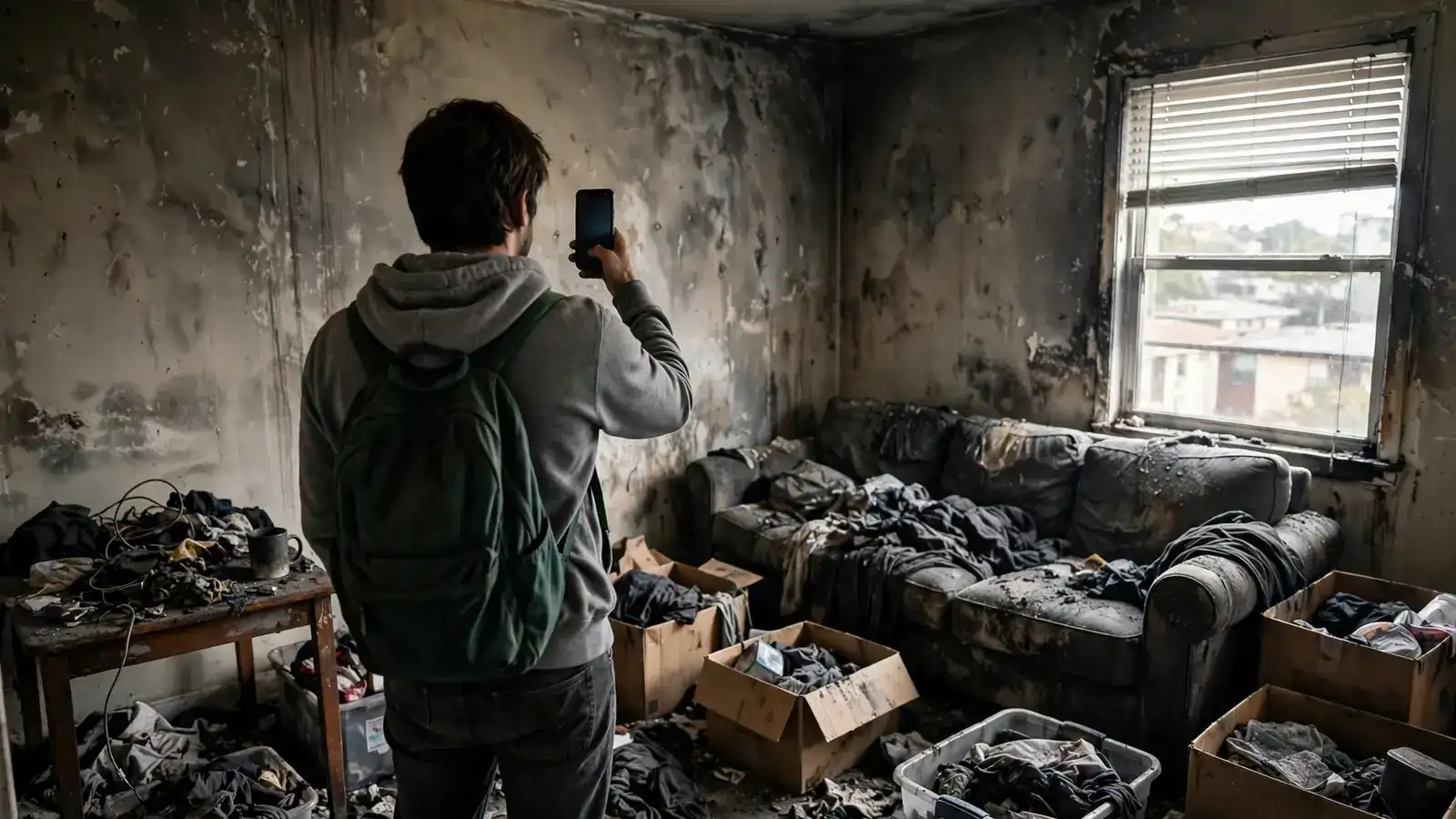
Neighboring units
If the fire was next door
Look for residue
Wipe a high surface; gray on the cloth means smoke came through.
Check closets
Clothes along shared walls often smell first.
Watch ceilings
Water stains may appear days later.
Report in writing
Tell management what you see and ask what will be cleaned.
Ask about the HVAC
Shared or adjacent systems may carry residue.
Landlord
Questions to ask your landlord
| Question | Why it matters |
|---|---|
| When can I return? | Plan housing and work |
| What will be cleaned in my unit? | Walls, ceilings, carpet, ducts |
| Will the AC system be cleaned? | Smoke in ducts keeps returning |
| What happens to rent while I am out? | Your rights may depend on the lease and the law |
| Can I get my belongings out? | Access for cleaning or moving |
| Is the building safe? | Structural and electrical checks |
Contents
Belongings and renters insurance
Make a list of damaged belongings with descriptions, approximate age and photos. Receipts help but are not always required. Ask your insurer whether they will pay for professional cleaning of clothing and items that can be restored, and which items they consider total losses. Do not throw anything away until the adjuster has seen it or agreed. If you do not have renters insurance, the Red Cross and local organizations may help with immediate needs.
Moving out
Security deposits and moving out
If the lease ends because of the fire, Texas law generally provides for the return of the security deposit, minus lawful deductions, and prorated rent where applicable. Give a forwarding address in writing. Keep copies of every letter and email. If you disagree with your landlord, free legal aid organizations in Houston can advise tenants.
Housing
Finding a place to stay
If you cannot stay in your unit, the American Red Cross often helps people displaced by home fires with immediate needs such as temporary lodging, food and clothing. Your renters insurance may pay additional living expenses while the unit is repaired. Some landlords can move tenants to a vacant unit in the same complex. Keep every receipt and ask your insurer what limits apply.
Inventory
Documenting your belongings
- 1
Go room by room
Photograph each wall, shelf and closet.
- 2
Open drawers and cabinets
Smoke gets inside; photograph contents.
- 3
List each item
Description, brand, approximate age.
- 4
Note damage type
Smoke, soot, water, heat.
- 5
Keep damaged items
Until your insurer says you can dispose of them.
- 6
Back up the list
Email it to yourself or store it online.
Pets
Pets and apartment fires
Pets are often frightened and may hide after a fire. If a pet is missing, tell firefighters and building management and check nearby hiding places when it is safe. Pets exposed to smoke should see a veterinarian, as smoke can affect their lungs. If you move to temporary housing, confirm pets are allowed or arrange boarding.
Other renters
Students and short-term tenants
Houston has large student populations around the University of Houston, Rice and Texas Southern, many in apartments near campus. Students should check whether their belongings are covered by a parent's homeowners policy or need separate renters insurance, and should tell their university if a fire affects housing, as student services may be able to help with emergency support.
Moving back
Repairs and returning home
Before moving back in, walk through the unit with management if possible. Check that walls and ceilings were cleaned or repainted, carpet was cleaned or replaced, the AC filter was changed and the ducts were cleaned if smoke reached them, and that smoke alarms work. Run the AC and smell the vents. Open closets and cabinets. If anything still smells of smoke or looks dirty, report it in writing before you sign anything that says the unit is acceptable.
Keep copies of all correspondence with your landlord and insurer for at least the length of your lease, in case questions come up later about your deposit or belongings.
FAQ
Renter questions after a fire
Do I still have to pay rent after a fire?
It depends on whether the unit is usable, your lease and Texas Property Code 92.054. Get advice if unsure.
Who cleans smoke in my apartment?
The landlord usually handles the structure; your belongings fall to you and your insurer.
Does renters insurance pay for a hotel?
Many policies include additional living expenses. Check yours.
Can I break my lease after a fire?
If the unit is totally unusable, Texas law may allow either side to end it with written notice.
My neighbor's fire left my unit smoky. What now?
Photograph, report in writing and ask what cleaning is planned.
Where can I get help if I have no insurance?
The American Red Cross and local charities may help with immediate needs.
Will the Red Cross help me after an apartment fire?
The Red Cross often helps displaced residents with immediate needs such as lodging, food and clothing.
Should I keep damaged belongings?
Yes, until your insurer agrees you can dispose of them.
What should I check before moving back in?
Clean walls and ceilings, clean carpet, a new AC filter, no smoke smell in vents or closets, and working smoke alarms.