
Key facts: Dryer vent fires
The cause
How dryer fires start
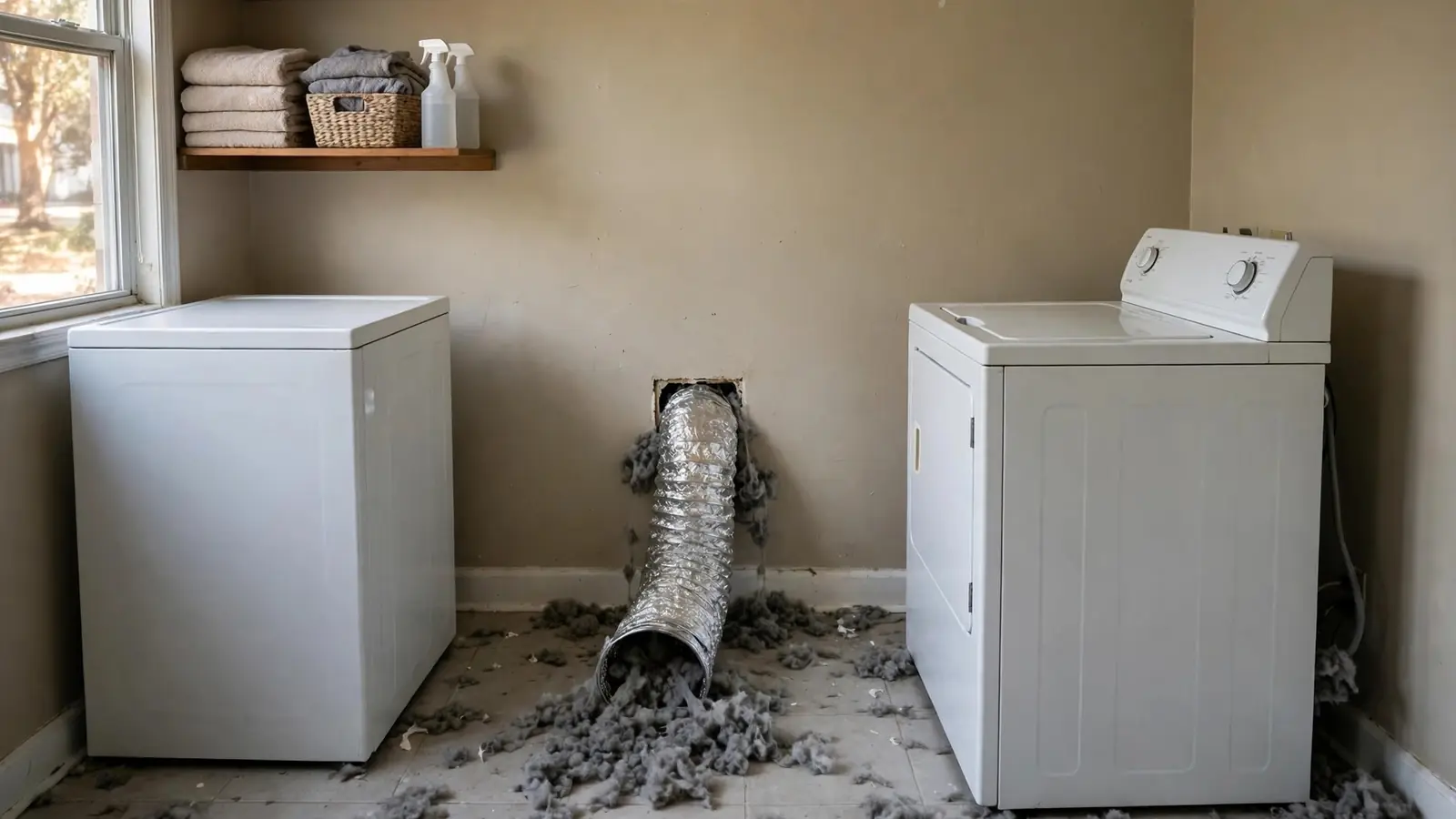
Every load sheds fibers. Most are caught by the lint screen, but some pass through and settle inside the dryer cabinet and along the vent duct. Lint is fine, dry and flammable. When airflow is restricted, the dryer runs hotter, and a spark or hot element can ignite the lint. The fire can then travel along the duct inside a wall or attic.
Houston homes add a few local factors. Humid air means clothes take longer to dry, so dryers run more. Many laundry rooms sit in the middle of the house, with vents running through walls or up to the roof. Long runs, bends and roof caps clogged with lint or nests all reduce airflow.
Signs
Warning signs
Clothes take longer to dry
Often the first sign of a blocked vent.
Dryer feels very hot
The cabinet or clothes are unusually hot.
Burning smell
Stop the dryer and check immediately.
Little air at the outside vent
The flap barely moves while the dryer runs.
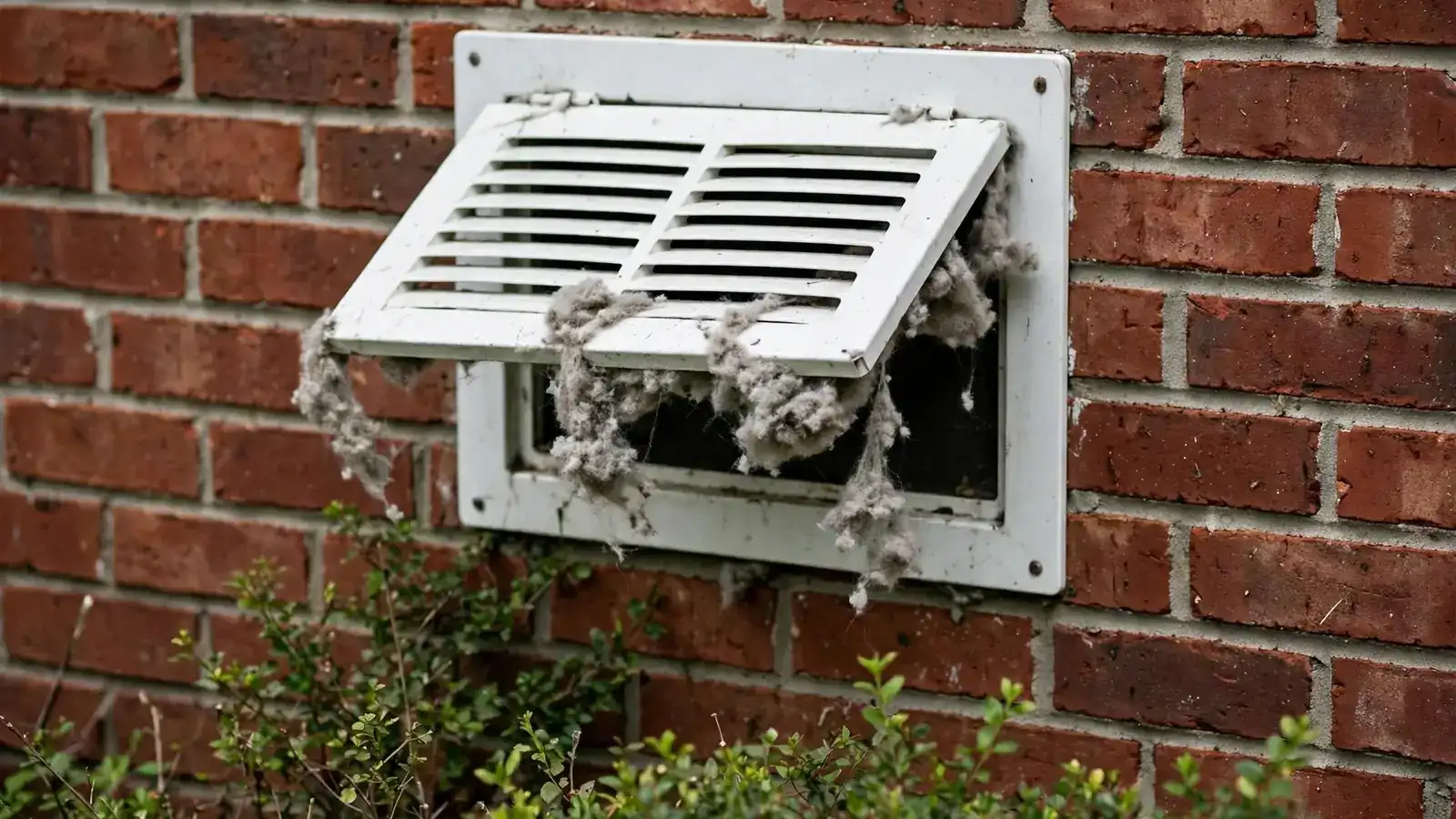
Lint around the door or outside hood
Lint is backing up.
Humid laundry room
Moist air is not leaving the house.
Prevention
Keeping dryer vents safe
- 1
Clean the lint screen every load
And wash it occasionally if fabric softener residue builds up.
- 2
Clean the duct regularly
Many homes need a yearly cleaning; long runs may need more.
- 3
Use metal ducting
Rigid or semi-rigid metal duct instead of plastic or thin foil.
- 4
Keep runs short and straight
Fewer bends mean less lint buildup.
- 5
Check the outside hood
Make sure the flap opens and nothing is nesting.
- 6
Do not run it unattended
Avoid leaving the dryer on when you go out or go to sleep.
After the fire
Cleanup after a dryer fire
Dryer fires often look small but spread smoke and soot through the house, especially when the laundry room is central. The dryer itself is usually replaced. The vent duct is removed, and if the fire traveled inside the wall or attic, those areas are opened to check framing and insulation. Soot from burned lint and clothing is typically oily, and odor can spread through the air conditioning.
Cleanup follows the usual order: make safe, dry any firefighting water, clean soot and smoke, deal with odor, then repair. A licensed electrician should check the dryer circuit, and a gas line check is needed for gas dryers.
Materials
Dryer duct materials
| Type | Fire safety |
|---|---|
| Rigid metal | Best; smooth walls trap less lint |
| Semi-rigid metal | Good for the short connection behind the dryer |
| Thin foil accordion | Easily crushed; traps lint |
| White plastic or vinyl | Not recommended; can melt and burn |
Layouts
Vent runs in Houston homes
In many single-story ranch homes, the laundry room is on an outside wall and the vent is short and simple. In newer two-story homes and townhomes, laundry rooms are often upstairs or in the middle of the house, with vents running long distances through walls or ceilings to the roof. These long runs collect more lint, and roof vents can be blocked by lint, debris or birds' nests. A dryer manufacturer's manual usually states the maximum vent length allowed, reduced for each bend.
Professional cleaning
Hiring a vent cleaner
Professional dryer vent cleaning uses brushes and air to clear the full length of the duct, including the outside or roof termination. Ask the company to show you the lint removed, check the airflow afterwards and tell you if the duct is crushed, disconnected or made of unsuitable material. Long roof runs may need cleaning more than once a year. If a vent passes through the attic, ask them to check joints for leaks that could fill insulation with lint.
Checklist
Signs your vent needs cleaning
| Check | What it tells you |
|---|---|
| Drying time | Longer cycles suggest blockage |
| Outside flap | Should open well while running |
| Laundry room humidity | Damp air means poor venting |
| Lint behind the dryer | Leaks at the connection |
| Burning smell | Stop immediately |
Other risks
Other laundry room fire risks
- Oily rags in the dryerRags with oil, stain or solvent can self-heat and ignite.
- OverloadingToo many clothes restrict airflow.
- Extension cordsDryers should plug directly into a proper outlet.
- Storage near the dryerKeep boxes, detergents and clothes clear of the dryer.
- Rubber-backed itemsSome labels warn against high heat.
Gas dryers
Gas dryers and carbon monoxide
Gas dryers burn natural gas or propane to make heat, and their exhaust contains carbon monoxide. A blocked or disconnected vent can push that exhaust back into the house. Keeping the vent clear protects against both fire and carbon monoxide. A carbon monoxide alarm near the laundry room and sleeping areas is a sensible precaution in any home with gas appliances. If the alarm sounds, get everyone out and call 911.
FAQ
Dryer vent questions
How often should dryer vents be cleaned?
Many homes need it about once a year; long runs and big families may need more often.
Is a plastic dryer duct safe?
No. Use rigid or semi-rigid metal.
Why do my clothes take so long to dry?
A blocked vent is a common cause. Check it before it becomes a fire risk.
Can a dryer fire spread into the attic?
Yes, along the vent duct. Firefighters and restorers check the full run.
Does a dryer fire need professional cleanup?
Often, because oily soot and smoke spread beyond the laundry room.
Who checks the gas line after a gas dryer fire?
A qualified plumber or the gas utility.
Can oily rags catch fire in a dryer?
Yes. Rags with oil, stain or solvent can self-heat. Do not dry them in the dryer.
Why is my dryer vent on the roof?
Upstairs or central laundry rooms often vent through the roof, which needs regular checks.
Can a blocked gas dryer vent cause carbon monoxide?
Yes. Exhaust can back up into the home. Keep vents clear and install CO alarms.
Who cleans dryer vents in an apartment?
Usually the property owner. Report slow drying or burning smells in writing.