
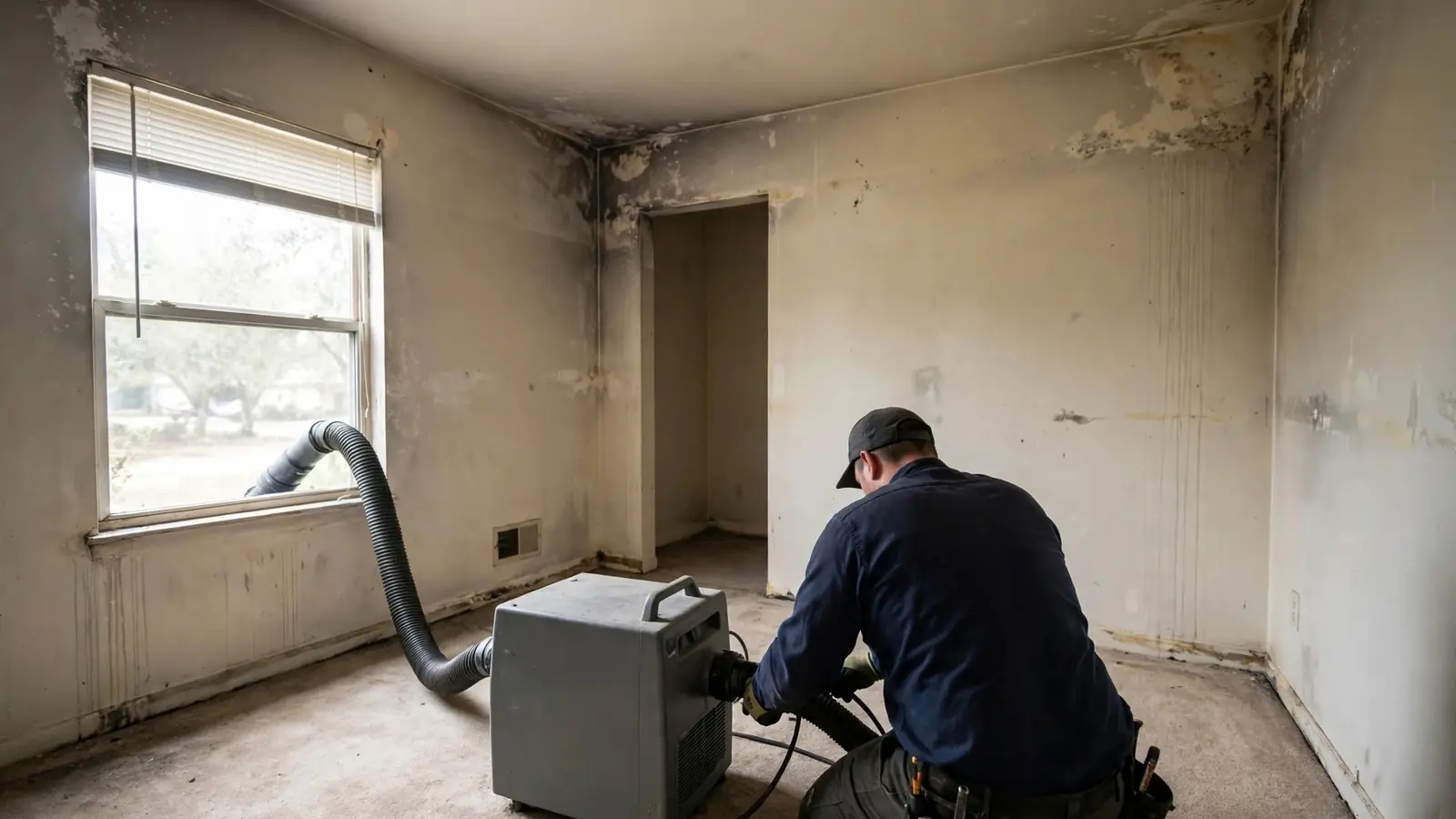
Key facts: Odor Removal
- Smoke odor comes from gases and residue held in porous materials.
- Humidity and heat release trapped odor, so smells can return on muggy days.
- Deodorizing without removing residue only masks smell for a time.
- The EPA advises that ozone generators should not be used in occupied spaces [1].
- The IICRC S700 covers odor control as part of fire and smoke restoration [2].
The cause
Why smoke smell is so stubborn
Smoke odor is made of thousands of chemical compounds. Some cling to surfaces as residue; others are gases small enough to soak deep into drywall paper, wood grain, insulation fibers, foam and fabric. As long as those materials stay in the home, they slowly release what they absorbed. That is why a home can look spotless and still smell of fire.
Warmth and moisture speed up that release. On a hot, humid Houston day, odor that seemed gone in the cool morning can be strong again by afternoon. Air conditioning cycling on and off moves that odor around the house. Lasting odor removal therefore focuses on sources, not air.
Sources
Where odor hides
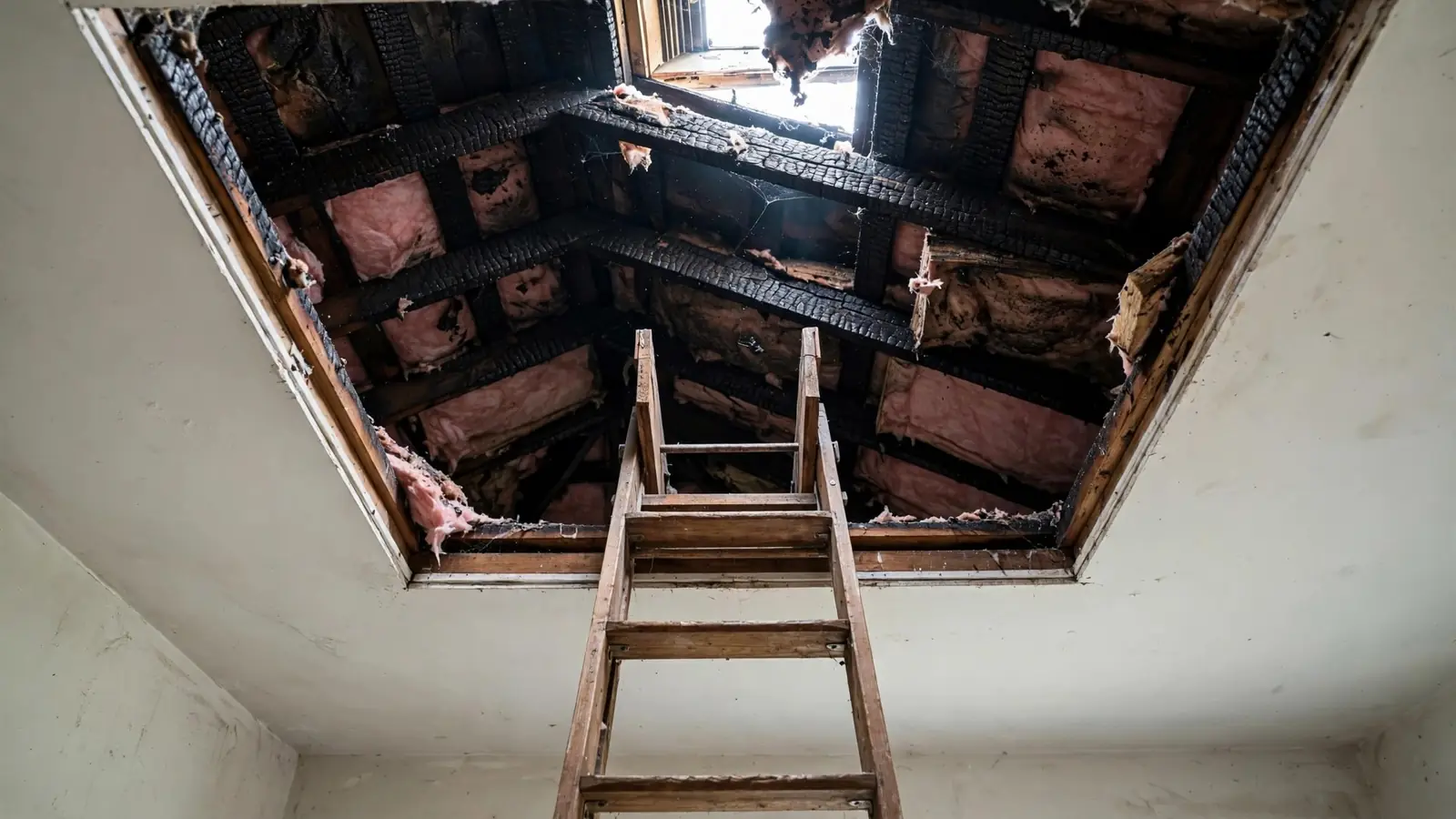
Attic insulation
Blown insulation acts like a filter and holds smoke for years.
Ducts and the air handler
Residue inside spreads smell every time the system runs.
Carpet pad
Foam under carpet absorbs smoke and water.
Upholstery and mattresses
Deep foam layers trap odor.
Wall cavities
Smoke enters through outlets and gaps around fixtures.
Closets
Clothing and shelves in closed spaces soak up smoke.
The method
How lasting odor removal works
Each step removes a layer; skipping one usually means the smell returns.
- 1
Find the sources
Smell and inspect every room, closet, the attic and the system.
- 2
Remove what cannot be saved
Charred materials, smoky insulation and pad come out.
- 3
Clean every surface
Residue is cleaned from ceilings, walls, cabinets and contents.
- 4
Treat the air system
Filters replaced, coil and blower cleaned, ducts cleaned or replaced.
- 5
Deodorize
Thermal fogging, hydroxyl units or ozone in empty homes.
- 6
Seal
Odor-blocking primer on framing and walls that held smoke.
- 7
Recheck
Rooms are checked after warm, humid days before sign-off.
Methods
Deodorizing methods compared
| Method | How it works | Can people stay? |
|---|---|---|
| Thermal fogging | Heated deodorant follows smoke's path into gaps | No, during treatment |
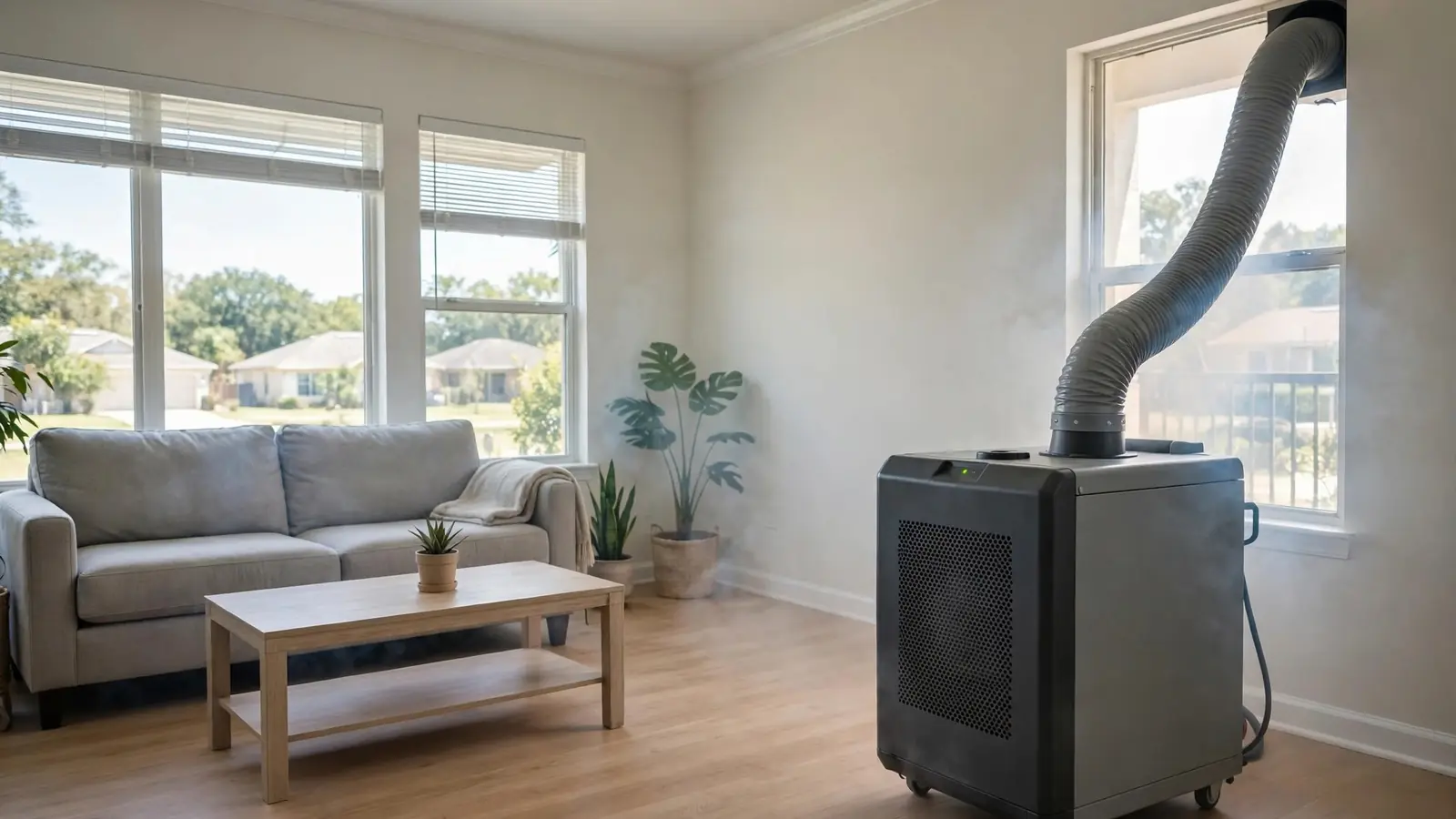
| Hydroxyl generators | UV light makes hydroxyl radicals that break odor down | Usually yes |
| Ozone | Strong oxidizer breaks down odor molecules | No; empty buildings only |
| Activated carbon | Air scrubbers capture odor gases | Yes |
| Sealing primer | Locks remaining odor in framing and drywall | Yes, with ventilation |
Local conditions
Houston humidity and odor
Humidity is the main local reason odor jobs fail. Damp materials hold odor more strongly and release it as temperatures rise. Materials that stayed wet after firefighting can also start to grow mold, which adds a musty smell on top of smoke. Good contractors dry the home properly first, run dehumidifiers through the odor work and recheck rooms on humid days before calling the job finished.
Houston's long cooling season matters too. Systems run for much of the year, so any residue left in ducts or on the coil spreads smell every day. Duct work is not an optional extra on most fire jobs here.
At home
What you can do now
Change the AC filter and keep the system off until it has been checked, if you can stay elsewhere. Bag smoky clothing and linens for professional cleaning. Remove food from the pantry and fridge if it was exposed to smoke or heat.
Avoid scented sprays, plug-in fresheners and candles; they mix with smoke odor and make it harder to judge progress. Open windows only on clean-air days, and run a dehumidifier if power is safe.
- New filter, system off
- Bag smoky fabrics
- No air fresheners
- Dehumidifier if safe
- Discard exposed food
Belongings
Contents and odor
Clothing, curtains, bedding and soft toys often respond to professional smoke laundering, which uses products that break down odor rather than masking it. Leather and electronics need specialist cleaning. Books and papers can be treated in odor chambers. Some upholstered furniture and mattresses that absorbed heavy smoke cannot be cleared and are replaced. Keep an itemized list with photos of anything thrown away.
Garage odor
Vehicles and garages
In a garage fire, cars parked inside can absorb smoke through vents and seals. Vehicle interiors need their own cleaning, usually through the vehicle's insurer and a specialist detailer or dealer. Garage walls and ceilings often need sealing after cleaning because unfinished drywall and framing absorb so much odor.
Timing
How long each odor step can take
| Step | Typical time |
|---|---|
| Source removal | One to several days |
| Surface cleaning | Days to a couple of weeks |
| Thermal fogging | Hours, then airing out |
| Hydroxyl treatment | Several days of running |
| Ozone (empty homes) | Hours to days, then ventilation |
| Sealing and painting | A few days |
Results
Signs odor removal was done right
- No smell after a warm, humid dayThe real test in Houston.
- No smell when the AC startsDucts and coil are clean.
- Closets smell neutralHidden spaces were treated.
- No perfumed cover scentOdor was removed, not masked.
- Written description of methodsYou know what was done and where.
Odor types
Different fires, different smells
Restorers often describe smoke odor by where it came from, because each type behaves differently. A wood or paper fire leaves a dry, campfire smell that usually clears with cleaning and airing. Burned plastics, foam and electronics leave a sharp chemical smell that clings to every soft surface. Burned food leaves a pungent, greasy smell that is surprisingly strong for how little residue can be seen. Electrical fires leave the acrid smell of melted wire insulation, often concentrated in one wall or ceiling.
Knowing the source helps choose the method. Protein odor from kitchens needs specific cleaners and thorough cabinet work. Plastic odor usually means more soft goods and insulation are replaced. Electrical odor points to wall cavities that need opening. A contractor who asks what burned is starting in the right place.
Ranch homes
Odor in single-story ranch homes
Many Houston neighborhoods, from Spring Branch to Meyerland, are full of single-story brick ranches built from the 1950s through the 1970s. In these homes, the attic runs over every room, and the air handler and ducts are usually up there too. Smoke that rises into the attic settles into the insulation over the entire house, so a kitchen fire can leave a whole-house smell.
Odor work on a ranch home nearly always includes the attic: inspecting insulation, removing it where it smells of smoke, cleaning or sealing the underside of the roof deck and rafters if they carry residue, and checking duct runs. Replacing the insulation also gives a chance to improve the home's energy performance.
Taller homes
Odor in two- and three-story homes
Newer two-story houses in the suburbs and the three-story townhomes common in inner Houston carry smoke upward through stairwells. The top floor, often where bedrooms are, can smell worse than the room where the fire started. These homes frequently have two or more air conditioning zones, each with its own air handler and duct system, and each must be checked. Top-floor carpets, mattresses and closets usually need the most attention.
Crawlspaces
Older pier-and-beam homes
In older parts of the city, including the Heights, Montrose, the Third Ward and parts of the East End, many homes sit on piers with a crawlspace below. Smoke can settle into the subfloor, floor joists and any insulation or ducts underneath, and a smell may seem to come up through the floor. Treating these homes means working in the crawlspace as well as the rooms above: removing smoky insulation, cleaning or sealing the underside of the floor and checking ducts that run below.
Fixes
Odor sources and their usual fix
| Source | Usual fix |
|---|---|
| Attic insulation | Remove and replace |
| Flexible duct | Replace when heavily affected |
| Metal duct | Clean with brushes and HEPA vacuum |
| Carpet pad | Replace |
| Drywall with light odor | Clean, then seal with primer |
| Charred framing | Remove or clean and seal |
| Upholstery | Clean if light; replace if heavy |
| Clothing | Professional smoke laundering |
Masking
Why masking products fail
Scented sprays, candles, plug-ins and baking soda bowls are tempting, but they do not remove smoke compounds. At best they cover them for a while; at worst they add more chemicals to the air and create a confusing blend of smells that makes it harder to tell when the real source is gone. Some so-called odor eliminators are simply perfumes. Lasting results come from removing and cleaning sources, then using true deodorizing methods that react with odor molecules.
Verification
Testing and verifying results
Odor is hard to measure with instruments, so verification relies mostly on careful smelling under the right conditions. A useful approach is to close up the home for several hours on a warm day with the air conditioning off, then walk in fresh and check each room, closet and the attic hatch. Then run the system and smell the supply vents. If odor is noticed, the contractor should trace it to a source rather than simply repeat a fogging treatment.
Ask the contractor what they will do if odor returns after the job is finished, and how long you have to report it. Agree on this in writing before work starts.
Preparation
Preparing your home for odor treatment
A little preparation helps treatments reach everywhere they need to.
- 1
Remove people and pets
Required for fogging and ozone; wise for most treatments.
- 2
Take plants out
Ozone and some fogs harm plants.
- 3
Remove or cover sensitive items
Ask about electronics, artwork and musical instruments.
- 4
Leave cupboards and closets open
Treatment needs to reach inside them.
- 5
Agree a re-entry time
Do not go back in until the contractor confirms it is safe.
Claims
Insurance and odor work
Most homeowners policies in Texas treat smoke odor as part of fire damage, so odor removal is often part of the claim. Disagreements are common about whether items can be cleaned or must be replaced, especially mattresses, upholstery and insulation. Photographs, the contractor's notes on what was tried, and a clear explanation of why something could not be cleared help. The Texas Department of Insurance explains your options if you disagree with an adjuster's decision.
Choosing help
Questions to ask about odor removal
- How will you find the sources?Expect an answer about attic, ducts, closets and porous materials.
- Which deodorizing method will you use, and why?It should suit whether the home is occupied.
- Will you seal anything?Sealing framing and walls is common after heavier fires.
- How will you check the result?Look for a plan that includes warm, humid days.
- What if the smell comes back?Agree a follow-up in writing.
Multifamily
Odor in apartments and condos
In an apartment, the source of a smell may not be in your unit at all. Smoke from a neighbor's fire can sit in the shared attic, in wall cavities between units or in a common hallway, and your unit may smell no matter how much you clean. Odor work in multifamily buildings has to be coordinated by the property owner, because the sources are in shared parts of the building.
If you rent, report the smell to management in writing, with dates and photos of any residue. Ask what work is planned for the building and when. Your own clothing, bedding and furniture are normally your responsibility and may be covered by renters insurance. Our renters guide sets out the steps in more detail.
Rebuild order
When odor treatment comes after rebuilding
On larger fires, odor work happens in stages. Heavy deodorizing is done after demolition and cleaning, when framing is exposed. Then framing is sealed, and new insulation and drywall go in. A final light treatment may follow after painting, once furniture and contents return. Treating only at the end is less effective, because sources inside walls and ceilings are then covered up. Ask your contractor where odor treatment fits in the rebuild schedule.
Roles
Who handles what after a fire
| Party | Usual role |
|---|---|
| Homeowner | Contacts insurer, documents damage, approves work |
| Restoration contractor | Removes sources, cleans, deodorizes, seals |
| HVAC contractor | Inspects and cleans or replaces equipment and ducts |
| Electrician | Inspects and repairs wiring after electrical fires |
| Contents specialist | Cleans clothing, electronics, documents |
| Insurance adjuster | Reviews scope and settles the claim |
Pets
Pets and odor
Pets have far more sensitive noses than people and may be distressed by smoke odor long after you stop noticing it. Their bedding, toys and crates absorb smoke and should be washed or replaced. Keep pets away during fogging or ozone treatments and until rooms are well aired. If a pet coughs, wheezes or seems lethargic after a fire, talk to a veterinarian.
Storm season
Smoke odor after a hurricane-season outage
Long power cuts during storms, such as those after Hurricane Beryl in 2024, bring their own odor problems. Generators run too close to the house can draw exhaust indoors, candles leave soot and smell, and fridges full of spoiled food add their own odor. When a small fire happens during an outage, the house may stay closed and hot for days before cleanup can start, letting smoke odor soak deeper into materials. Once power returns, start drying and airing immediately and replace the AC filter before running the system.
Beyond the house
Cars, boats and outbuildings
Detached garages, sheds, workshops and boats stored on the property can absorb smoke during a nearby fire. Unfinished wood walls and stored fabrics in these buildings hold odor strongly. Cleaning and sealing outbuildings follows the same principles as the house: remove sources, clean, deodorize and seal. Vehicles and boats usually go through their own insurance and need specialists who understand their materials and electronics.
Myths
Odor myths to ignore
- Bowls of vinegar fix itThey may absorb a little odor in the air but leave the sources untouched.
- Just open the windows for a weekAiring helps but cannot pull odor out of insulation and foam.
- Ozone fixes everythingIt helps in empty homes but does not replace cleaning and can harm some materials.
- Paint seals it inRegular paint does not; a purpose-made sealing primer after cleaning does.
- If you cannot see soot, there is no problemOdor can be strong where residue is almost invisible, such as after kitchen fires.
Resale
Selling a home after a fire
If you plan to sell after a fire, lasting odor removal matters even more. Buyers and inspectors notice smoke smell quickly, especially on warm days with the house closed. Texas sellers generally must disclose known defects on the seller's disclosure notice, and past fire damage is commonly listed. Keep the contractor's documentation of what was removed, cleaned, deodorized and sealed; it reassures buyers that the work was done thoroughly.
FAQ
Houston odor removal questions
Why does the smoke smell come back on hot days?
Heat and humidity release odor still held in porous materials such as insulation and drywall.
Can air fresheners fix smoke smell?
No. They mask it briefly and make it harder to judge whether the source is gone.
Is ozone safe?
Only in empty buildings. The EPA advises against ozone generators in occupied spaces.
Do I need to replace attic insulation?
If it absorbed smoke, replacement is usually the most reliable fix.
Will my clothes stop smelling?
Most can be cleared with professional smoke laundering.
How do I know the ducts are clean?
Ask for photos of the coil, blower and duct interiors before and after.
Why does my home smell musty as well as smoky?
Wet materials may be growing mold. Drying and moisture checks are needed.
Can I stay home during odor treatment?
With hydroxyl units, often yes. With fogging or ozone, no.
Does sealing primer trap smell for good?
It locks in remaining odor when used after proper cleaning.
How long until the smell is gone?
Small jobs can clear in days; whole-house jobs with insulation and ducts can take weeks.
Why does my upstairs smell worse than the kitchen where the fire was?
Smoke rises through stairwells and settles on upper floors, especially in bedrooms and closets.
Does odor get into crawlspaces?
In pier-and-beam homes it can, and the crawlspace may need treatment.
Do plug-in air fresheners help?
No. They mask smell and make it harder to tell when the source is gone.
Should I leave cabinets open during treatment?
Yes, unless the contractor says otherwise.
My neighbor's fire left my apartment smelling of smoke. What should I do?
Report it to management in writing with photos; sources in shared spaces must be treated by the building owner.
When should odor treatment happen in a rebuild?
Mainly after demolition and cleaning, before new insulation and drywall, with a final light treatment at the end.
Can I use vinegar or coffee grounds to remove smoke smell?
They may absorb a little odor in the air but do not touch the sources in insulation, ducts and fabrics.
Do I have to tell buyers about a past fire?
Texas seller disclosures generally ask about known defects and past damage. Ask a real estate professional about your situation.