
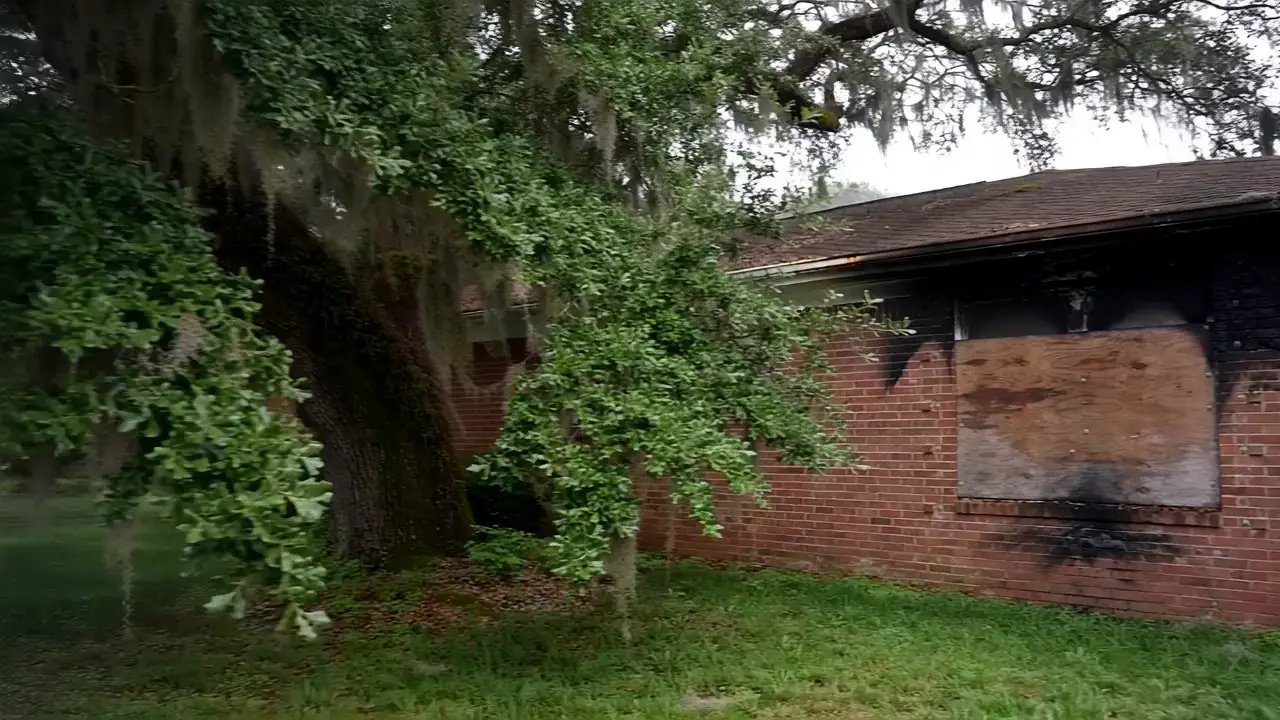
Fire damage restoration in Houston, Texas
Houston Fire Damage Restorationdried, cleaned and cleared of smoke
A Houston house fire rarely ends when the flames go out. Hose water sits in walls and under floors in air that is already damp, smoke has traveled through the attic and the air conditioning, and the next Gulf storm may be days away. One call puts you through to an independent restoration contractor working in Houston, and you talk about your home on that same call.
Call-in only. A contractor takes your call.
- Board-up and tarping before storms
- Drying in Gulf Coast humidity
- Soot and smoke cleanup
- Smoke odor traced to its source
- A contractor on the lineYour call is put through to an independent restoration contractor working in Houston, and you talk right then.
- Nothing to fill inNo forms, no stored details and no calls, texts or emails from this site afterwards.
- Houston conditions coveredHumidity, slab and pier-and-beam homes, apartments and storm season are all explained.
- Know the steps firstEach stage of restoration is laid out before you pick up the phone.
Key facts: Houston Fire Damage Restoration
- Restoration usually runs in order: secure the home, dry it, clean soot and smoke, treat odor, then repair.
- Smoke reaches rooms far from the fire through attics, stairwells and running air conditioning.
- Mold can begin on damp materials within 24 to 48 hours, according to the EPA [1].
- Houston's hurricane season runs from June through November [2].
- This line passes calls to independent contractors; the site itself performs no restoration.
After the fire
Problems a Houston house fire leaves
Most fires cause several of these together. Knowing which you face helps on the call.
An open house
Vented windows, forced doors and roof cuts let in rain and intruders.
Read moreSoaked floors and walls
Hose water spreads into pad, drywall, cabinets and crawlspaces.
Read moreSticky soot
Humidity turns soot tacky on texture, brick and paint.
Read moreSmoke in every room
Attics, ducts and stairwells carry smoke far from the fire.
Read moreOdor on humid days
Warm, damp air releases smell held in insulation and foam.
Read moreA fire in your apartment building
Shared walls and attics spread damage between units.
Read more
Restoration services
Fire restoration services for Houston homes
Each service page goes into the work in detail and lists questions to ask.
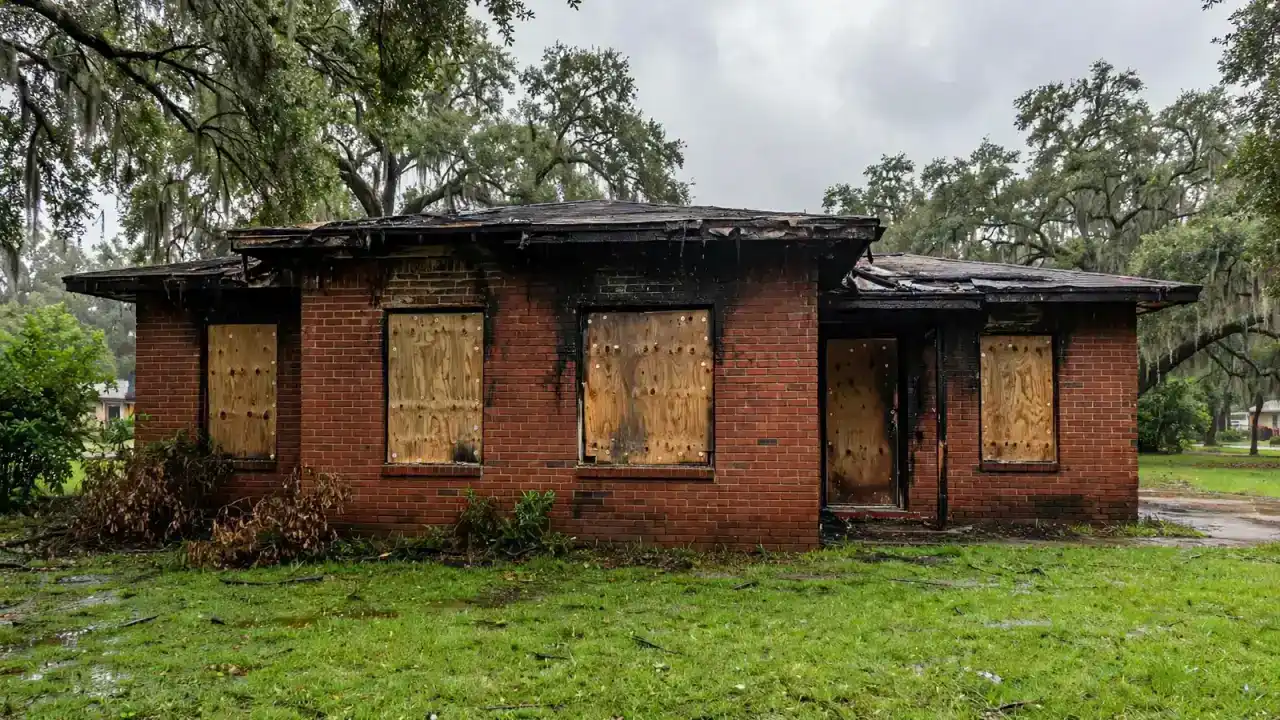
Board-Up and Tarping
Broken windows, opened roofs and forced doors need securing fast, especially before Gulf storms. How Houston homes are boarded and tarped.
Explore service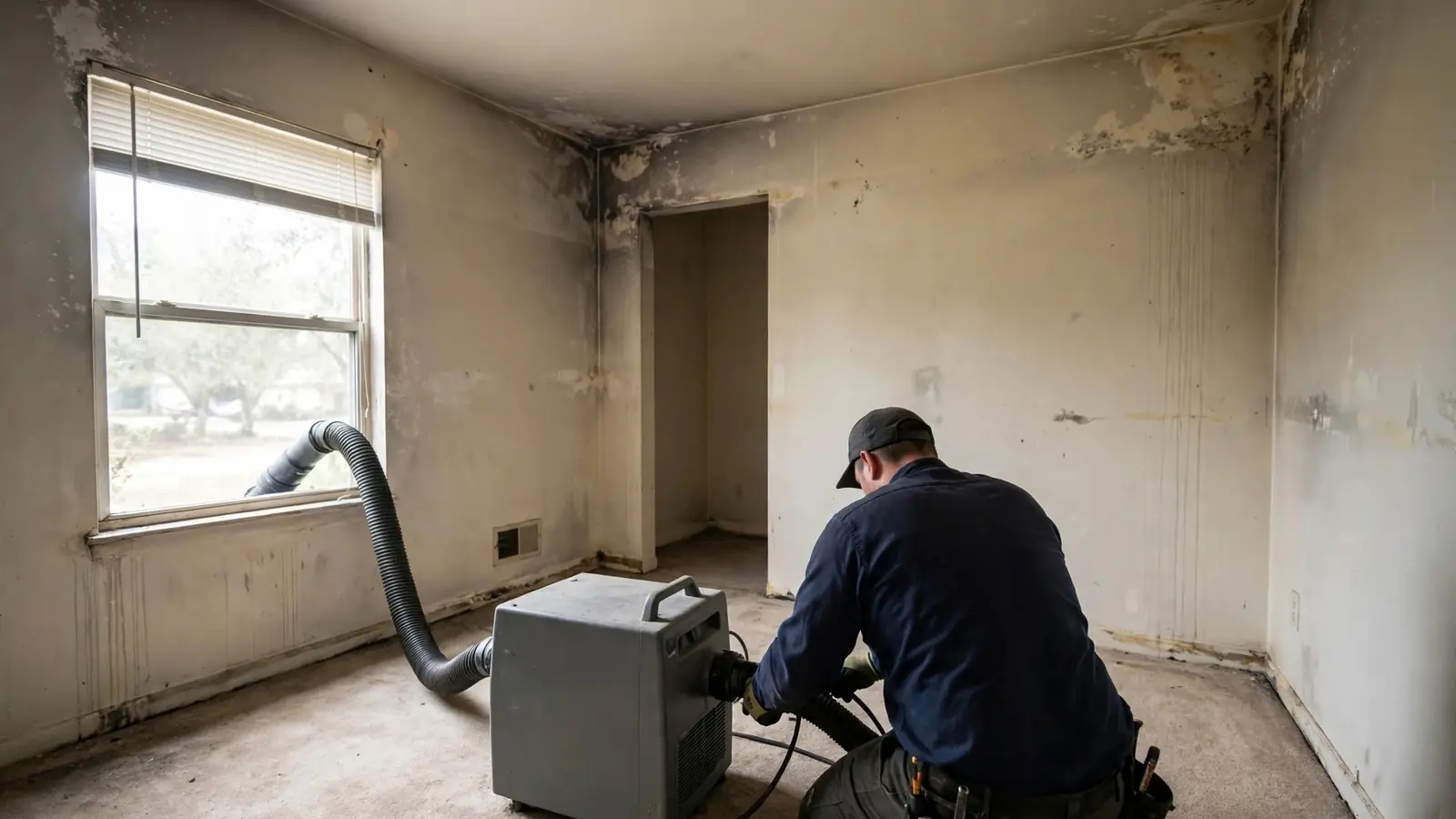
Odor Removal
Smoke smell hides in insulation, ducts and fabrics, and humidity brings it back. How lasting odor removal works in Houston.
Explore service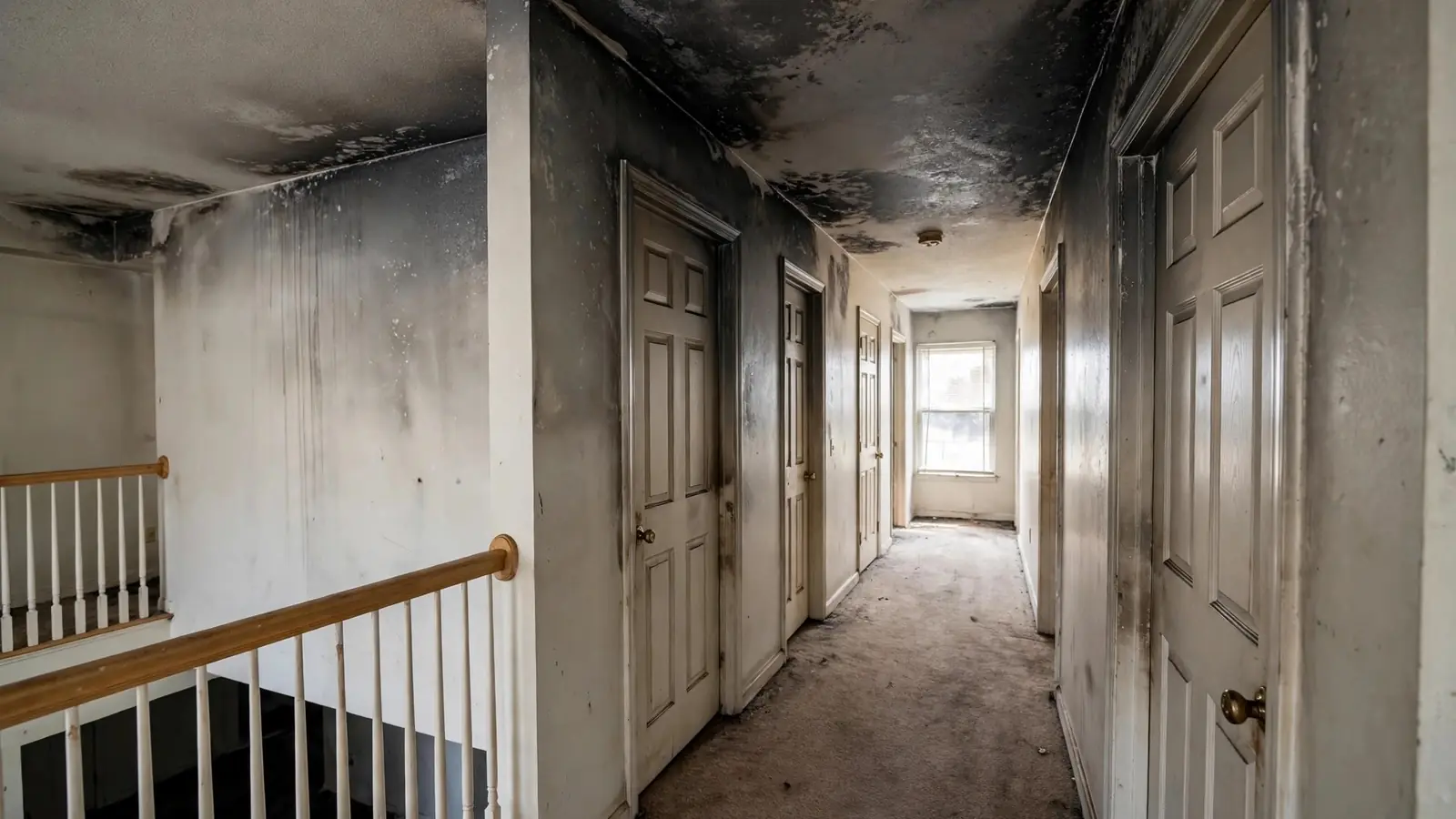
Smoke Damage Cleanup
Smoke spreads through attics, ducts and shared walls. How Houston homes and apartments are cleaned room by room after a fire.
Explore service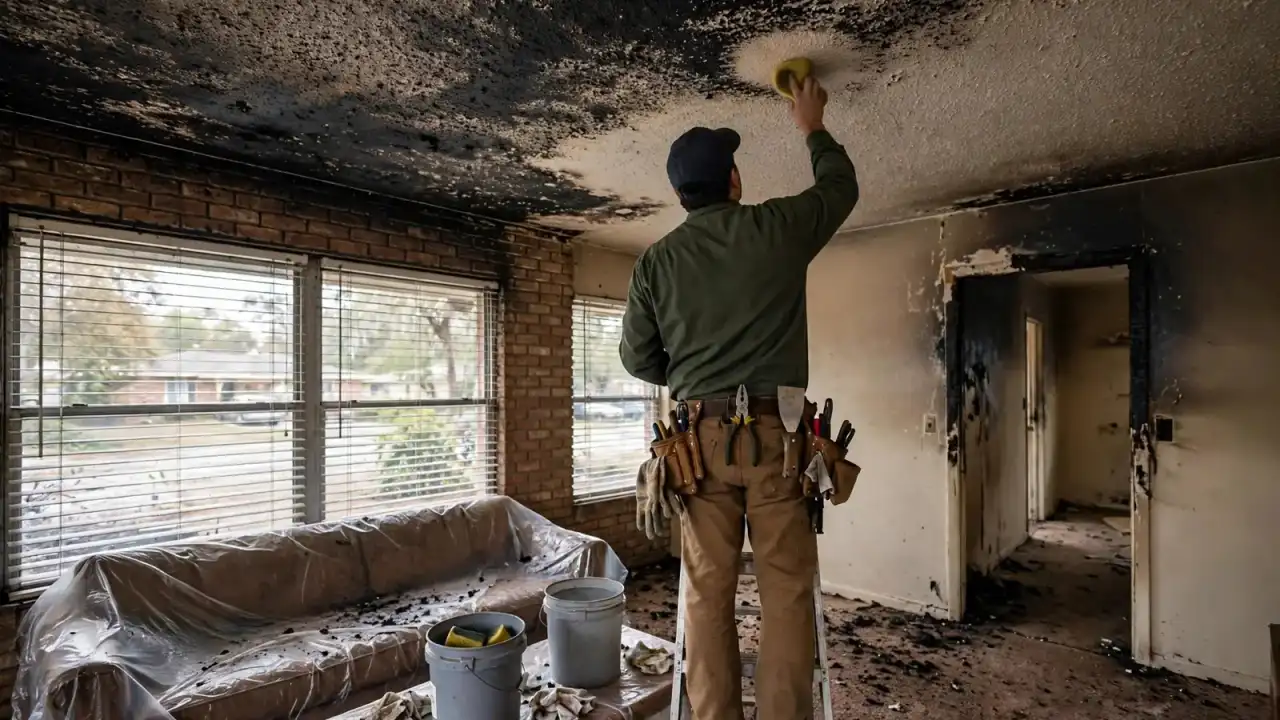
Soot Removal
Houston humidity makes soot sticky and quick to set. How soot is tested and lifted from walls, ceilings, brick and belongings.
Explore service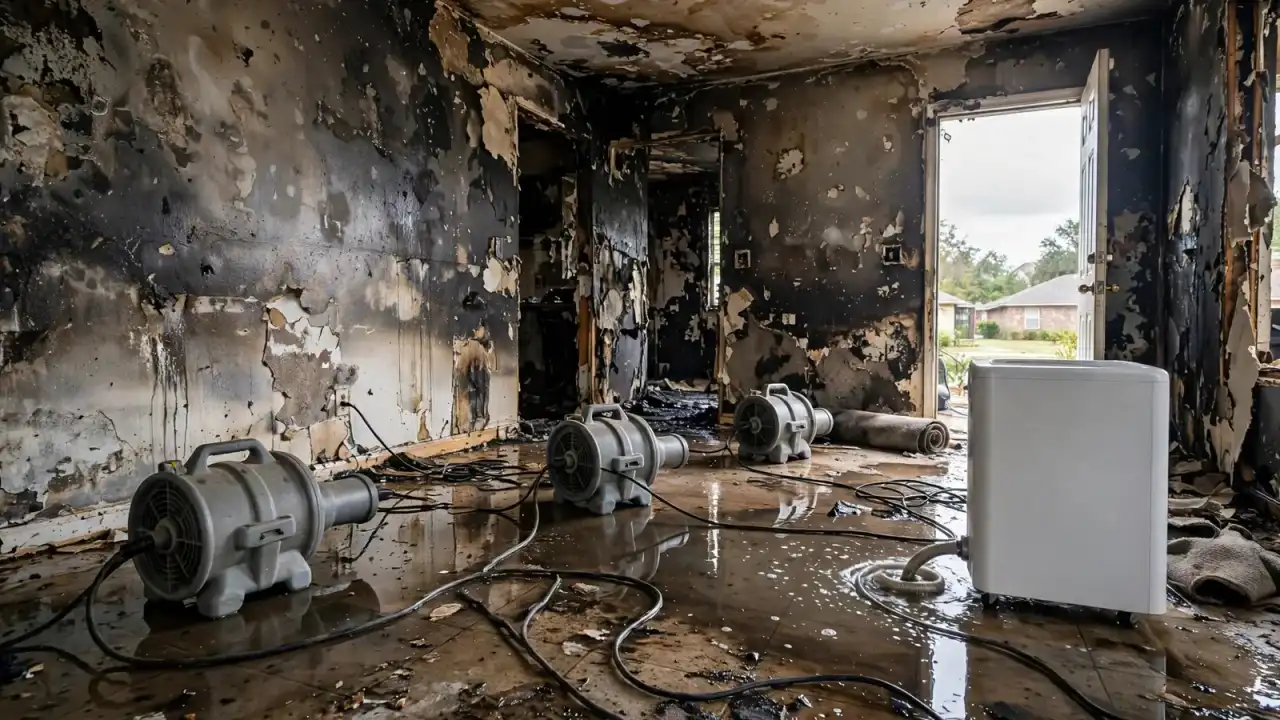
Firefighting Water Damage
Hose water soaks floors, walls and ceilings, and Houston humidity slows drying. How wet fire scenes are extracted, dried and checked.
Explore service
Before you go back in
Wait until the Houston Fire Department says the building can be entered. Fire weakens floors and ceilings, wet ceilings can fall, and smoke residue is hard on the lungs.
- Wait for the fire department's release
- Stay out from under sagging ceilings
- Leave the AC off until it is checked
- Wear a fitted N95 and gloves inside
- Throw out food touched by heat or smoke
The sequence
Why restoration follows an order
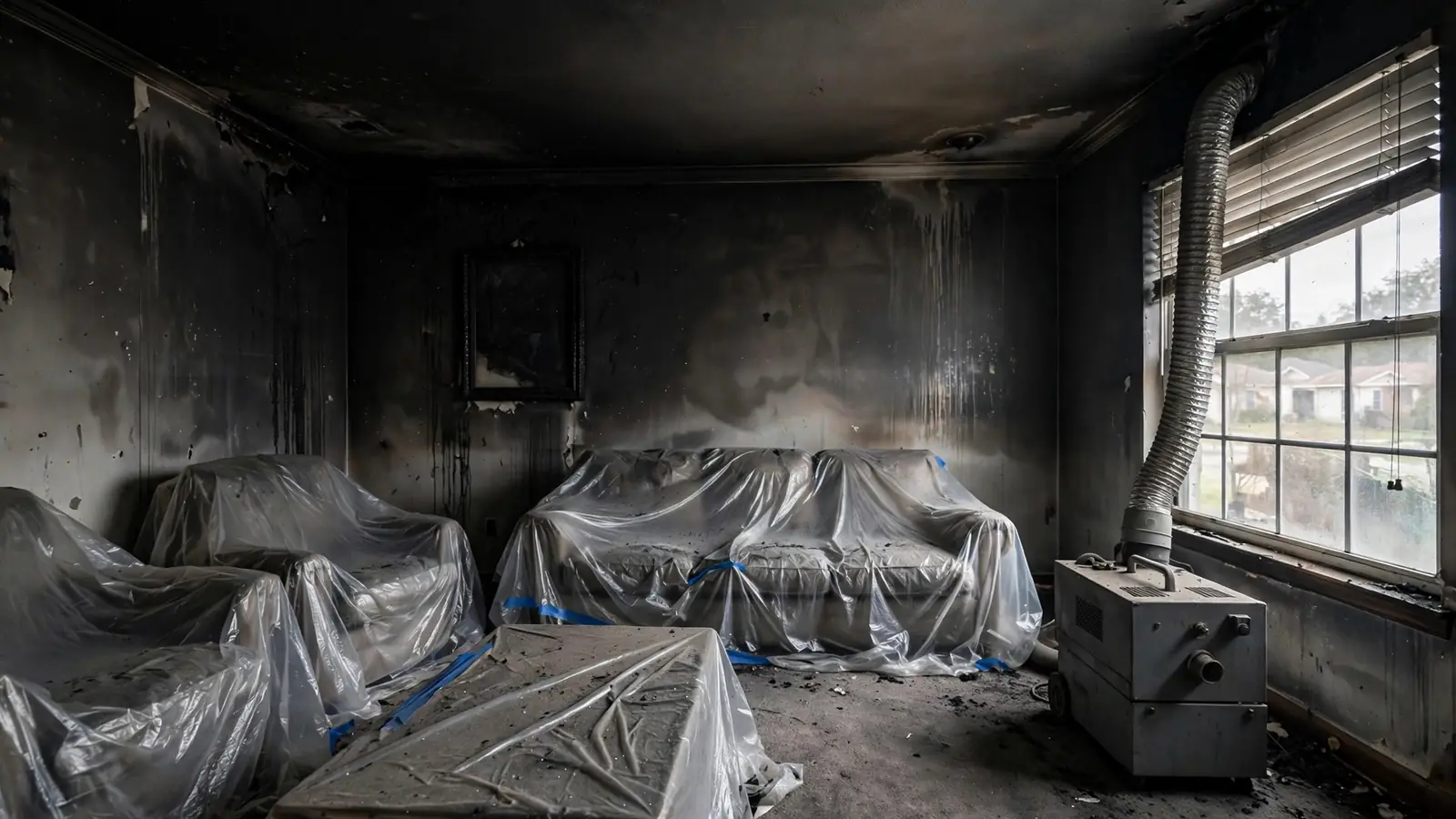
Restoration works in stages for good reasons. Openings are closed first, because Gulf rain through a vented roof turns a fire loss into a fire and water loss. Drying comes next: in Houston's humidity, wet drywall and pad can grow mold within days, and wet soot cannot be cleaned well.
With materials dry, soot and smoke are cleaned from ceilings downward. Odor work follows cleaning rather than replacing it, then surfaces are sealed, painted and repaired. Skipping steps, such as painting over soot or switching the AC back on early, usually adds work.
- 1. Secure the openings
- 2. Extract and dry
- 3. Clean soot and smoke
- 4. Remove odor at the source
- 5. Seal and rebuild
Local conditions
What Houston changes about the work
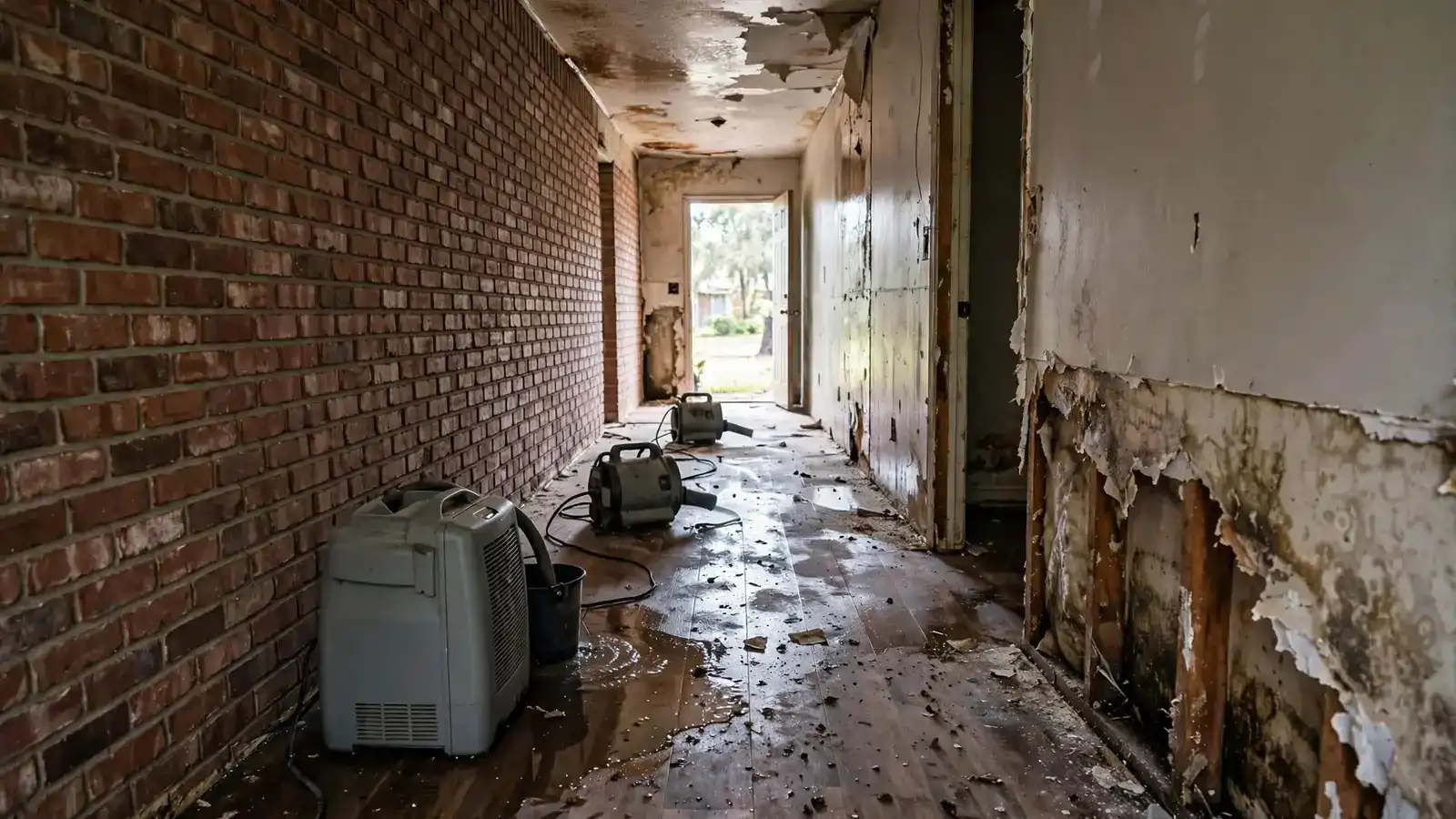
Houston's air is humid much of the year, so drying needs dehumidifiers rather than open windows, and mold is a real risk on any material left wet. Air conditioning runs most months, so smoke very often travels through ducts to every room.
The housing is mixed: early bungalows on piers, brick ranches, garden apartments and three-story townhomes. Hurricane season brings storms that test every tarp and board on a damaged house.
- Humidity and fast mold
- AC carrying smoke through ducts
- Slab, pier-and-beam and townhomes
- Storm season pressure
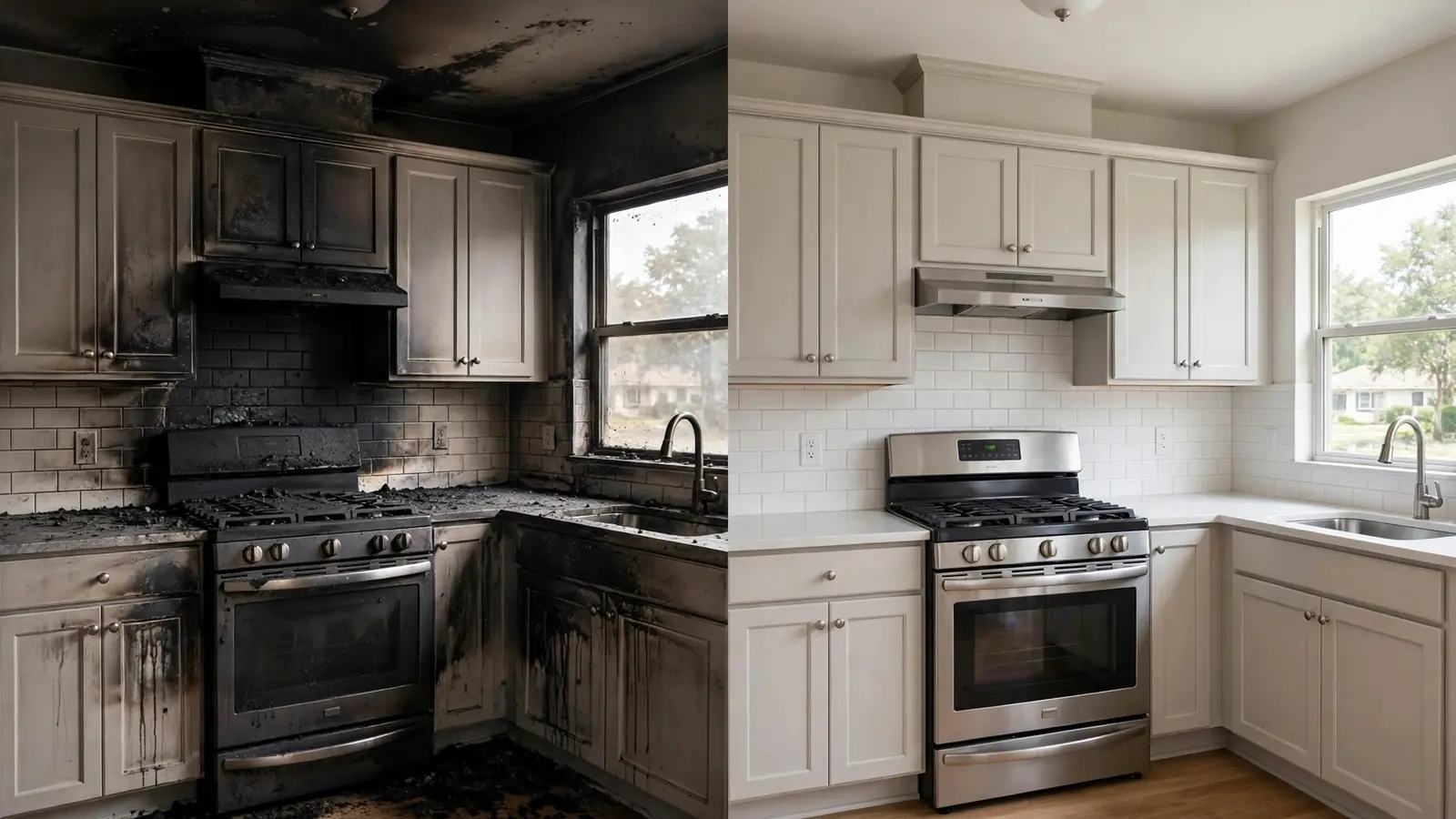
Before and after
What thorough cleaning can bring back
Rooms that look lost after a fire are often cleaned, sealed and painted rather than torn out.
 BeforeAfter
The call
What happens when you call
- 1
You dial the number
The call goes through to an independent restoration contractor working in Houston.
- 2
You describe the fire
Where it started, what you can see, and whether the fire department has released the house.
- 3
You agree next steps on the call
Any visit or urgent work is arranged between you and the contractor while you talk.
- 4
The home is assessed
If a visit is set up, rooms, attic, ducts and any crawlspace are checked.
- 5
The work follows the sequence
Securing, drying, cleaning, odor and repairs.
Houston neighborhoods
Fire restoration across Houston neighborhoods
From Heights bungalows to [Clear Lake](/areas/clear-lake/) two-stories, here is how homes differ across the city.
 Service area
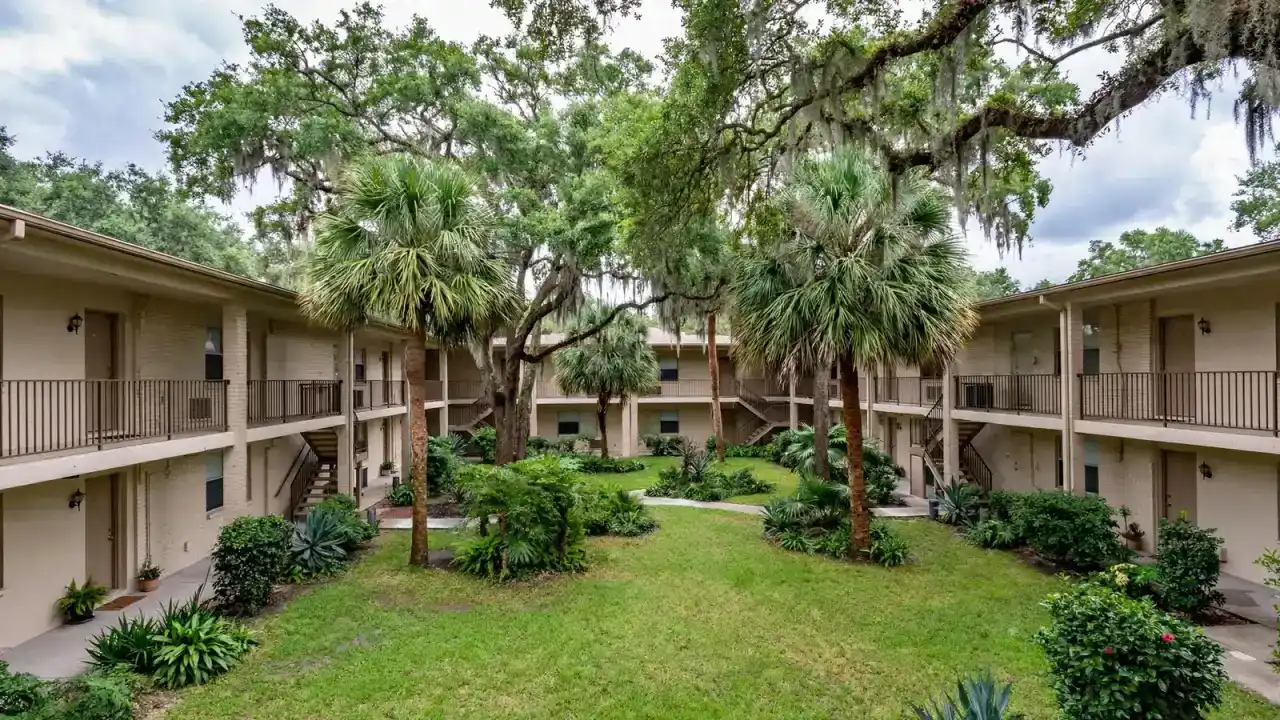
Alief
1970s-80s homes and many garden apartment complexes in one of Houston's most diverse areas. Shared walls and multi-unit fires shape restoration.
Learn more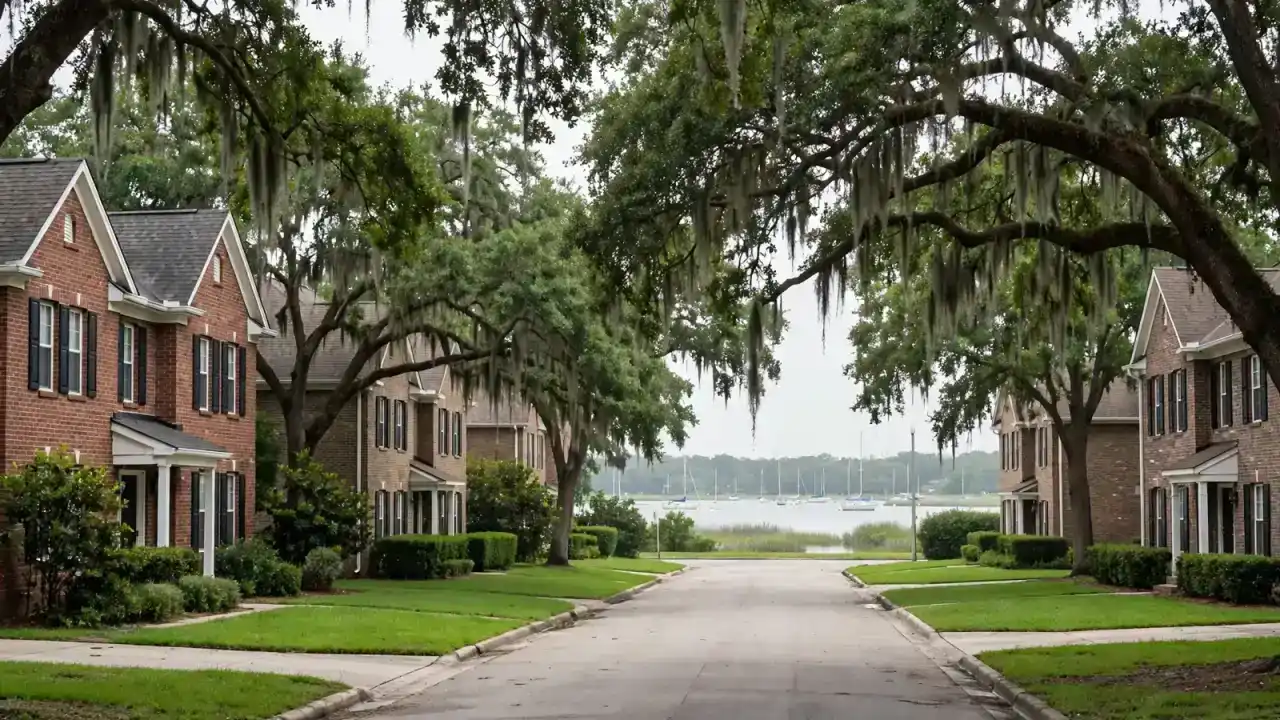 Service area
Clear Lake
Suburban two-story homes near NASA and Galveston Bay. Hurricane exposure, storm surge history and attic-to-upstairs smoke shape restoration here.
Learn more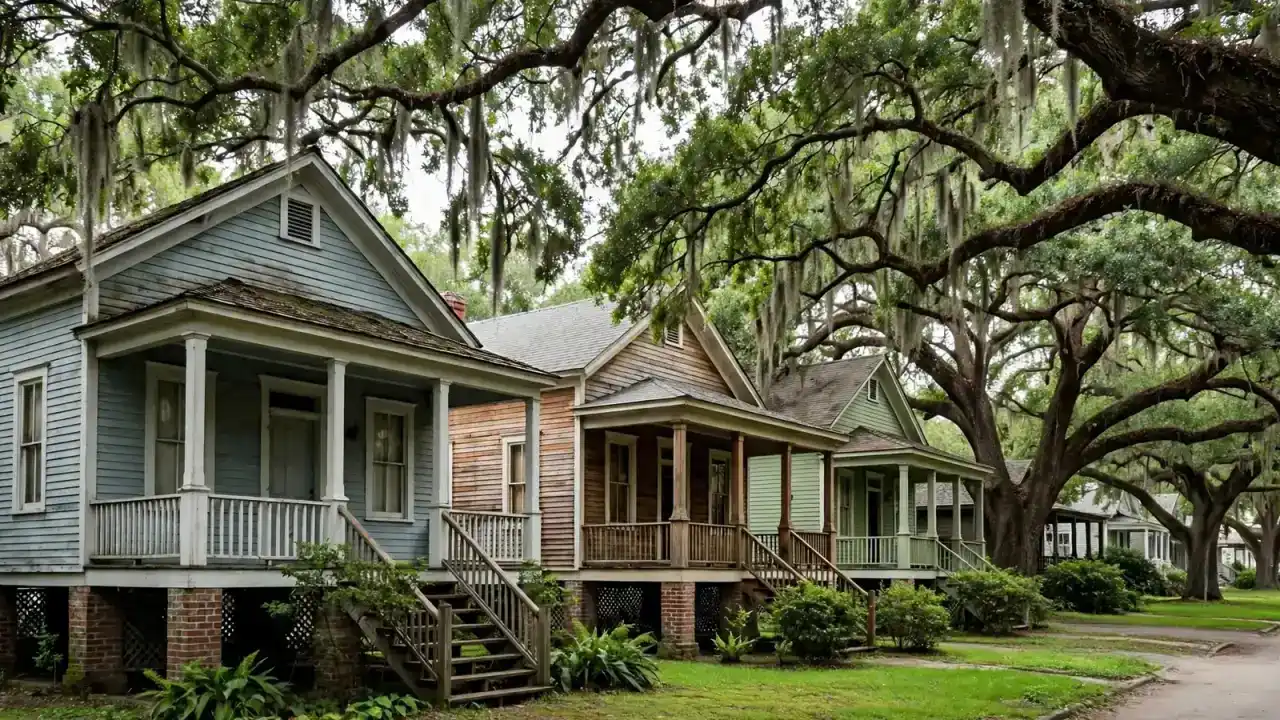 Service area
Houston Heights
Raised wood bungalows, historic districts and new townhomes. Crawlspaces, old wiring and preservation rules shape fire restoration here.
Learn more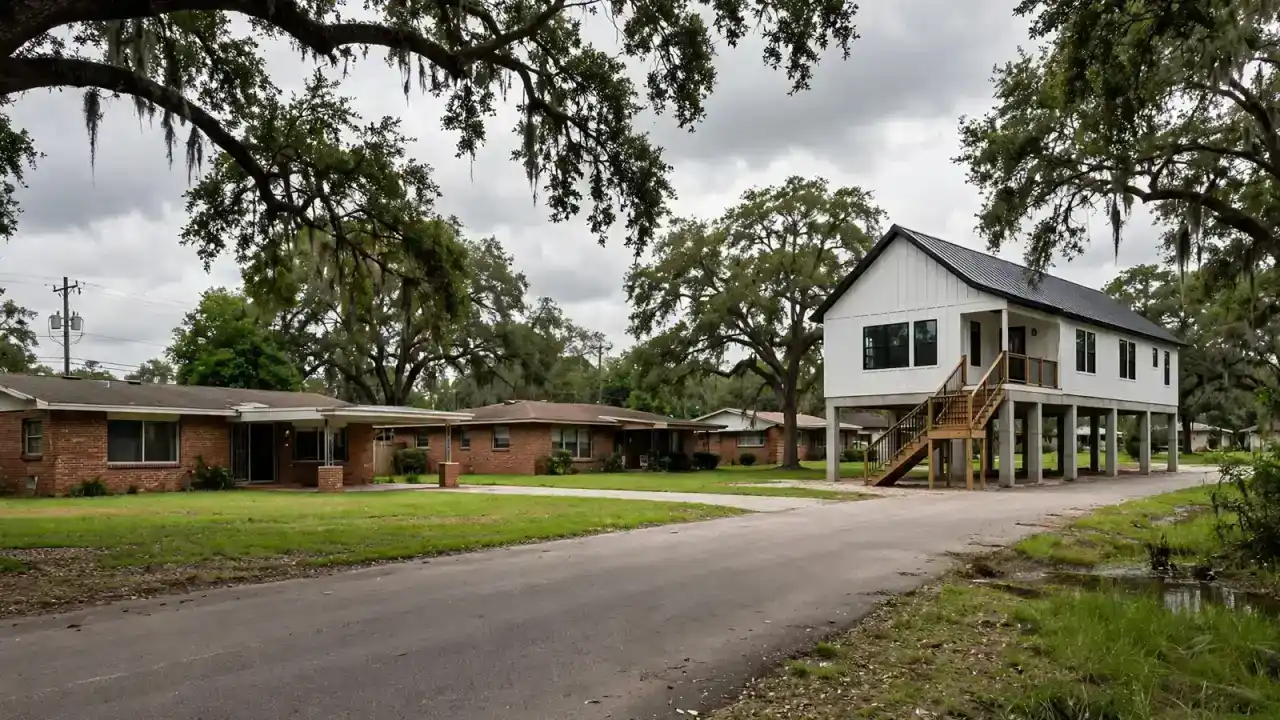 Service area
Meyerland
Mid-century ranch homes, many raised or rebuilt after repeated Brays Bayou floods. Flood history and mixed foundations shape fire restoration.
Learn more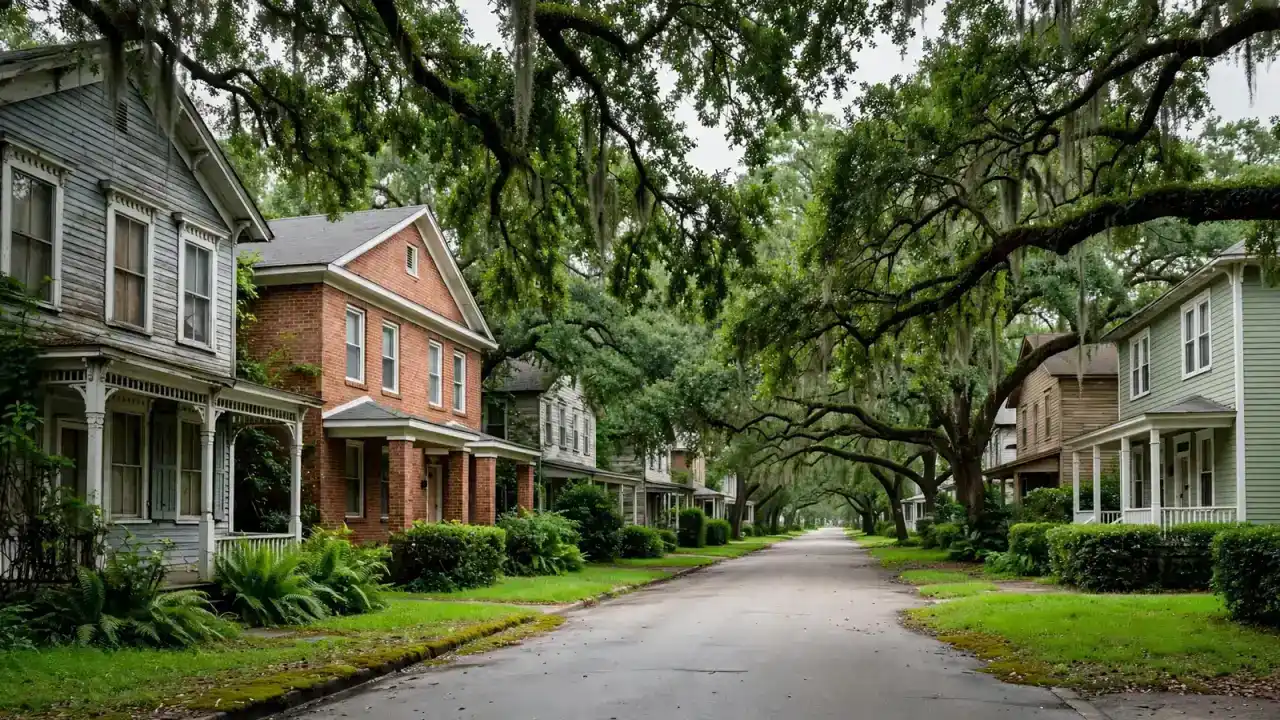 Service area
Montrose
Older homes, garage apartments, duplexes and townhomes on dense lots. Shared walls and old wiring make fire restoration here distinctive.
Learn more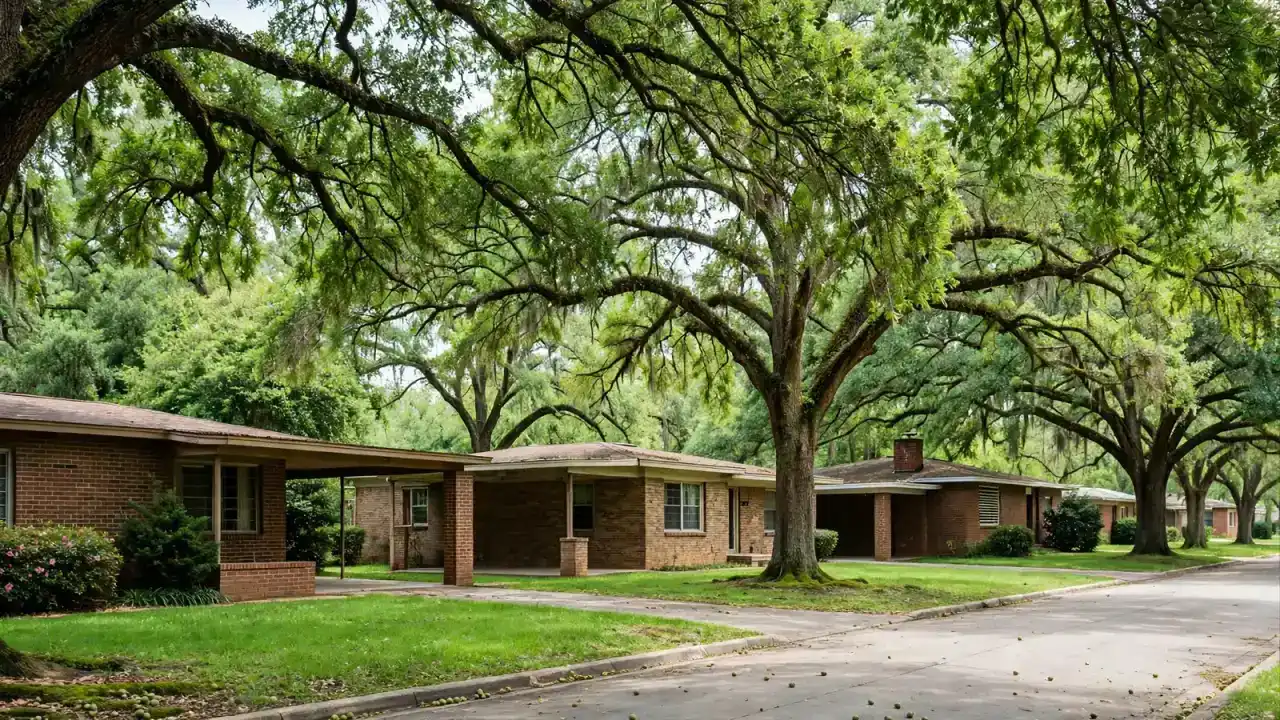 Service area
Spring Branch
1950s brick ranches with carports beside new two-story builds. Attic smoke, slab drying and older materials shape restoration here.
Learn more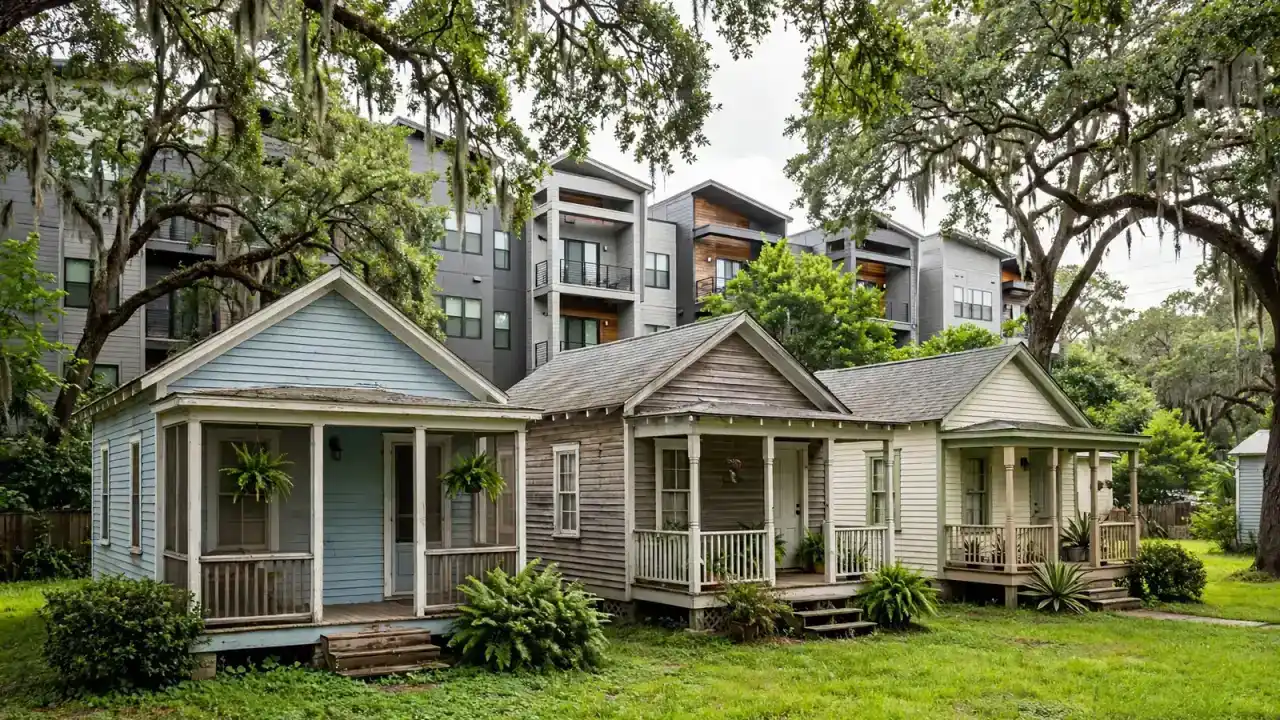 Service area
Third Ward
Historic wood homes, shotgun houses and new townhomes near two universities. Older construction, renters and close lots shape restoration here.
Learn more
Clean or replace
What usually survives a fire
| Material | Usual outcome | Main factor |
|---|---|---|
| Interior brick | Cleaned and sealed | Depth of soot in mortar |
| Painted drywall with light film | Cleaned, primed, repainted | Stains and odor |
| Drywall soaked by hose water | Cut out and replaced | How long it stayed wet |
| Attic insulation | Replaced | Smoke and water |
| Carpet pad | Replaced | Water and odor |
| Flexible AC duct | Often replaced | Residue inside the liner |
| Clothing and linens | Professionally cleaned | Scorching |
| Food and medicine | Thrown out | Any heat or smoke |
About this site
About this Houston call-in line
Fire Damage Restoration Houston is a call-in referral line. When you call the number on this site, the call goes through to an independent restoration contractor working in Houston and you speak with them directly. This site has no technicians, sends no crews and does no restoration.
We have no forms, we do not keep your contact details, and nobody from this site will call, text or email you later. Whatever you arrange is between you and the contractor on that call. Before agreeing to work, ask about insurance, methods and documentation, and for electrical work, check the electrician's licence with the Texas Department of Licensing and Regulation. [5]
For an overview of every stage, see Houston restoration services, and for short answers, read the Houston fire damage FAQ. The information here is general and draws on public sources such as the EPA, the American Red Cross, the National Weather Service and the U.S. Fire Administration, listed on each page.
Guides
Guides for particular situations
Generators and outages, mold after firefighting, renters, dryer vents and industrial smoke.
 Guide
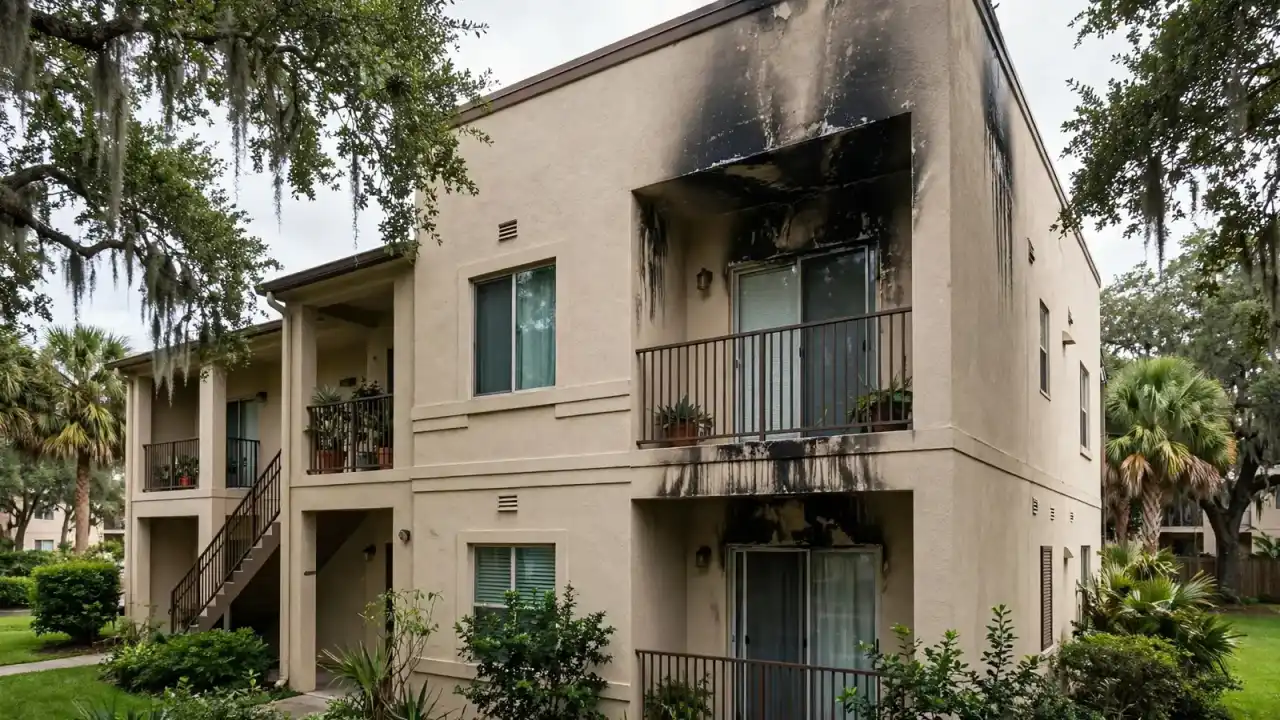
Renters after a fire
A fire in your complex, even next door, raises questions about rent, repairs and belongings. A plain guide for Houston tenants.
Read the guide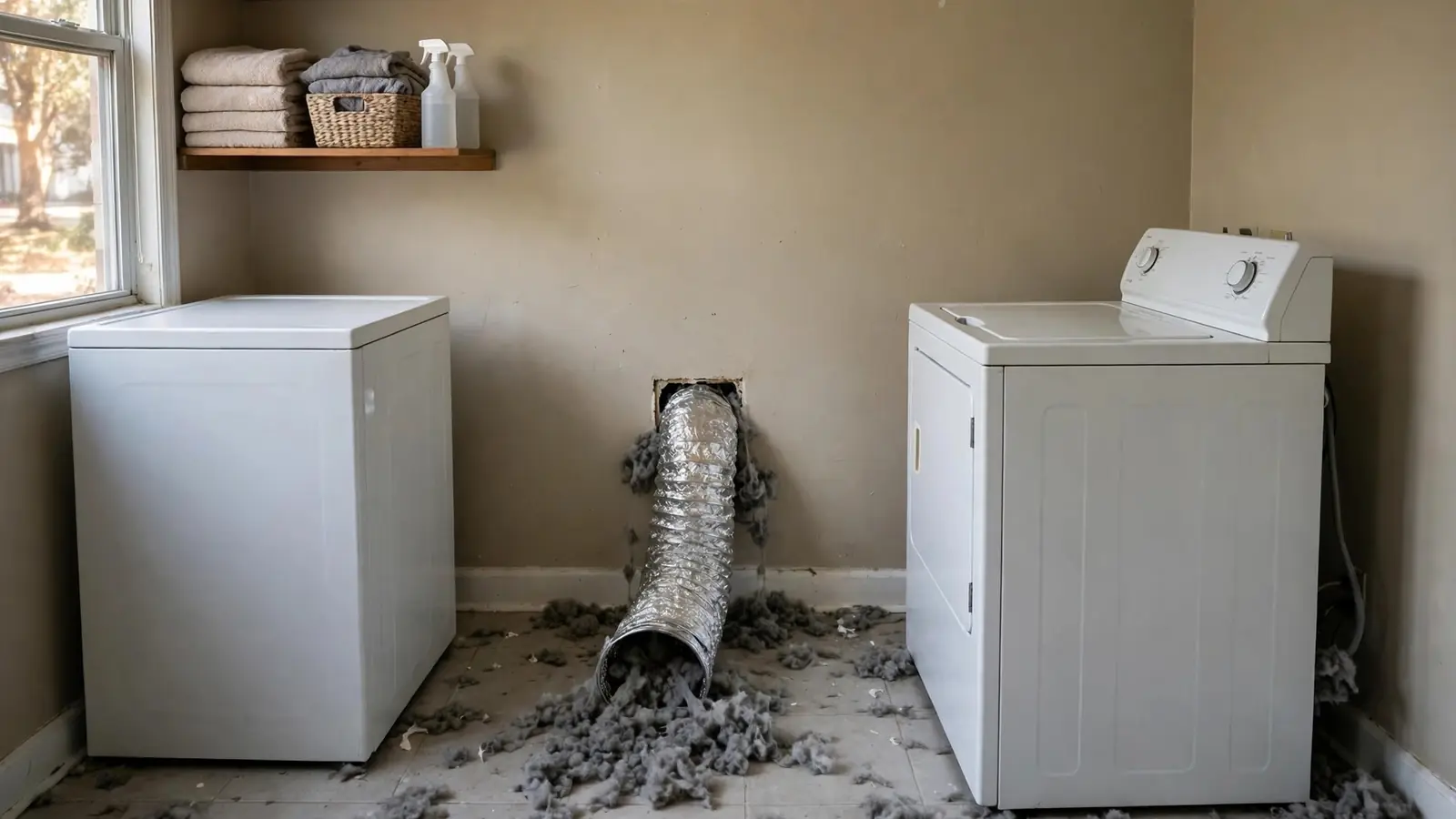 Guide
Dryer vent fires
Lint in dryer vents is a well-known fire starter. Warning signs, prevention and cleanup after a laundry room fire in a Houston home.
Read the guide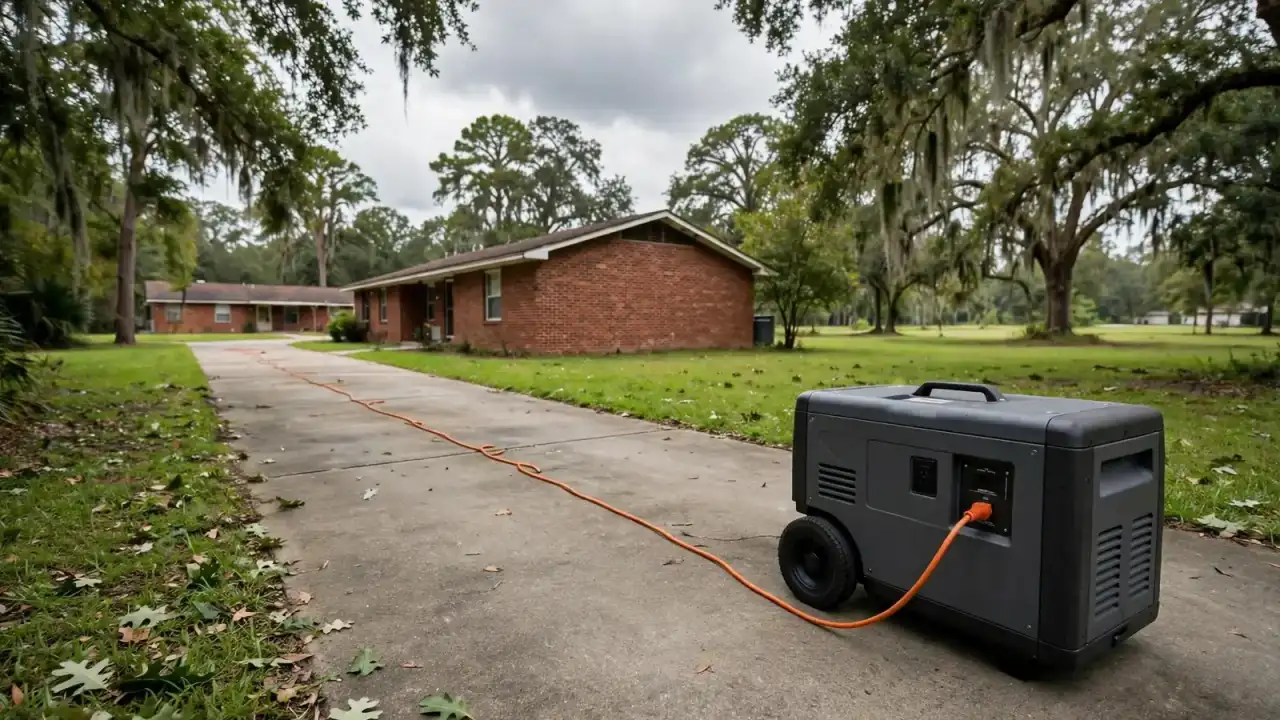 Guide
Generators and outages
Storm outages bring generators, candles and camp stoves indoors. How Houston households avoid fires and carbon monoxide when the power is out.
Read the guide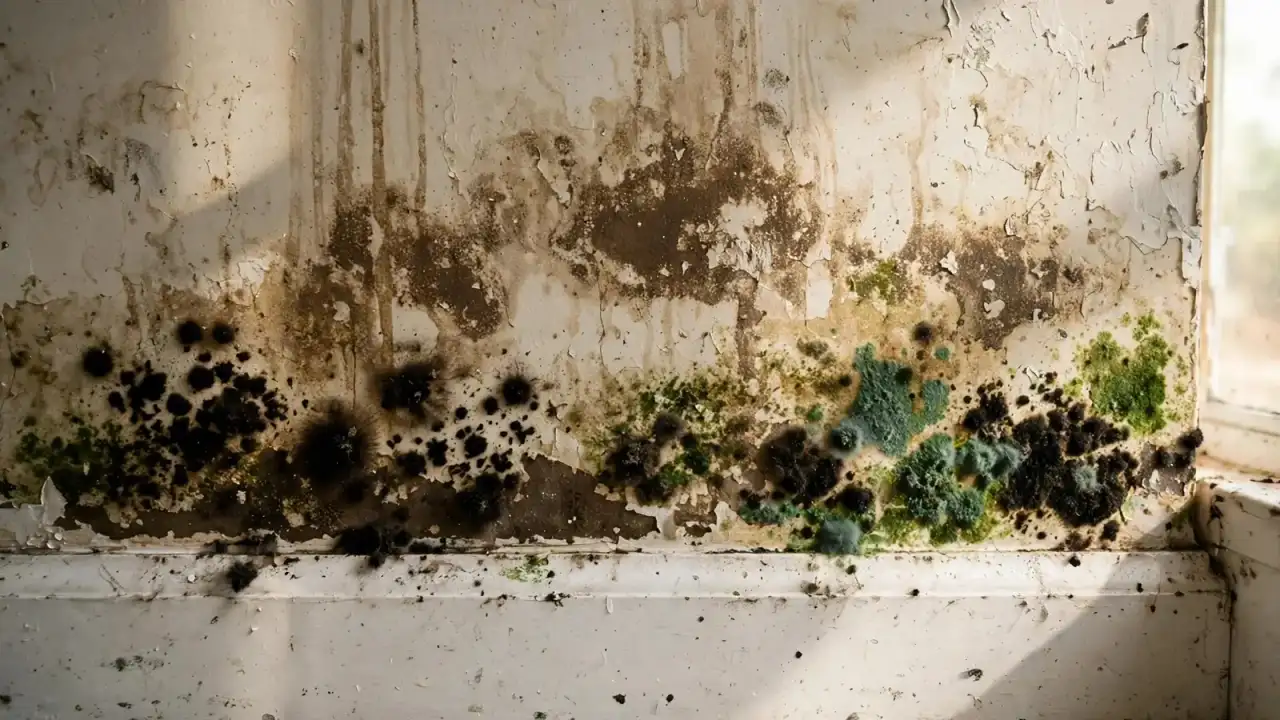 Guide
Mold after firefighting
Hose water plus Houston humidity is a recipe for mold. How to spot it early and what to do when a fire scene starts to smell musty.
Read the guide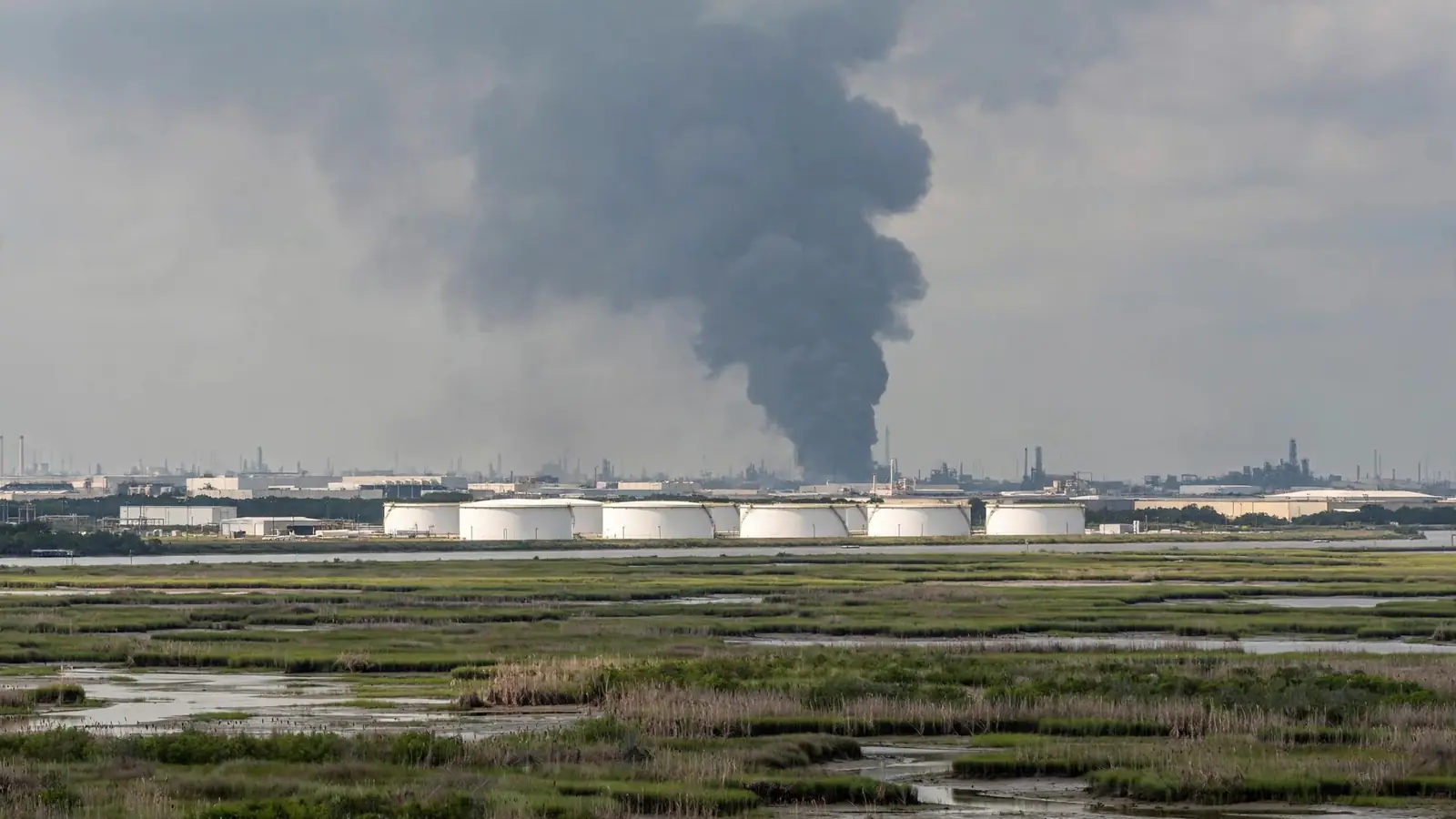 Guide
Industrial smoke
Plant, tank and refinery fires along the Ship Channel can send smoke over Houston neighborhoods. What to do during and after.
Read the guide
FAQ
Houston fire damage questions
Still have a question?
Send us the details and we'll point you the right way.
Call NowNumber coming soonWhat should I do first after a house fire in Houston?
Make sure everyone is safe, wait for the fire department's release, call your insurer and get openings covered before rain.
Who picks up when I call?
An independent restoration contractor working in Houston. This site does not do the work.
Will this site contact me later?
No. There are no forms and no follow-up calls, texts or emails.
Why does my house need drying after a fire?
Firefighting water soaks walls and floors, and Houston humidity slows natural drying.
Why is the soot sticky?
Humid air and hose water make soot tacky, so it smears if wiped.
Can I turn on the AC?
Not until the filter is changed and the system has been checked.
Does my renters insurance matter?
It usually covers your belongings and may cover temporary housing. Landlords handle the building.
Does a hurricane affect my fire repairs?
It can. Ask the contractor to check boards and tarps before any storm.
Houston fire damage
Talk to a restoration contractor now
Call and your call goes through to an independent restoration contractor working in Houston. Tell them what happened and what your home needs.
Sources and citations
Keep reading