
Key facts: Spring Branch
- Spring Branch was settled by German immigrants in the mid-1800s and later developed into suburban neighborhoods [1].
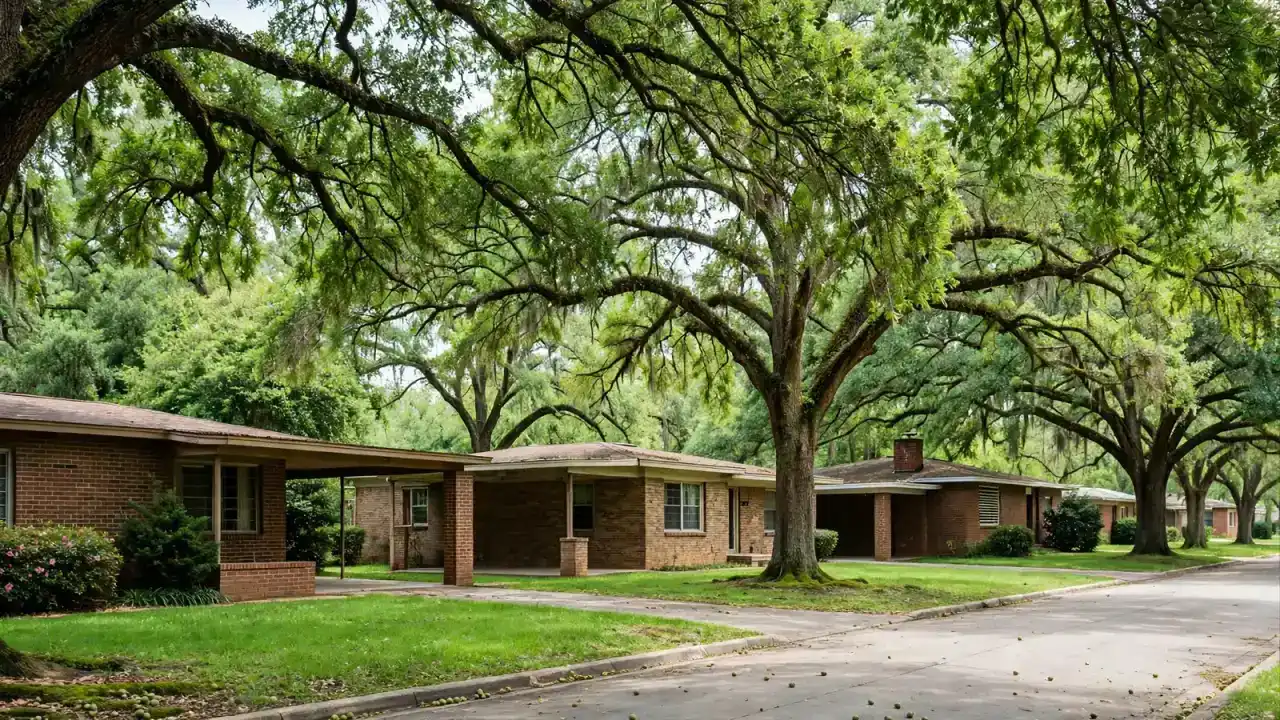
- Much of its housing is 1950s and 1960s brick ranches on slab foundations.
- Many original homes have been replaced with larger two-story houses.
- Mid-century homes may contain asbestos in some materials and lead in older paint [2][3].
- The covered ZIP codes for Spring Branch on this site are 77055 and 77080.
Coverage
Spring Branch ZIP codes on this line
Calls from these Spring Branch ZIP codes can reach an independent restoration contractor who works there.
- 77055Southern Spring Branch, north of I-10 and around Long Point Road.
- 77080Central and northern Spring Branch toward Hammerly and the Beltway.
About Spring Branch
From farm settlement to suburb
Spring Branch takes its name from a creek in the area, where German families settled in the 1840s and farmed for generations. After the Second World War, Houston's growth pushed west, and the area filled with subdivisions of modest brick ranch houses on generous lots, many with carports and detached storage. Houston annexd much of Spring Branch in the 1950s, and the Spring Branch Independent School District serves a large part of it.
Today the area is diverse, with long-established families, large Hispanic and Korean communities along Long Point Road and newer residents drawn by schools and proximity to the Energy Corridor and Memorial. Original ranches sit next to large new two-story homes, townhomes and apartment complexes.
Construction
Spring Branch homes and fire
Single-story brick ranches
One continuous attic over every room.
Slab foundations
Water stays under flooring and in wall bottoms.
Carports and detached storage
Fires there can reach the house or neighbors.
Original acoustic ceilings
May contain asbestos in older homes.
New two-story homes
Smoke rises up stairwells to bedrooms.
Apartment complexes
Shared attics and walls.
Attics
Why the attic matters in a ranch house
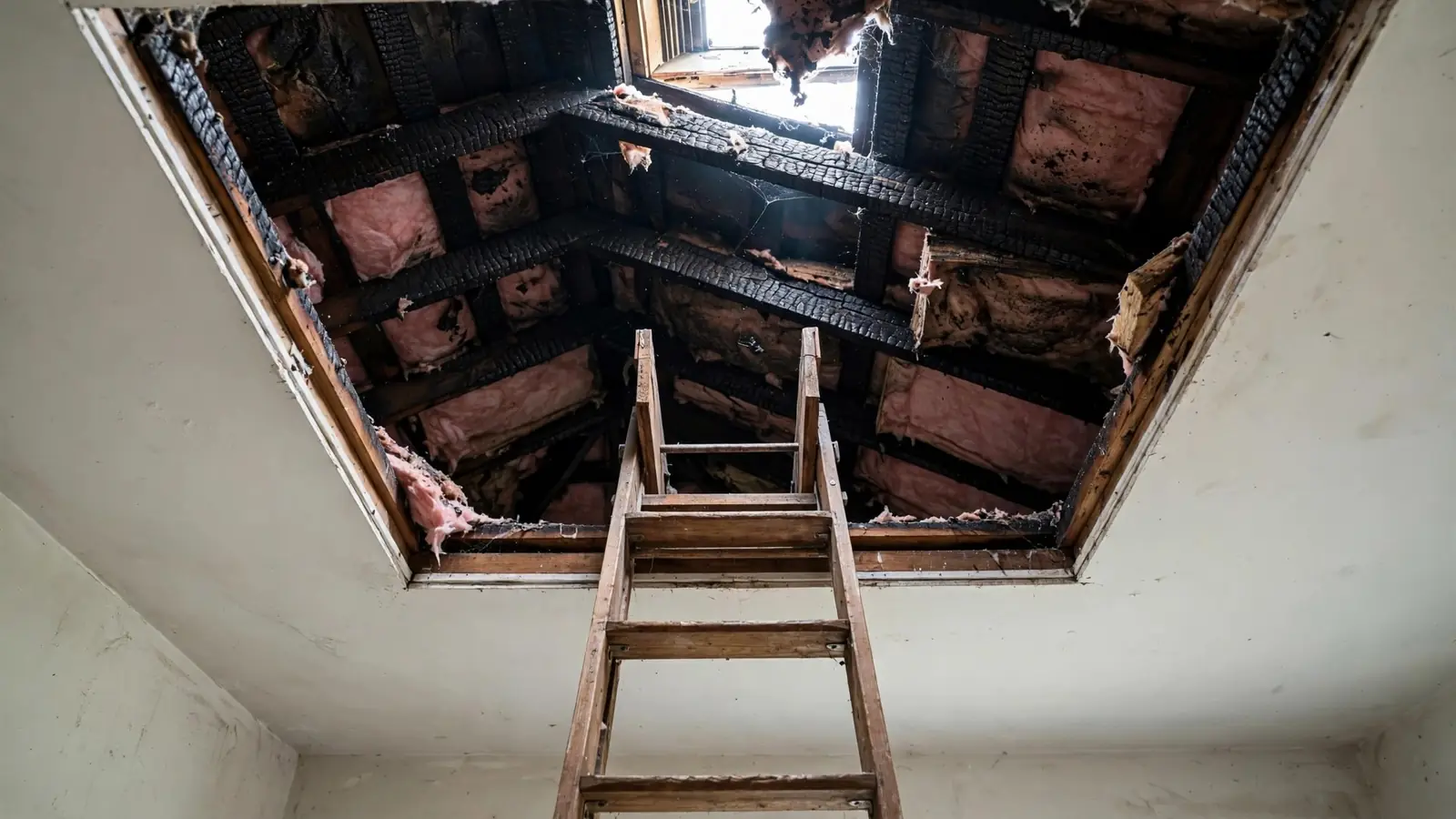
In a single-story ranch, the attic spans the whole house. Smoke that enters the attic, through a ceiling opening, an attic access, a light fixture or the air handler, spreads over every room and settles into the insulation. The house below may look clean in some rooms but smell of smoke for months, because the insulation above keeps releasing odor, especially on hot afternoons.
Restoration almost always includes the attic: inspecting insulation, removing it where it smells of smoke or got wet, cleaning or sealing rafters and decking, and checking the air handler and ducts, which in most Houston ranches are in the attic. New insulation goes in once the space is clean and dry.
Materials
Spring Branch materials after a fire
| Material | Usual outcome | Notes |
|---|---|---|
| Acoustic ceiling | Sealed or replaced | Test for asbestos first |
| Painted drywall | Cleaned, primed, repainted | Light film usually cleans |
| Original wood floors under carpet | Cleaned and refinished | Dry slowly if wet |
| Vinyl or asbestos-era tile | Tested before removal | Adhesive may also need testing |
| Attic insulation | Usually replaced | Main odor source |
| Brick veneer outside | Cleaned | Masonry-safe methods |
Outbuildings
Carports, sheds and big lots
Spring Branch lots are larger than in inner Houston, and many have carports, detached garages, workshops or sheds. These often hold lawn equipment, fuel, paint and batteries. A fire there can spread to the house along the carport roof or to a neighbor's fence and shed. After a fire, outbuildings are assessed separately, and stored fuels and chemicals are checked before anyone moves them. Containers that are bulging or melted are handled as hazardous waste.
Checklist
First steps after a Spring Branch house fire
- 1
Stay out until released
Let firefighters declare the house safe.
- 2
Open a claim
Note the claim number and adjuster's name.
- 3
Document the attic and every room
Photos of the attic hatch area help.
- 4
Board and tarp
Close windows, doors and roof openings.
- 5
Begin drying
Slabs hold water under flooring.
- 6
Plan testing
For older materials before demolition.
Drying
Drying a slab ranch
Firefighting water on a slab spreads across floors, under carpet pad, vinyl and laminate, and into the bottom of walls. Concrete absorbs water and gives it up slowly. Drying starts with extraction, then moisture mapping, removal of soaked pad and lower drywall where needed, and dehumidifiers with air movers. The slab is checked before new flooring goes down. In Houston's humidity, keeping the house closed while equipment runs works better than opening windows.
New homes
New builds among the ranches
Many Spring Branch lots now hold large two-story homes built in the last twenty years. These have modern materials, open plans, high ceilings and often two AC systems. Smoke behaves differently: it rises into high ceilings and upstairs rooms, and both AC systems may carry it.
Water from an upstairs fire comes down through ceilings, sometimes into a downstairs family room with a high ceiling. Restoration starts upstairs, includes stairwells and both systems, and dries any wet ceilings and walls below.
- Smoke rises to upper floors
- Two AC systems to check
- High ceilings need tall access
- Water comes down through ceilings
- Start cleaning upstairs
Causes
Common fire starters in Spring Branch homes
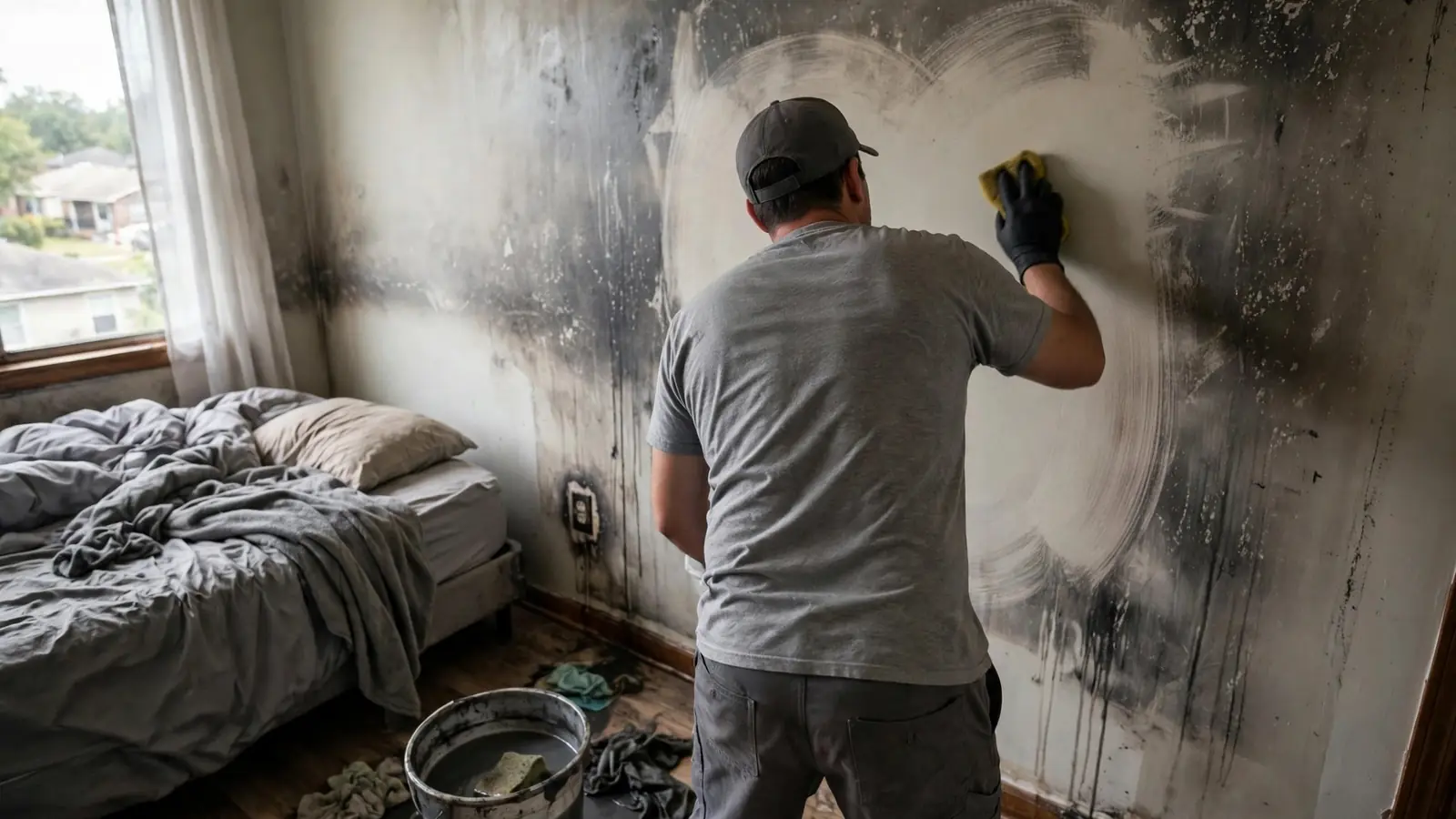
Kitchen fires are the most common cause of home fires nationally, and Spring Branch is no different. Other frequent causes in mid-century homes include overloaded circuits in houses wired for far fewer appliances than families use today, space heaters in older rooms, dryer vents that have not been cleaned in years, and garage and carport storage. Newer homes see more battery-related fires from power tools, e-bikes and scooters charged in garages.
Older electrical panels in some mid-century homes may be at or near the end of their service life. If your home still has its original panel or you notice warm outlets, flickering lights or breakers that trip often, have a licensed electrician look at it before a problem becomes a fire.
Risks
Fire risks by home age
Original 1950s and 1960s wiring
Fewer circuits; added loads over decades.
Older electrical panels
Some models have known problems; ask an electrician.
Original ductwork
Old insulation and leaks can pull smoke from the attic.
Space heaters
Used in older, less insulated rooms.
New builds
Battery charging in garages; long dryer vent runs.
Both
Kitchen fires remain the top cause.
Commercial corridor
Korean and Hispanic businesses along Long Point
Long Point Road and nearby streets are lined with restaurants, markets, auto shops and small businesses, many owned by Korean and Hispanic families. Homes behind these strips can be affected by smoke from a commercial fire, especially a restaurant kitchen or auto shop fire involving oils and tires. After a nearby fire, check attics, vents and filters, and photograph any residue before cleaning.
Timing
Spring Branch restoration timeline
| Stage | What happens | Spring Branch factor |
|---|---|---|
| Securing | Board-up and roof tarp | Large trees near roofs |
| Drying | Extraction and dehumidifiers | Slab floors and wall bottoms |
| Testing | Asbestos and lead where needed | Mid-century materials |
| Attic work | Insulation removal, cleaning, sealing | Attic over every room |
| Cleaning and odor | Top to bottom, then deodorizing | Whole-house smoke |
| Rebuild | Insulation, drywall, flooring, paint | Match brick and trim |
Trees
Pecan and oak trees after a fire
Big pecans and oaks shade many Spring Branch homes. Heat from a house fire can scorch nearby branches and weaken them, and falling limbs are a danger during repairs and storms. Have an arborist check trees close to the burned side of the house. Clear leaves and debris from roof tarps after storms so water drains properly, and keep gutters clear while the house is under repair.
Multifamily
Apartments in Spring Branch
Spring Branch has many apartment complexes, especially along Gessner, Hammerly, Long Point and near the Beltway, many built in the 1970s and 1980s. In these garden-style complexes, units share attics and walls, and a fire in one apartment often sends smoke and water into others. Tenants should report damage in writing, photograph their unit and belongings, and contact their renters insurer. The property owner usually handles cleaning and repairs of the building. Texas law addresses leases when a unit becomes unusable because of fire.
Families
Families, schools and staying close
Many families choose Spring Branch for its schools. After a fire, staying near school and work keeps daily life steadier for children. Ask your insurer whether additional living expenses cover a nearby rental, and let your child's school know what happened. Spring Branch ISD schools and local churches and community groups often help families affected by fires with clothing, supplies and support.
Attic work
Clearing attic smoke from a ranch
Attic work is often the difference between a home that smells clean and one that does not.
- 1
Inspect from the hatch and inside
Look for darkened insulation and residue on rafters.
- 2
Remove smoky insulation
Vacuum it out with equipment that vents outside.
- 3
Clean rafters and decking
HEPA vacuuming and cleaning where residue remains.
- 4
Seal if odor persists
Odor-blocking sealer on wood.
- 5
Check the air handler and ducts
Clean or replace as needed.
- 6
Install new insulation
Once the attic is clean and dry.
Floors
Older wood floors under carpet
Many original Spring Branch ranches have oak floors hidden under carpet laid in later decades. After a fire, if carpet and pad are removed because of smoke or water, those floors may be revealed. If they stayed dry, they can often be cleaned and refinished. If they got wet, they need slow, measured drying first. Older vinyl or tile under carpet in kitchens and halls should be tested for asbestos before removal, along with any black adhesive.
Summer odor
Odor that comes back in summer
Spring Branch owners often notice smoke odor returning in July and August, when attics get very hot. Heat drives odor out of any remaining smoky insulation, wood or ductwork and into the rooms below. If odor returns after restoration, the attic and ducts are the first places to check. A good contractor will trace the source rather than simply repeat deodorizing.
Flood history
Flooding along Spring Branch creeks
Parts of Spring Branch lie near Spring Branch Creek, Brickhouse Gully and Buffalo Bayou's tributaries, and some streets flooded during Hurricane Harvey in 2017 and other heavy storms. Homes that flooded may have had lower walls, insulation and flooring replaced. After a fire, tell your contractor and insurer about any earlier flood repairs, since they change what is behind walls and how materials respond to drying.
Exteriors
Brick veneer and exterior cleaning
Most Spring Branch ranches have brick veneer, often with painted wood trim, soffits and fascia. Smoke stains brick above windows and doors, and heat can crack bricks or damage mortar near a fire. Brick is cleaned with masonry-safe methods and low pressure to avoid driving water behind the veneer. Damaged bricks can be replaced, though matching older brick can take some searching. Wood trim and soffits are cleaned or replaced and repainted, using lead-safe practices on older paint.
Comparison
Ranch or new build: what differs
| Aspect | 1950s-60s ranch | New two-story |
|---|---|---|
| Smoke path | Through the shared attic | Up stairwells |
| AC systems | Usually one, in the attic | Often two |
| Older materials | Asbestos and lead possible | Unlikely |
| Floors | Slab; oak under carpet in some | Slab; tile or wood |
| Odor source | Attic insulation | Upstairs fabrics and ducts |
| Exterior | Brick veneer and wood trim | Brick, stone or siding |
Insurance
Insurance and older homes
Older homes may need code upgrades during repairs, such as electrical changes, smoke alarms or insulation standards. Some policies include ordinance or law coverage to help with these. Ask your insurer early how code upgrades are handled, and ask your contractor which upgrades are required. The Texas Department of Insurance explains homeowners policies and how to file a claim.
Checks
Signs your ranch still has smoke in the attic
- Odor strongest near the attic hatchSmoke remains above the ceiling.
- Smell on hot afternoonsAttic heat releases odor.
- Gray ceiling stains around light fixturesSmoke passed through gaps.
- Odor each time the system cycles onDucts or the air handler hold residue.
Additions
Garage conversions and additions
Over the decades, many Spring Branch owners converted carports or garages into living space, added dens or extended kitchens. These additions may have different roofs, ceilings and wiring from the original house, sometimes with a separate attic space or a low-slope roof. After a fire, restorers check how the addition connects to the main attic and whether smoke traveled between them. Wiring in additions should be inspected along with the rest of the house.
Returning
Moving back into a restored ranch
- 1
Sniff the attic hatch area
No smoke smell should remain.
- 2
Run the AC for a few minutes
Check supply vents for odor.
- 3
Open closets and kitchen cabinets
Look and smell inside.
- 4
Check floors
No soft spots, cupping or stains.
- 5
Get a written summary
What was cleaned, removed, sealed and replaced.
Summary
Spring Branch after a fire: the short version
In an original ranch, assume smoke reached the attic over the whole house, and plan to replace insulation and check the air handler. Dry slab floors and wall bottoms quickly, test mid-century materials before demolition, and have an electrician inspect older wiring and panels. In a new two-story home, start cleaning upstairs and check both AC systems. Either way, document everything and keep receipts.
Storms
Storm season and big trees
Spring Branch lost power widely during Hurricane Beryl in 2024 as trees fell across lines. For a house already damaged by fire, storms bring falling limbs, roof damage and outages that stop drying equipment. Before storm season, ask your contractor to check tarps and boards, trim limbs over the damaged part of the roof, and plan for a generator placed safely outside if drying must continue during an outage.
Kitchens
Kitchens in mid-century ranches
Original ranch kitchens were small and often closed off, though many have since been opened to the living room. A stovetop fire in an opened-up kitchen sends smoke across the whole living area and into the attic through recessed lights and the attic hatch. Cabinets, often replaced in later remodels, are cleaned inside and out; particleboard cabinets that got wet usually swell and are replaced. Range hoods are degreased or replaced, and food near the stove is discarded.
FAQ
Spring Branch fire damage questions
Why does my whole ranch smell of smoke when the fire was in one room?
Smoke spread through the shared attic over every room and settled in the insulation.
Does attic insulation need replacing?
If it absorbed smoke or got wet, replacement is usually best.
Is my acoustic ceiling dangerous?
Older textures may contain asbestos. Test before disturbing it.
Can original wood floors under carpet be saved?
Often, if dried and refinished properly.
How long does a slab take to dry?
Usually several days; the slab is checked before new flooring.
Can a carport fire damage the house?
Yes, heat and flames can travel along the roof line.
Do new two-story homes need different cleaning?
Yes. Start upstairs and check both AC systems.
What should I do with stored fuel after a fire?
Have it checked; damaged containers go to hazardous waste disposal.
Should my old electrical panel be checked after a fire?
Yes. A licensed electrician should inspect panels and wiring before power is restored.
Can smoke from a nearby business fire damage my home?
Yes. Check attics, vents and filters, and photograph residue.
Can apartment tenants in Spring Branch get help after a fire?
Report damage in writing, contact your renters insurer and ask management about cleaning and temporary housing.
Why did the smoke smell return in summer?
Attic heat drives odor out of remaining smoky materials. The attic and ducts should be checked.
Can heat-cracked bricks be replaced?
Yes, though matching older brick can take time.
Will my policy pay for code upgrades?
Some policies include ordinance or law coverage. Ask your insurer early.
Can a fire spread along a wooden fence?
Yes. Fences can carry fire between yards and sheds.
Do additions need separate checks after a fire?
Yes. They may have separate attics, roofs and wiring.
Can drying continue during a power outage?
Only with a generator placed safely outdoors. Plan this with the contractor before storm season.
How long does a typical ranch restoration take?
Often several weeks, depending on attic work, testing and repairs.
Do recessed lights let smoke into the attic?
Older ones often do, through gaps around the housing.
Should I tell my neighbor if my fire damaged their fence?
Yes, and suggest they contact their own insurer.
Are carports covered by homeowners insurance?
Usually as part of the dwelling or other structures, depending on the policy.
Can soot be cleaned off a carport ceiling?
Usually, with cleaning and repainting, unless heat damaged the boards.